


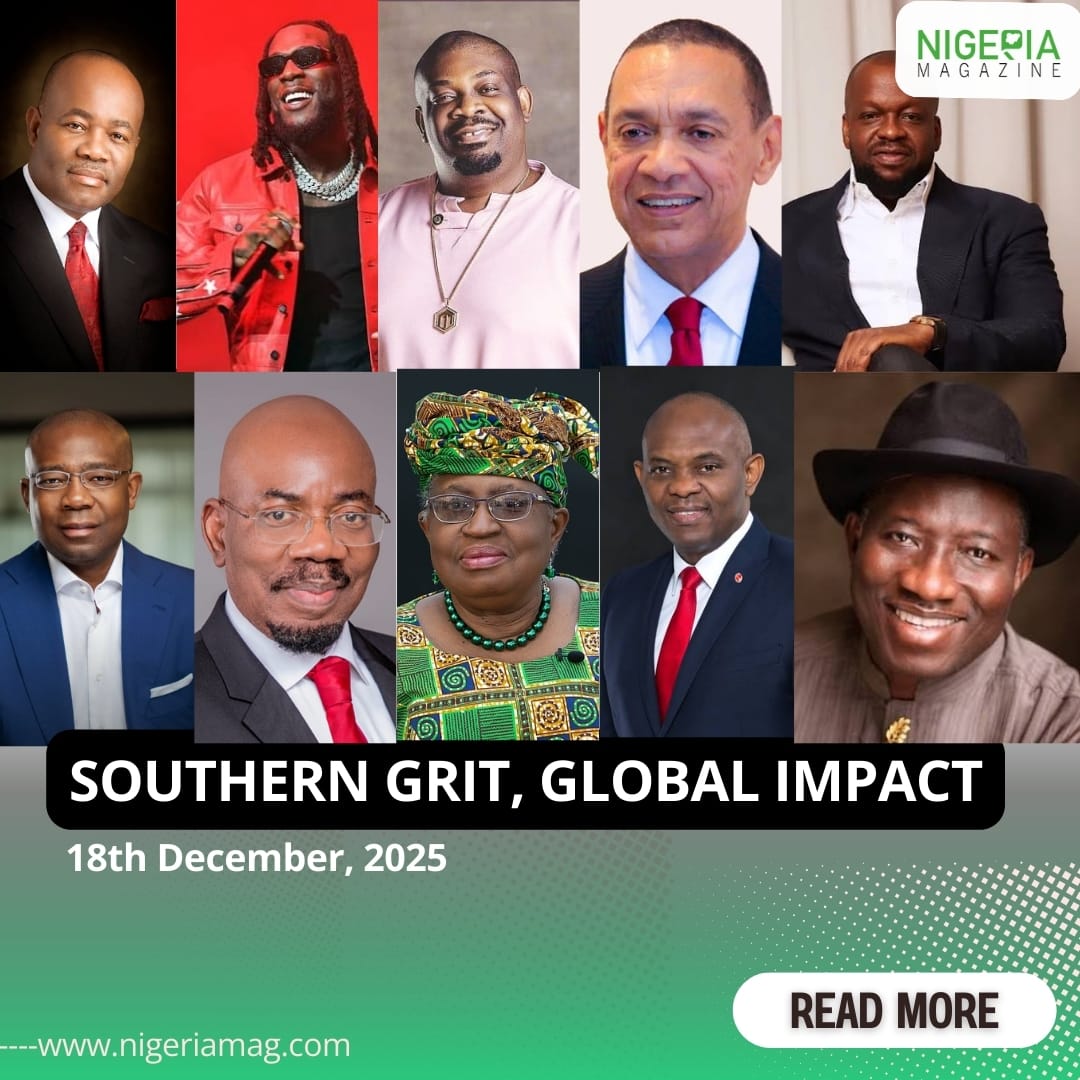
The South–South region of Nigeria—rich in culture, resources, and resilience—has produced individuals whose influence extends far beyond their states of origin. Across politics, finance, enterprise, and entertainment, these figures demonstrate measurable impact built on skill, strategy, and sustained effort. Together, they form factual case studies in how preparation, timing, and deliberate choices translate into lasting success.
Goodluck Jonathan (Bayelsa State) rose from academia into public service and steadily advanced through deputy governorship, governorship, the vice presidency, and ultimately the presidency (2010–2015). His tenure is noted for calm leadership and for overseeing Nigeria’s first peaceful transfer of power between rival parties. What worked: gradual progression, education, and a non-confrontational style.
Tony Elumelu (Delta State) built United Bank for Africa into a pan-African institution operating in over 20 countries. Through Heirs Holdings and the Tony Elumelu Foundation, he has invested in power, banking, and entrepreneurship, supporting thousands of African entrepreneurs since 2015. What worked: long-term investing, institution-building, and a private-sector-led development philosophy.
Ngozi Okonjo-Iweala (Delta State) combined academic excellence with global experience at the World Bank, served twice as Nigeria’s Finance Minister, and became the first African and first woman to lead the World Trade Organization in 2021. What worked: technical competence, global exposure, and policy discipline.
Jim Ovia (Delta State) founded Zenith Bank in 1990 and grew it into one of Nigeria’s most profitable and well-governed banks, while investing in education and technology through the Jim Ovia Foundation and James Hope University. What worked: strong governance, early tech adoption, and institutional culture.
Aigboje Aig‑Imoukhuede (Edo State) led Access Bank through transformative mergers and international expansion, elevating it from a mid-tier lender to a major African financial group. What worked: strategic consolidation, leadership development, and sustainability focus.
Igho Sanomi (Delta State) entered oil and gas early with Taleveras Group, building a globally active energy trading firm before diversifying into shipping, aviation, and infrastructure. What worked: early sector entry, calculated risk-taking, and global positioning.
Ben Murray‑Bruce (Bayelsa State) pioneered modern entertainment in Nigeria through the Silverbird Group—introducing major television platforms, music awards, and cinema chains—before serving as a senator. What worked: spotting media gaps, brand diversification, and audience-first innovation.
Don Jazzy (Rivers State) reshaped contemporary Afrobeats through production excellence, first with Mo’Hits Records and later with Mavin Records, which has launched multiple chart‑topping artists. What worked: talent development, adaptability, and creative leadership.
Burna Boy (Rivers State), born Damini Ogulu, is a Grammy-winning global artist whose work blends Afrobeats with international sounds while maintaining strong African themes. What worked: a consistent artistic identity, global collaboration, and high production standards.
Godswill Akpabio (Akwa Ibom State) served as governor (2007–2015) during a period of extensive infrastructure development, later becoming a senator, Minister of Niger Delta Affairs, and Senate President. What worked: grassroots engagement, visible public projects, and strategic alliances.
Shared Pattern: Across fields, these South–South Nigerians exhibit common traits—investment in education or skill mastery, strategic opportunity use, long-term thinking, and the capacity to operate locally and globally. Their stories are not myths but documented careers that underscore the region’s most powerful resource: human capital, effectively deployed.

