



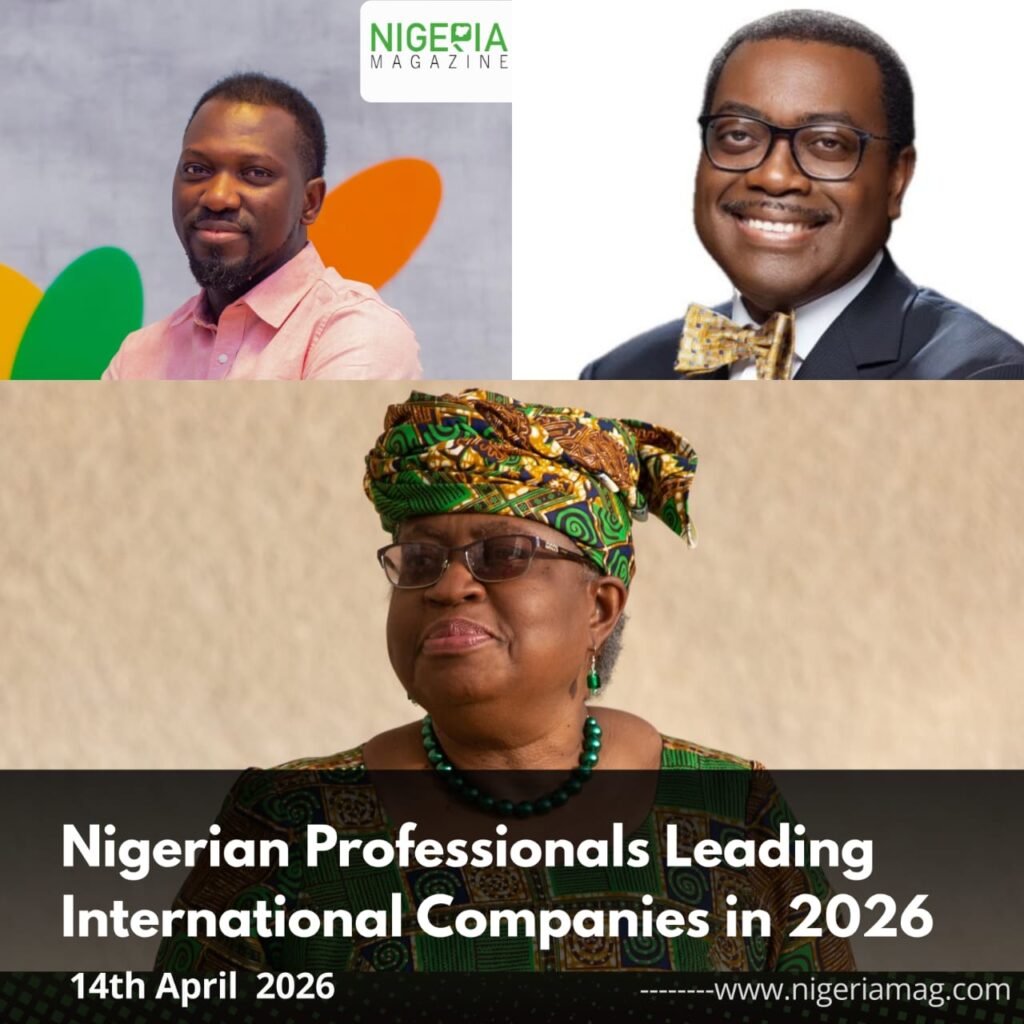
In recent decades, Nigerian professionals have steadily expanded their influence beyond national borders, occupying strategic leadership roles across global corporations, international institutions, and high-growth technology firms.
By 2026, this trend has accelerated, with Nigerian executives playing prominent roles in shaping global finance, technology innovation, consulting, and development policy.
From the boardrooms of multinational corporations to the leadership of global institutions, these professionals are not only advancing their organizations but also redefining perceptions of Nigerian expertise in the global marketplace.
Global Influence in Finance and Economic Leadership
Among the most recognizable Nigerian figures in global economic leadership is Ngozi Okonjo-Iweala, Director-General of the World Trade Organization. As the first woman and the first African to lead the institution, she has become a symbol of Nigeria’s global influence in international finance and trade policy. (World Trade Organization)
Okonjo-Iweala’s career spans more than four decades in global development and economic management. Before assuming leadership of the WTO in 2021, she spent 25 years at the World Bank, rising to the position of Managing Director, Operations. (World Trade Organization)
Her tenure has been marked by efforts to modernize global trade rules and address economic disruptions caused by geopolitical tensions and supply-chain instability. In 2024, she secured a second term as WTO Director-General, reinforcing her influence on global trade policy into the late 2020s. (World Trade Organization)
Another Nigerian shaping international finance is Akinwumi Adesina, President of the African Development Bank Group. Since taking office in 2015, Adesina has championed large-scale infrastructure investment and economic development initiatives across Africa. His leadership of the AfDB’s “High 5s” strategy—focused on electrification, industrialization, and food security—has positioned the institution as a key player in Africa’s economic transformation. (Vanguard News)
Together, these leaders represent the growing role of Nigerians in shaping global economic systems and financial institutions.
Nigerians Driving Technology and Innovation
In the technology sector, Nigerian professionals are increasingly leading global startups and digital infrastructure companies.
One prominent figure is Olugbenga Agboola, CEO and co-founder of Flutterwave. Under Agboola’s leadership, the fintech company has expanded payment infrastructure across more than 30 African countries, enabling global merchants to transact seamlessly in African markets. (Leadership)
Flutterwave has become one of Africa’s most recognized fintech platforms, attracting billions of dollars in venture funding and partnerships with major international payment networks. Its rapid expansion demonstrates the global competitiveness of Nigerian-led technology firms.
Similarly, Shola Akinlade, co-founder and CEO of Paystack, has helped reshape digital payments in Africa. Paystack’s success attracted global attention when it was acquired by the U.S.-based payments giant Stripe in 2020, marking one of the largest technology acquisitions involving an African startup. (Leadership)
Beyond fintech, Nigerian entrepreneurs are also contributing to global technology talent development. Eyitayo Ogunmola founded Utiva, a talent development platform that has trained tens of thousands of Africans for careers in global technology companies. (Wikipedia)
By connecting African talent with international employers, companies like Utiva are helping bridge the digital skills gap while expanding Nigeria’s role in the global tech ecosystem.
Consulting, Strategy, and Corporate Leadership
Nigerian professionals are also rising within global consulting and corporate leadership roles.
One notable example is Ije Nwokorie, who became Chief Executive Officer of Dr. Martens in 2025. His appointment marked a milestone in the global fashion and retail industry, as he became the only Black CEO in the FTSE 250 index at the time. (The Times)
Before leading Dr. Martens, Nwokorie held leadership roles at brand consultancy Wolff Olins and technology giant Apple, building a reputation for expertise in brand strategy and business transformation. (The Times)
In consulting and investment management, figures like Akintoye Akindele have also achieved global recognition. As founder and chairman of Platform Capital, Akindele oversees investments in technology, mobility, fintech, and climate-focused companies across multiple continents. (Entrepreneur)
Platform Capital manages billions of dollars in assets and has supported more than 160 companies globally, reflecting the increasing role of Nigerian investors in shaping international venture capital and private equity markets. (Entrepreneur)
Leadership in Global Institutions and Development
Beyond corporate boardrooms, Nigerian professionals are also influencing global governance and development policy.
For example, Amina Mohammed serves as Deputy Secretary-General of the United Nations, where she oversees implementation of the Sustainable Development Goals and global development initiatives. (Daybreak, Politics, Entertainment, Sport)
Her work involves coordinating international efforts on climate policy, poverty reduction, and global partnerships—demonstrating the increasing presence of Nigerian leadership in multilateral institutions.
Meanwhile, Nigerian engineers and academics like Ndubuisi Ekekwe have contributed to technological innovation within global semiconductor and engineering industries. Ekekwe’s work in microelectronics and sensor technology, including innovations used in consumer electronics, highlights the role of Nigerian professionals in advanced engineering fields. (Wikipedia)
The Rise of a Global Nigerian Talent Network
The increasing presence of Nigerians in international leadership roles reflects broader changes in global talent mobility. Nigerian professionals are now widely represented in sectors ranging from finance and consulting to artificial intelligence, venture capital, and international development.
Educational mobility, diaspora networks, and entrepreneurial ecosystems have played significant roles in this expansion. Many Nigerian executives have studied at leading global universities while maintaining strong ties to African markets, enabling them to bridge international business environments.
Equally important is the rise of Nigerian-led companies with global reach. Fintech firms, digital platforms, and investment companies founded by Nigerians are increasingly attracting international capital and partnerships, further strengthening Nigeria’s reputation as a hub for innovation.
Looking Ahead
As the global economy continues to evolve, Nigerian professionals are likely to play an even larger role in shaping industries worldwide. From the leadership of international institutions to the expansion of technology startups, these executives demonstrate the depth of Nigerian talent on the global stage.
Their achievements not only highlight personal success but also signal a broader shift in global business leadership—one in which Nigerian professionals are helping define the future of finance, technology, and consulting across continents.

