


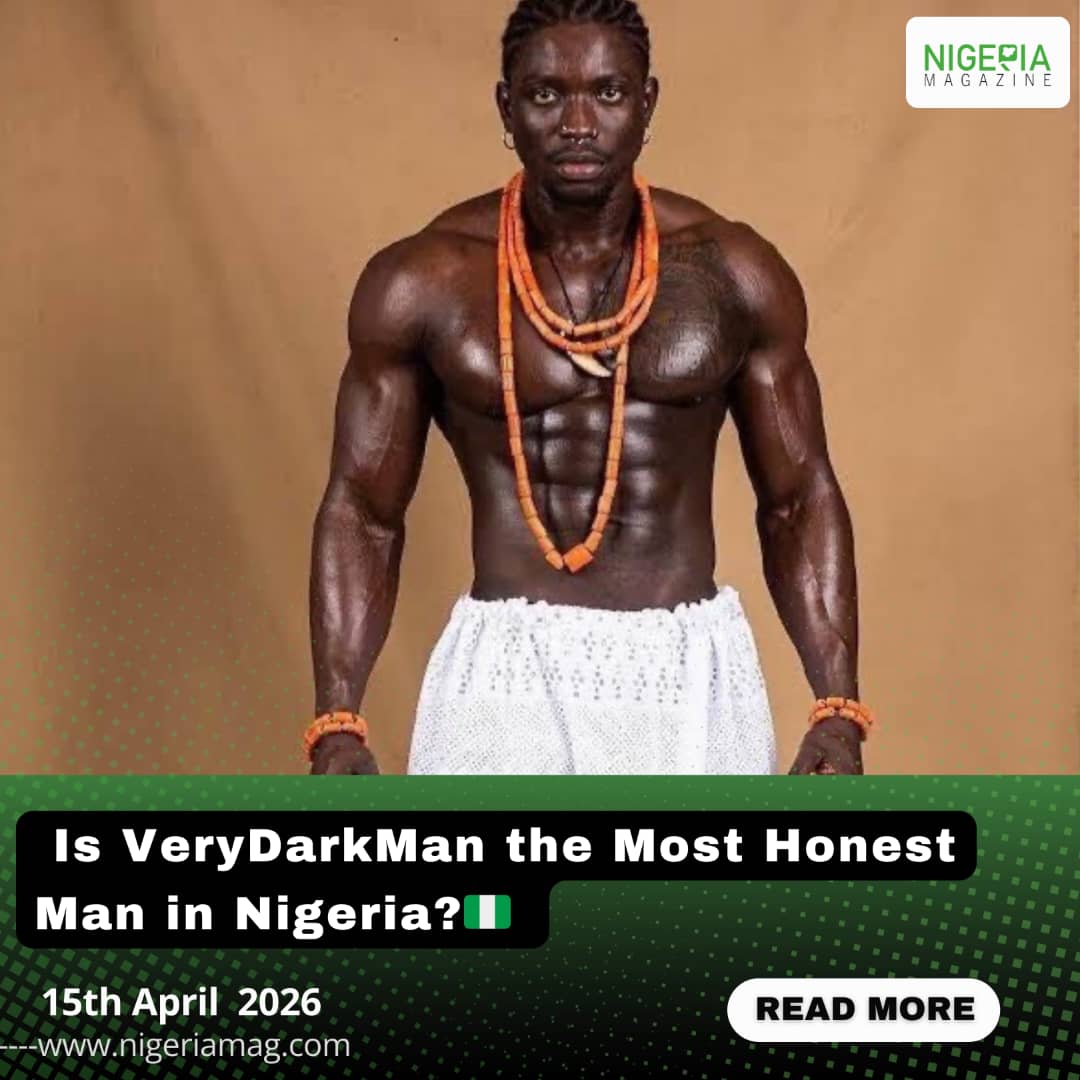
Recent Events Add Fuel to the Debate…!!!
In Nigeria’s ever-evolving digital public square, the question of honesty has taken on new urgency—especially when tied to outspoken figures like VeryDarkMan. Known for his confrontational style and viral exposés, the activist remains one of the most polarizing voices in the country. But recent events in 2026 have reignited the central question: is VeryDarkMan truly Nigeria’s most honest man, or simply one of its most controversial?
Recent Controversies: Testing Credibility
Over the past few weeks, VeryDarkMan has been at the center of a major online storm involving philanthropist King Mitchy and Seyi Tinubu, son of President Bola Tinubu.
The dispute began after King Mitchy publicized a rapid school renovation project in Delta State—an initiative she framed as proof that meaningful change can happen quickly. VeryDarkMan challenged the narrative, alleging that the project was exaggerated or misrepresented, and went further to suggest that it was politically motivated. (The Guardian Nigeria)
He publicly questioned the authenticity of the renovation and claimed to have evidence contradicting the official story. For his supporters, this was classic VeryDarkMan—digging deeper where others might accept surface-level narratives.
However, the situation escalated when he accused Seyi Tinubu of backing the project and even alleged threats to his life. Tinubu firmly denied these claims, describing them as false and unfounded. (ThisDayLive)
The fallout has been significant. A diaspora group has reportedly issued legal notice over alleged defamatory statements, further intensifying scrutiny around his methods. (The Nation Newspaper)
Supporters: “He Verifies What Others Ignore”
Despite the backlash, many Nigerians argue that these incidents actually reinforce VeryDarkMan’s reputation for honesty.
Supporters point to his insistence on questioning the school renovation narrative. They argue that in a system where public relations often overshadow accountability, skepticism is necessary. The fact that he demanded evidence—and claimed to have independent verification—has been framed as proof of integrity rather than recklessness.
This pattern is not new. In previous cases, VeryDarkMan has challenged powerful individuals and institutions, including religious leaders and public figures. Notably, he openly questioned the legitimacy of miracle products promoted by prophet Jeremiah Omoto Fufeyin, demanding regulatory proof—an action that led to a ₦1 billion lawsuit against him. (Wikipedia)
To his followers, these actions demonstrate consistency: a willingness to confront authority regardless of consequences.
A History of Risk-Taking
VeryDarkMan’s track record also includes personal risks that supporters interpret as evidence of sincerity.
He has faced multiple arrests and legal challenges over his online activism, including allegations of cyberstalking and defamation tied to his exposés. (Wikipedia) These encounters with law enforcement have, paradoxically, strengthened his credibility among fans who see him as a victim of a system resistant to scrutiny.
In 2025, he was also linked to exposing alleged misconduct in high-profile cases, including disputes involving activists and financial dealings. While not all claims were proven, his involvement often triggered public attention and, in some cases, official responses. (Wikipedia)
For supporters, this willingness to “put himself on the line” is a key marker of honesty.
Critics: “Honesty Must Be Responsible”
Yet critics argue that recent developments tell a different story.
The King Mitchy controversy, in particular, has raised concerns about the consequences of unverified claims. While VeryDarkMan insisted the school renovation was false, Mitchy later presented receipts showing she spent over ₦1 million on the project. (The Guardian Nigeria)
Additionally, Seyi Tinubu’s strong denial—and calls for factual accuracy—have fueled arguments that VeryDarkMan may sometimes act on assumptions rather than confirmed evidence. (The Nation Newspaper)
For critics, honesty is not just about speaking boldly; it is about ensuring that statements are accurate, fair, and responsibly communicated. Without these elements, they argue, even well-intentioned activism can cause harm.
Between Activism and Influence
What makes VeryDarkMan unique is his position at the intersection of activism and digital influence. He is not bound by traditional journalistic standards, yet his reach rivals that of mainstream media platforms.
This dual role complicates the question of honesty. On one hand, his independence allows him to challenge powerful figures without institutional constraints. On the other, it raises questions about accountability and verification.
Recent events highlight this tension. His allegations sparked national conversation—but also legal threats, public denials, and reputational risks for those involved.
Public Perception: Divided but Engaged
Across Nigeria, opinions remain sharply divided.
To supporters, VeryDarkMan represents courage in its rawest form—a man willing to say what others fear. His critics, however, see a pattern of sensationalism that risks undermining genuine advocacy.
Interestingly, both sides agree on one thing: his influence is undeniable.
Every controversy he engages in becomes a national conversation. Every claim—whether proven or disputed—forces public scrutiny. In this sense, his impact extends beyond the question of personal honesty to a broader role in shaping Nigeria’s information landscape.
Honesty in the Eye of the Public
So, is VeryDarkMan the most honest man in Nigeria?
Recent events provide no simple answer. Instead, they reveal a more complex reality: honesty is not just about intention, but also about method, accuracy, and accountability.
For his supporters, his relentless questioning of power and refusal to stay silent are proof enough. For his critics, the same actions highlight the dangers of unchecked influence.
What is clear is that VeryDarkMan has become a defining figure in Nigeria’s digital age—one whose actions continue to challenge, provoke, and divide.
And perhaps that is the real story: not whether he is the most honest man in Nigeria, but how his presence is forcing a nation to continually redefine what honesty truly means.

