


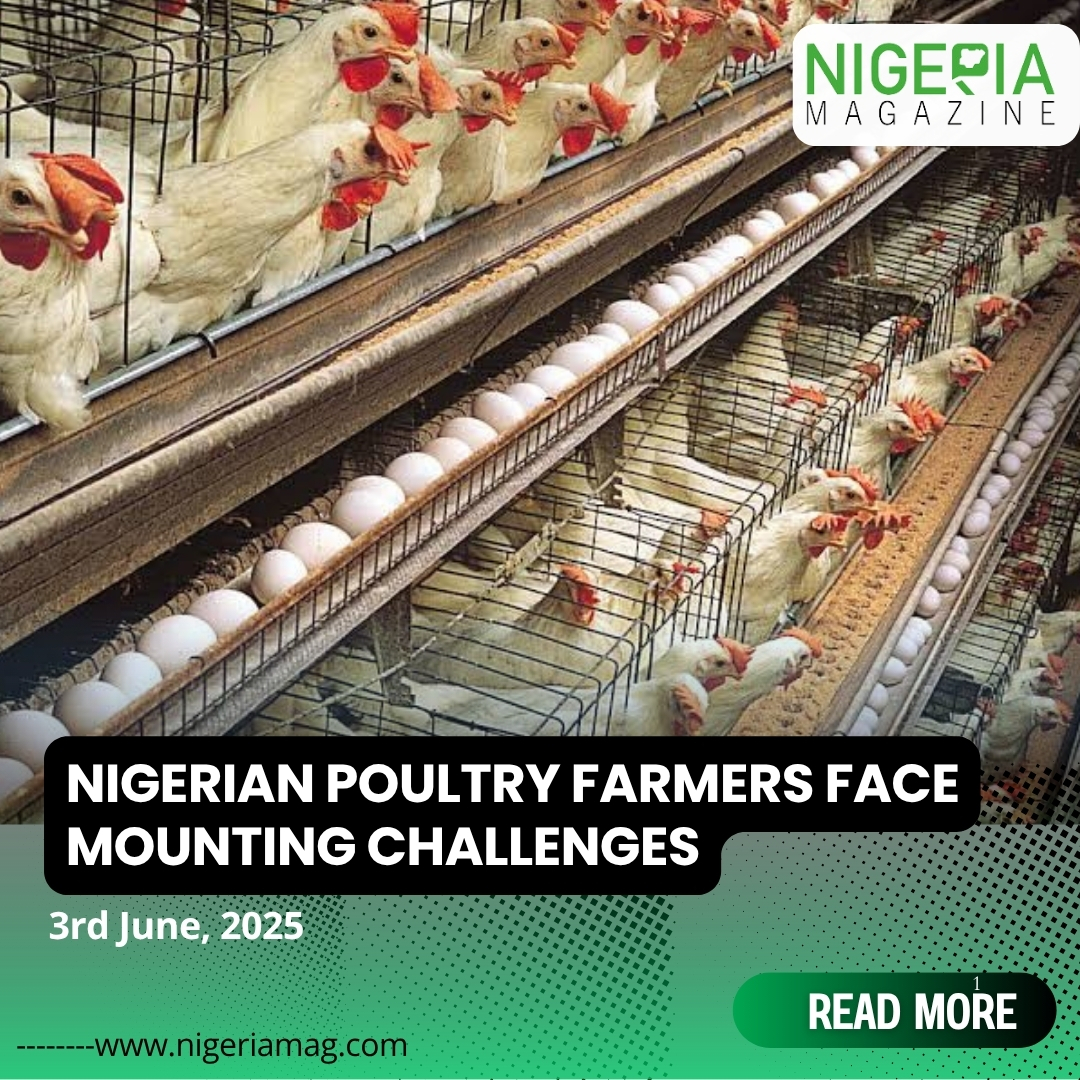
Nigeria’s poultry industry is facing significant challenges despite contributing about 25-30% to the country’s agricultural GDP. The sector produces 650,000 metric tonnes of eggs and 300,000 metric tonnes of poultry meat annually but struggles with issues like disease outbreaks, competition from cheap imports, and high operating costs.
Disease outbreaks, particularly avian influenza, have led to substantial losses, with mortality rates reaching up to 90-100% on some farms due to poor biosecurity measures. The influx of smuggled poultry products makes it difficult for local farmers to compete, resulting in reduced demand and prices for their products. High production costs, driven by constant power outages, inadequate water supply, and poor road networks, further exacerbate the situation, with feed costs accounting for 70-80% of poultry production expenses.
The cumulative effect of these challenges has led to significant losses for poultry farmers, with many struggling to stay in business. The industry’s growth and development are hindered, resulting in reduced egg and poultry meat production.
To address these issues, potential solutions include investing in infrastructure, research, and development to enhance competitiveness, providing subsidies and support to farmers, promoting local consumption, improving biosecurity, developing local feed production, stabilizing markets, and offering government support through affordable financing options and subsidies. By implementing these solutions, Nigeria’s poultry industry can recover and continue to make significant contributions to the agricultural sector.

