


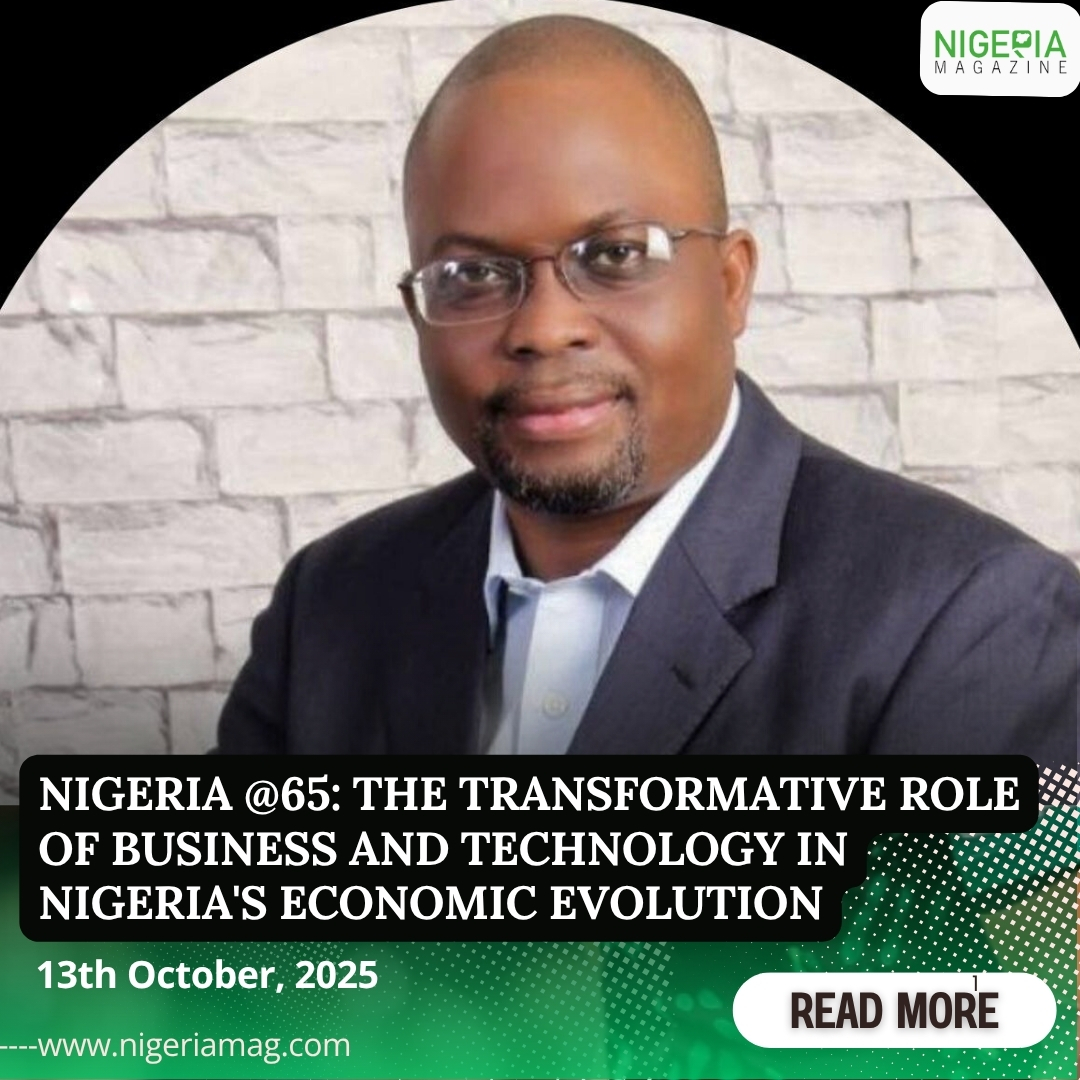
By Martins Uwoghiren
The year 2025 is a special one for Nigeria, marking 65 years of nation‐building, hopes, challenges, and reinvention. On October 1, 1960, Nigeria officially gained independence from British colonial rule. As Nigerians celebrate this momentous occasion, it’s also essential to take a step back and examine where the country has come, where it still struggles, and what the data and trends suggest about its future. This is a story about Nigeria and the promises of how business and technology can help shape a different future.
If you’re paying attention to Nigeria’s startup ecosystem, you might have seen some of the headlines in the last several years, quietly but steadily maturing. In 2024, Nigerian startups raised about USD $410 million, according to Africa: The Big Deal, which was roughly the same amount raised in 2023. The headline numbers were huge raises for two startups: Moove (a vehicle‐financing mobility startup) and Moniepoint (a fintech payments platform). Each company raised about USD $110 million in its rounds. Significant raises in a startup ecosystem like Nigeria’s are always a signal of trust. When a group of investors, whether local or global, familiar or new, invests their money in startups, they’re backing a set of beliefs in scalable business models and the power of technology to solve real problems and meet genuine needs. Nigeria’s share of all startup funding into Africa in the last five years has been significant; nearly 29%, or about USD $4.4 billion out of approximately USD $15 billion raised continent‐wide from 2019 to 2023.
The top ecosystems in Africa during this period are Nigeria, Kenya, South Africa, and Egypt. Although there is variation year-to-year, and the number, value, and deals raised in Nigeria can fluctuate, Nigeria remains consistently among the top ecosystems in Africa. Lagos, Nigeria’s commercial capital, is one city in the country that has risen in global rankings. In StartupBlink’s 2024 “Startup Index” (the global ranking of startup cities), Lagos is ranked among the world’s top 100 cities for startup activity for the first time—positioned 70th globally and one of only two African cities to make the list (the other is Cairo, ranked 67th).
Startups and fintech get the most headlines, but the facts and figures around agriculture remain significant. A large majority of Nigerians still depend on farming for their livelihoods, and the share of agriculture in GDP shows that dependency while hinting at how slowly diversification has progressed. The most recent reports pegged the sector’s contribution to Nigeria’s GDP at about 23.8% in recent years.
In the fourth quarter (Q4) of 2024, agriculture contributed about 25.59% of GDP, with growth of 1.76% in that quarter compared to the third quarter (Q3) of 2024. This is encouraging in terms of some improvement in domestic food production, crop diversification, and efforts to diversify the economy away from oil and services. Yet the agriculture data also shows some troubling vulnerabilities. In the first quarter (Q1) of 2024, agriculture’s GDP contribution fell to about 21.07%, lower than in the same period of 2023 and after a relatively strong Q4 2023. Food inflation has risen sharply, and food import bills have increased partly due to disruptions in local farming caused by climate change, insecurity, and infrastructure deficits.
Estimates of the number of food-insecure Nigerians range in the tens of millions, as millions of small farmers, who produce most of Nigeria’s food, are affected by rising input costs, poor transportation and storage, and distribution challenges. Again, tech (data dashboards, digital agriculture platforms, mobile apps for weather/pest information, etc.) is one area that can help improve data, connect farmers to buyers more directly, and enable faster scaling to address these gaps in time.
However, Nigeria has achieved numerous significant successes and spawned multiple unicorns. For example, Moniepoint became the latest Nigerian unicorn in a Series C funding round of USD $110 million led by Development Partners International (backed by Google and others). The company plans to use that capital to expand across Africa and grow its domestic market share in Nigeria, where it already boasts over 20 million subscribers and over 500,000 users who actively use their accounts monthly.
Moove, the transport and logistics startup that helps drivers in Nigeria (and other African markets) finance vehicles for ride-hailing, logistics, and delivery services, has raised USD $100 million in a Series B round, valuing the company at approximately USD $750 million, according to TechCrunch. The company, which has closed over 100,000 vehicle financing transactions across its networks in six countries, is in the process of finalizing a new round of funding, according to multiple sources.
As promising as some of these facts and figures sound, Nigeria still faces major structural issues that, if not addressed, could slow or even reverse the gains being made. In agriculture, for example, the sharp decline in food production in some regions is linked to climate change, including rising temperatures, more erratic rainfall, and the lack of resilient infrastructure, such as dams or irrigation systems, to mitigate these effects. A farmer in Sokoto state, for example, might tell you that the nearby river that used to flow year‐round has dried up. Without the river, there is little way to irrigate farms unless he invests in (and can access) more expensive pumps or other irrigation systems.
Funding levels have experienced some variability. While the total funding for 2024 (approximately USD $410 million) remains consistent with 2023, data indicate a decrease in the number of funding successfully closed in 2024. The Fintech and mobility industries based in Lagos are among the exceptions when compared to other sectors or states within Nigeria. There are challenges with fluctuations in currency, inflation, unsteady power supply, and frequent government policy changes, which contribute to increased costs and risks for doing business.
Additionally, food insecurity has remained a significant challenge. According to the World Food Programme, approximately 31 million Nigerians are affected by food insecurity, exacerbated by increasing food imports, rising prices, and diminishing agricultural yields. Contributing factors include insecurity resulting from conflict and theft, land degradation, limited cold storage and transportation infrastructure, as well as the impacts of climate change.
If these obstacles are not a surprise, the next question is what can be done? The Nigerian government, civil society, local entrepreneurs, global investors, and development partners can all play a part. For Nigeria’s business and tech sectors, some levers hold exceptional promise if the right environment, policies, and support mechanisms can be put in place.
ICT in agriculture, such as mobile phone apps that provide weather forecasts, early warning systems for diseases and pests, price information, and direct market access for farmers, can increase yields, reduce losses, and narrow the gap between rural producers and urban consumers. Studies suggest that infrastructure deficits, poor connectivity, and low digital literacy hold back the adoption of such technologies. Still, where they can be overcome, the results can be striking.
In education, online learning platforms, digital tools, and remote learning technologies can help reach Nigeria’s massive youth population, much of which lives in underserved or rural areas with limited access to physical schools or where existing schools are understaffed. Fintech and mobile banking have already brought financial services to millions of Nigerians who were previously excluded. This alone increases inclusion and economic participation, especially for rural communities and informal sector workers.
Energy is another huge opportunity. With millions of homes and businesses suffering from power outages and unreliable grid access, decentralized solutions such as solar mini‐grids, home and community solar units, and reliable local manufacturing and financing options present untapped potential. Businesses that can tap into this demand with locally innovated, affordable products and dependable, fair financing tend to unlock both profits and benefits for society at large. Promoting more “mega deals” within Nigeria can be beneficial, but diversifying technology investments across other industries, such as health, education, agriculture, and climate, ensures that the benefits of expanding the development of business and technology are broadly distributed.
Nigeria is likely to consolidate its role as Africa’s tech and business powerhouse by 2030, if current trends continue and its growth remains inclusive. Startup funding should continue to grow, especially if global capital returns and local regulations become clearer and more supportive, while policy frameworks stay steady or become more predictable and encouraging. There will be more unicorns and more Nigerian founders who have not come up through traditional tech hubs like Lagos or Abuja. More sectors, more geographies will be represented as Nigeria’s startup and business ecosystem matures.
The real question will be whether these benefits and successes will have a broad impact that will ensure that fewer people are food insecure, power is available more consistently to underserved areas, rural youth benefit from digital skills training, climate challenges are addressed before they undercut agricultural efforts, etc.
Celebrating Nigeria’s independence should mean more than merely revisiting history, dwelling on the past, or being pessimistic about current events. It requires having the vision and investments to support business and technology that will create a lasting change. With the proper focus and support, they have the potential to unlock even more of Nigeria’s promise than the founding dreams of 1960.
Martins Uwoghiren
CIO | IT Director | Senior Technology Executive | Digital Transformation | IT Audit and Security Management | ITIL, CISA, MCP, A+
Results driven technology leader with over 20 year experience planning and leading the design, implementation and integration of cutting-edge technology solutions including enterprise applications for public utilities, oil and gas, financial and educational institutions.

