


By Moses Chibuike Ezechukwu
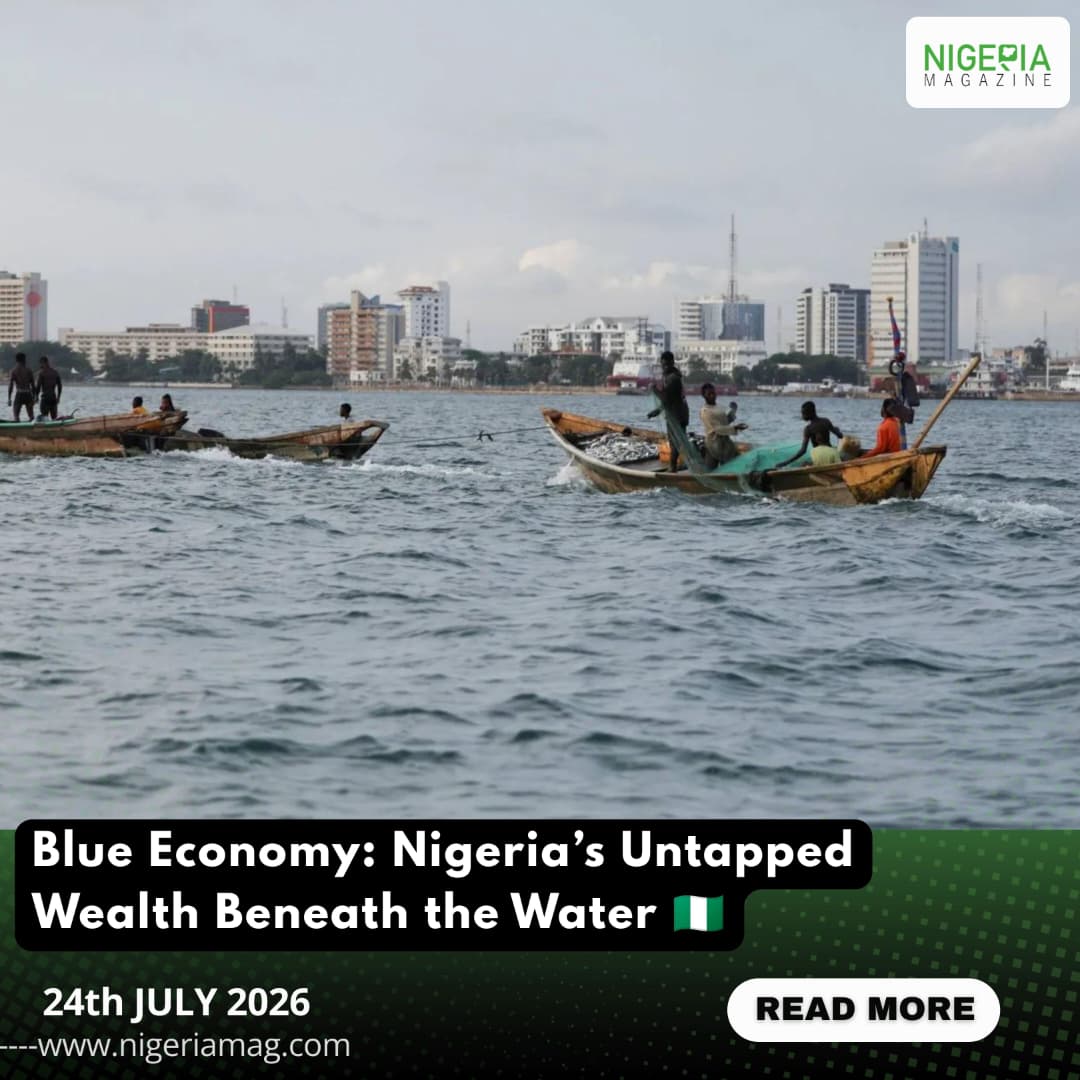
From the Atlantic coastline to the River Niger and countless inland waterways, Nigeria possesses enormous aquatic resources that remain largely underutilised. The Blue Economy presents a practical pathway for economic diversification, job creation, environmental sustainability, and long-term national prosperity.
Introduction
For decades, conversations about Nigeria’s economy have revolved around crude oil, agriculture, and more recently, technology. Yet, hidden in plain sight is another resource with the potential to transform the nation’s future—its vast marine and inland water resources.
Stretching across approximately 853 kilometres of Atlantic coastline and blessed with rivers, lakes, creeks, and wetlands, Nigeria is naturally positioned to become a leading player in Africa’s Blue Economy. Unfortunately, these resources have not received the attention they deserve.
The Blue Economy is more than fishing or shipping. It is a modern economic model that promotes the sustainable use of oceans, rivers, lakes, and coastal resources to create jobs, improve livelihoods, stimulate innovation, and protect the environment for future generations. The World Bank defines it as the sustainable use of ocean resources for economic growth while preserving the health of marine ecosystems.
As countries around the world invest heavily in ocean-based industries, Nigeria has an opportunity to rethink its economic priorities and unlock a new era of sustainable development.
Understanding the Blue Economy
The phrase “Blue Economy” may sound new to many Nigerians, but its principles are straightforward. It encourages nations to generate wealth from water resources without destroying the ecosystems that support them.
Rather than exploiting marine resources recklessly, the Blue Economy focuses on balancing economic growth with environmental conservation. This includes industries such as fisheries, aquaculture, maritime transport, port development, coastal tourism, renewable ocean energy, marine biotechnology, and even underwater mineral exploration.
Unlike traditional economic models that often prioritise short-term profits, the Blue Economy recognises that healthy oceans and waterways are essential for long-term prosperity.
Why Nigeria Cannot Ignore This Opportunity
Nigeria’s strategic location along the Gulf of Guinea gives it a significant advantage in maritime trade. The country’s ports serve as gateways to West and Central Africa, while its rivers connect communities, businesses, and agricultural centres across several states.
Yet, despite these advantages, much of Nigeria’s maritime potential remains untapped. Poor infrastructure, illegal fishing, pollution, inadequate investment, and weak policy implementation have prevented the sector from reaching its full capacity.
Experts believe that if properly harnessed, Nigeria’s marine economy could generate millions of jobs and contribute trillions of naira annually to the national economy.
At a time when the country seeks to reduce dependence on oil revenue, the Blue Economy offers a practical alternative.
Key Sectors Driving the Blue Economy
Fisheries and Aquaculture
Fish remains one of the most consumed sources of protein in Nigeria. Yet, local production still falls short of national demand, forcing the country to rely heavily on imports.
Expanding sustainable aquaculture can improve food security, reduce imports, create employment, and increase rural incomes. Modern fish farming techniques also reduce pressure on wild fish populations while maintaining ecological balance.
Supporting local fish farmers with access to finance, improved technology, and better market opportunities would significantly strengthen the industry.
Maritime Transport and Shipping
Over 80 percent of global trade is transported by sea, making maritime transport one of the world’s most important economic sectors.
Nigeria’s ports in Lagos, Onne, Calabar, Warri, and Port Harcourt already play vital roles in regional commerce. However, improving port efficiency, reducing congestion, modernising infrastructure, and investing in inland waterways could dramatically boost trade and lower transportation costs.
An efficient maritime transport system also attracts foreign investment and strengthens Nigeria’s competitiveness within the African Continental Free Trade Area (AfCFTA).
Coastal Tourism
Nigeria’s coastline is rich with beautiful beaches, mangrove forests, cultural heritage, and unique biodiversity.
With better infrastructure, security, and environmental management, coastal tourism could become a major source of revenue while supporting thousands of small businesses in hospitality, transportation, entertainment, and local crafts.
Countries like Seychelles and Mauritius have demonstrated how sustainable tourism can significantly contribute to national income while preserving natural ecosystems.
Marine Renewable Energy
The ocean is increasingly becoming a source of clean energy through offshore wind, tidal power, and wave energy technologies.
Although Nigeria is still at an early stage, investing in marine renewable energy could diversify the country’s energy mix while supporting global climate goals and reducing dependence on fossil fuels.
Environmental Protection Must Remain a Priority
Economic growth should never come at the expense of environmental destruction.
Plastic pollution, oil spills, illegal dumping, coastal erosion, and overfishing continue to threaten Nigeria’s aquatic ecosystems. These challenges not only damage biodiversity but also reduce the productivity of fisheries and tourism.
Protecting mangrove forests, restoring wetlands, enforcing environmental regulations, and promoting sustainable fishing practices are essential if the Blue Economy is to succeed.
Healthy ecosystems are not obstacles to development—they are the foundation upon which sustainable economic growth depends.
The Role of Government and the Private Sector
The establishment of Nigeria’s Federal Ministry of Marine and Blue Economy signalled a growing recognition of the sector’s importance. However, policy announcements alone are not enough.
Real progress requires investment in modern ports, maritime education, research, digital technologies, coastal infrastructure, and stronger collaboration between government agencies and private investors.
Universities should also expand programmes related to marine science, ocean engineering, fisheries, environmental management, and maritime logistics to prepare a skilled workforce for emerging opportunities.
Private companies, financial institutions, and international development partners all have important roles to play in financing innovation across the sector.
Opportunities for Nigerian Youth
Perhaps one of the most exciting aspects of the Blue Economy is its potential to create employment.
Young Nigerians can build careers in marine engineering, aquaculture, shipping logistics, environmental consultancy, underwater robotics, coastal tourism, ocean research, maritime law, renewable energy, and digital technologies supporting maritime operations.
Entrepreneurs can also identify business opportunities in seafood processing, cold-chain logistics, eco-tourism, boat manufacturing, waste recycling, and marine technology services.
With the right support, the Blue Economy can become a powerful engine for youth empowerment and economic inclusion.
Looking Ahead
The future of Nigeria’s economy may not lie solely beneath the ground but also beneath the water.
Around the world, nations are recognising that oceans, rivers, and coastal ecosystems are valuable economic assets when managed responsibly. Nigeria has every reason to embrace this global shift.
Unlocking the Blue Economy will require vision, strategic investment, sound environmental policies, and a commitment to sustainability. It will also require citizens to see water not merely as a natural resource, but as a source of opportunity, innovation, and national prosperity.
If Nigeria gets it right, the Blue Economy could become one of the country’s greatest economic success stories in the decades ahead.

