


By Kede Aihie
A few days ago, former Attorney General of Nigeria, Abubakar Malami, SAN, was in the news over forfeited assets worth ₦212 billion linked to him.
Not to be outdone, former Governor of the Central Bank of Nigeria, Godwin Emefiele, has also been in the headlines. Courts have granted final forfeiture orders against properties linked to him, as well as millions of dollars. Yes — over a million dollars, and more.
Brazen corruption is hard to believe for many, but it is happening. To my mind, we need a new approach to this problem. It has been normalized for too long. If we treat corruption as a systemic ailment, not just isolated cases, then real treatment becomes possible. Yet no serious studies have been done on those convicted of corruption to understand what drives such reckless behavior.
Godwin Emefiele served as CBN Governor from 4 June 2014 to 9 June 2023, when President Bola Tinubu suspended him. During his first term, he ran an interventionist currency policy at the direction of the presidency, propping up the naira by pumping billions of dollars into the foreign exchange market. He also introduced a multiple exchange rate regime to mask pressure on the naira and delay devaluations.
In 2019, the Senate approved a second five-year term for Emefiele — the first time anyone had served two terms since Nigeria’s return to democracy in 1999. Senate President Bukola Saraki read President Muhammadu Buhari’s letter on 9 May 2019. Emefiele was screened and confirmed on 16 May 2019.
In 2022, Emefiele sparked controversy by being linked to the 2023 presidential race. This was seen as a breach of the CBN Act, which requires the governor to remain apolitical. Campaign posters surfaced in Abuja, and a group claiming to be rice farmers bought the APC presidential nomination form in his name. Emefiele publicly denied any ambition to run, but later filed a suit at the Federal High Court in Abuja to stop INEC and the Attorney General from disqualifying him. The court declined his request but allowed arguments. The episode triggered lawsuits from citizens and civil society groups demanding his removal.
On 9 June 2023, President Tinubu suspended Emefiele with immediate effect, citing an ongoing investigation and planned reforms. He was directed to hand over to Deputy Governor Folashodun Adebisi Shonubi, who served as Acting Governor.
What followed were arrests and prosecutions. The DSS confirmed arresting Emefiele on 10 June 2023. A video of him being escorted to a private jet circulated widely. He was first charged in July 2023, then re-arrested by the DSS on 25 July 2023 at the Federal High Court in Lagos.
On 5 April 2024, the EFCC filed fresh charges alleging he fraudulently allocated $2 billion in foreign exchange between 2022 and 2023 without proper authorization. Court actions continued with an interim forfeiture on 24 May 2024 of $4.7 million, ₦830.8 million, and several properties. On 22 June 2024 there was a final forfeiture of properties worth over ₦12.18 billion to the federal government. More recently, the Federal High Court in Lagos, with Justice Ayokunle Faji presiding, ordered final forfeiture of $1.4 million following an EFCC application filed on 25 June 2024.
EFCC investigator David Jayeoba stated in an affidavit that the funds were suspected proceeds of unlawful activity traced to Donatone Limited’s account with Titan Trust Bank. He said investigations showed the money was placed in interest-yielding accounts, laundered through a foreign account in Mauritius, and later returned to Nigeria under false pretenses. In effect, Emefiele moved from leading the apex bank to suspension, criminal charges, and large-scale asset forfeitures after a brief foray into partisan politics.
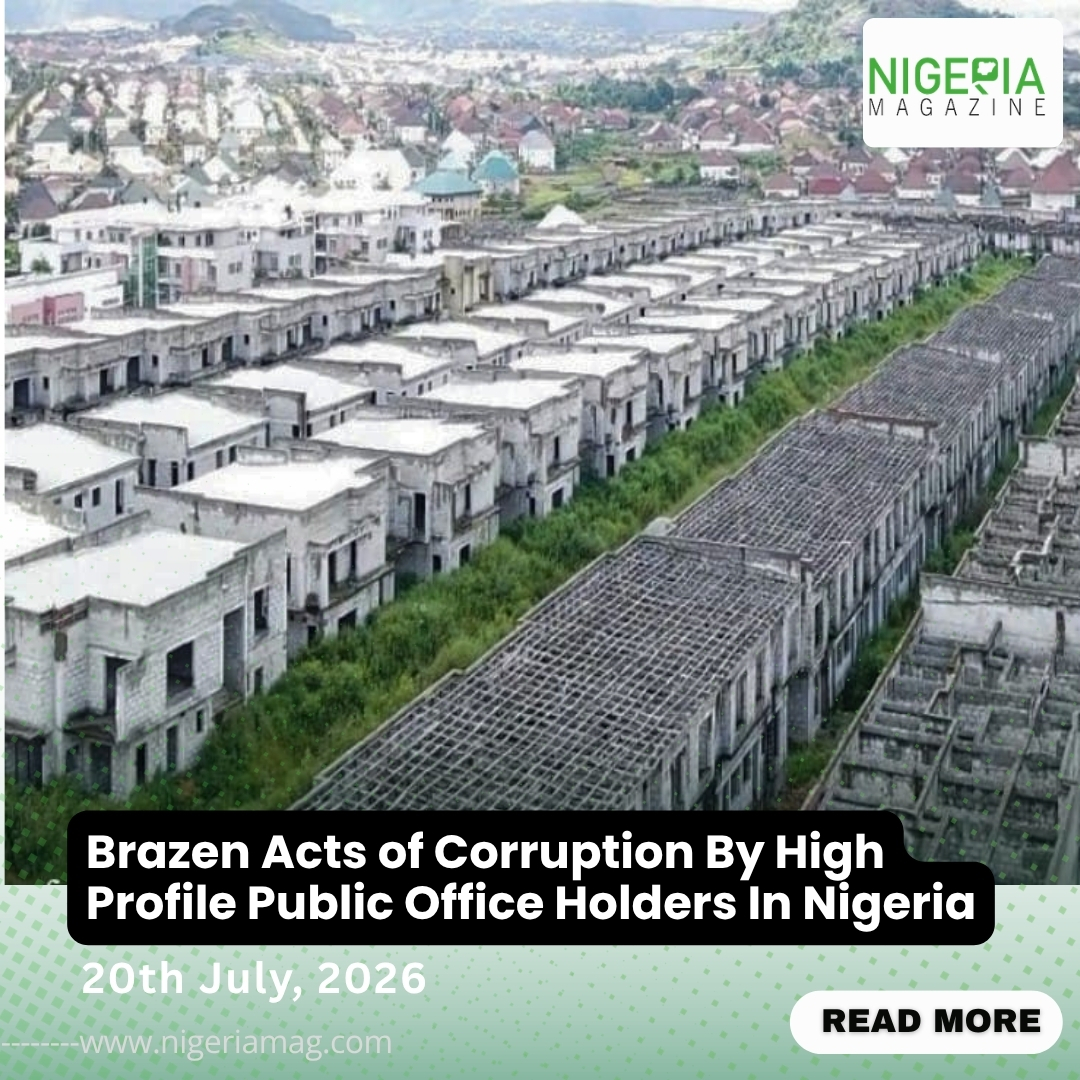
The scale of recovered assets has also grown. On 20 May 2025, the EFCC handed over a recovered Abuja estate of 753 housing units traced to Emefiele to the Ministry of Housing and Urban Development. According to the EFCC, the estate spans 150,500 square metres on Plot 109, Cadastral Zone C09, Lokogoma District, Abuja, and was forfeited to the federal government following a final forfeiture order issued on 2 December 2024 by the Federal High Court in Abuja. EFCC Chairman Ola Olukoyede formally transferred the property to the ministry in a brief ceremony at its headquarters in Abuja. The housing minister confirmed receipt and outlined plans for the assets. The estate comprises duplexes and other apartment units. Emefiele has appealed the forfeiture order.
Corruption festers because it has been institutionalized. There are many more high-profile cases of graft, and hardly any institution or sector appears immune from the theft of public funds. The tragedy is that those in government for four to eight years often seem to get away with what looks like the perfect crime. Several factors are at play. There are weak accountability frameworks that fail to check power in real time. There is a lack of oversight from the National Assembly. The political system rewards profligate, cash-driven politics. And the judiciary, police, and anti-corruption agencies remain compromised, under-staffed, under-trained, and focused on reaction instead of prevention. Until we address these root causes, forfeitures will remain headlines instead of deterrents.

