


By Kede Aihie
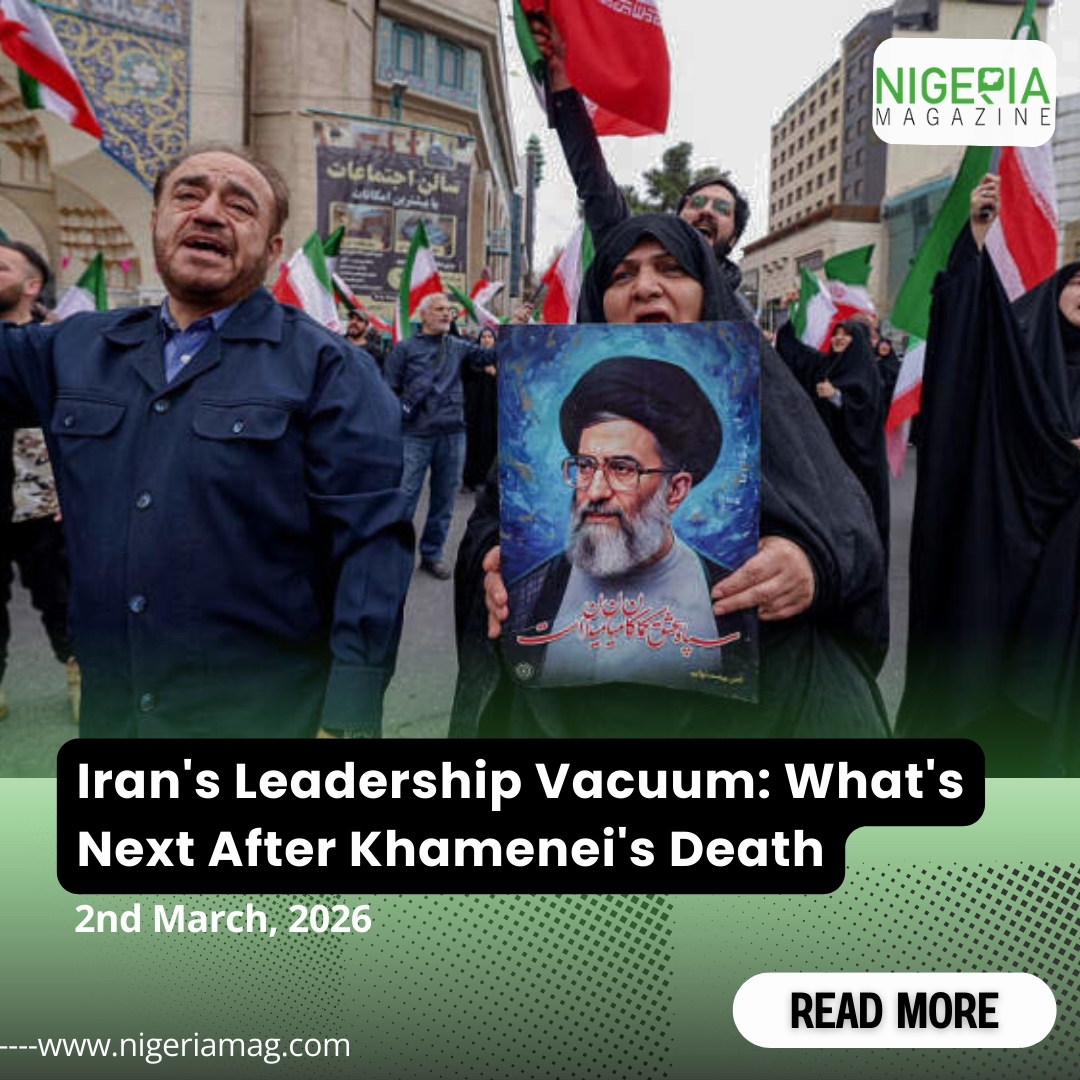
The death of Ayatollah Ali Khamenei, Iran’s Supreme Leader, has plunged the country into uncertainty. According to United States President Donald Trump, leading candidates to succeed in Iran’s government have been killed, complicating efforts by the US to engineer a swift political succession in Tehran.
An Interim Leadership Council, comprising President Masoud Pezeshkian, Supreme Court Chief Justice Gholam-Hossein Mohseni-Eje’i, and cleric Alireza Arafi, will temporarily handle duties until a new leader is elected. The Assembly of Experts, an 88-member clerical body, will convene to select Khamenei’s successor, requiring a two-thirds majority.
Potential candidates include Mojtaba Khamenei, Khamenei’s son, who is influential but lacks senior clerical standing. Ali Larijani, a pragmatic conservative with deep establishment ties, is another contender. Alireza Arafi, an established cleric with bureaucratic experience, and Hassan Khomeini, grandson of Iran’s revolution founder with moderate views, are also in the running. The Islamic Revolutionary Guard Corps (IRGC) will likely play a significant role in shaping the succession process.
The economic implications are already being felt, with oil prices soaring 13% in Asia and Brent crude hitting $82.37 a barrel, the highest in over a year. Gold prices have also jumped 1.3% .

