


(Society & Generations)
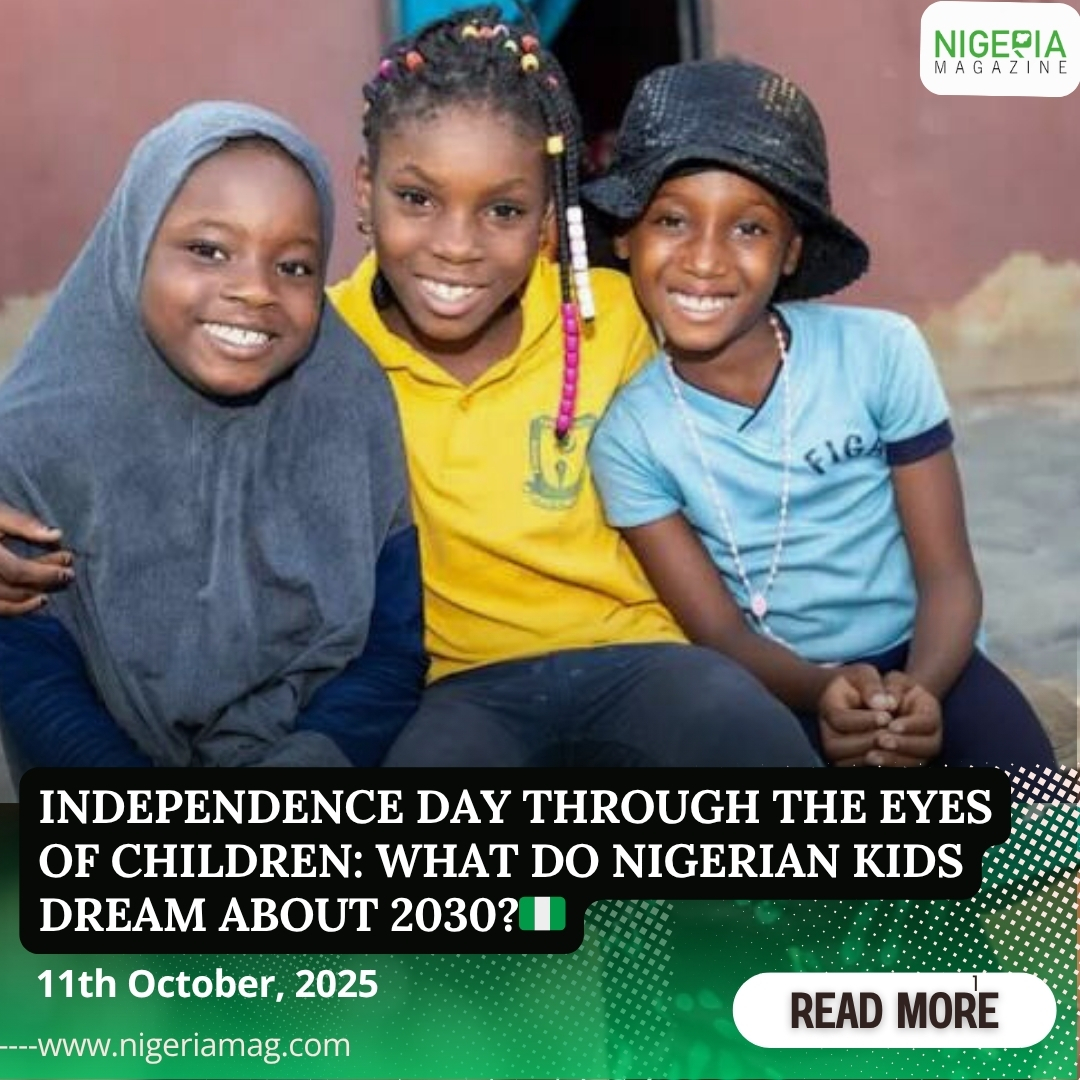
Every year on October 1st, Nigeria pauses to celebrate its Independence Day — a moment that stirs both pride and reflection. Flags wave high, parades march through city streets, and speeches echo across the airwaves. But amid the ceremonies and nostalgia, a quieter story unfolds — that of Nigeria’s youngest citizens. These are the voices not yet weighed down by history, whose visions for the nation’s future shimmer with innocence and possibility.
As the country marks 65 years of independence in 2025, the question arises: what does Nigeria look like through the eyes of its children? And more importantly, what do they dream about for the Nigeria of 2030?
A Generation of Digital Dreamers
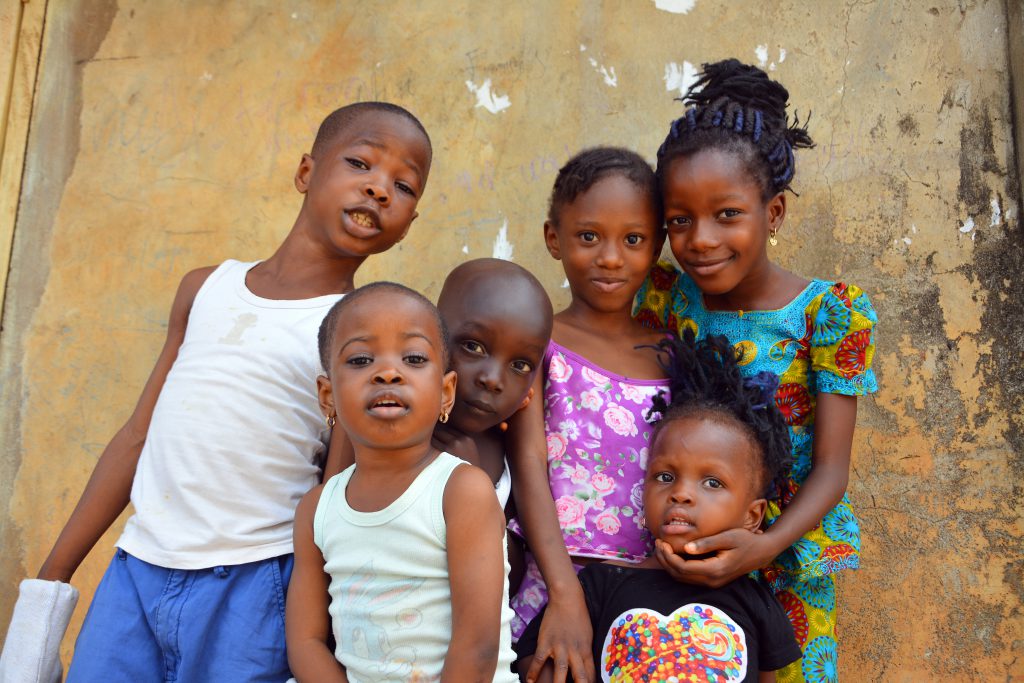
In classrooms from Lagos to Maiduguri, children are growing up in a Nigeria that is rapidly changing. Smartphones are nearly as common as textbooks, and many children can navigate YouTube or TikTok before they can write a full paragraph. This digital fluency is shaping how they see their world — and their country’s future.
“I want to build robots that can clean the streets,” says 10-year-old Amina from Kano, her eyes lighting up as she describes her dream. “Nigeria will be very clean by 2030. We can use robots to pick up dirt and help people.” Her teacher nods proudly, adding that the school recently began a coding club — part of a growing national push to introduce STEM education early.
Children like Amina are emblematic of a broader trend. Across Nigeria, more schools are integrating technology into learning, and young minds are imagining futures filled with drones, solar farms, and AI-powered classrooms. In their dreams, Nigeria in 2030 is bright, efficient, and globally competitive — a place where innovation solves everyday problems.
“We Want Lights That Never Go Off”
Yet, not all dreams are futuristic. For many Nigerian children, the vision of 2030 begins with something far simpler: stability.
Twelve-year-old Chibuike from Enugu dreams of a Nigeria where “the light will never go off.” His words, met with laughter from his classmates, reflect a reality that millions still live daily — intermittent electricity, fluctuating power supply, and dark nights that interrupt study and play alike.
For children in rural areas, these dreams carry even deeper significance. “If we had light, we could read more,” says Grace, a 9-year-old from Taraba State. “Sometimes I use my father’s phone torch to do my homework.”
To them, 2030 isn’t just about flying cars or high-speed trains. It’s about reliable power, safe roads, working hospitals, and schools where teachers have enough books and computers for everyone. These children are dreaming of the fundamentals — a fair shot at a better life.
Hope, Not Cynicism
Unlike many adults, children rarely speak with the language of despair. They see problems, yes, but they instinctively reach for solutions.
“I want to be President one day,” says 11-year-old Musa from Sokoto. “When I am President, every child will go to school. Nobody will sell water on the road.” His classmates clap and cheer — not because they think it’s impossible, but because it feels right.
Their sense of justice is unclouded by the complexities of politics or policy. For them, fairness is simple: every child deserves safety, education, and opportunity. This optimism may be Nigeria’s most valuable resource — a well of hope that replenishes with each generation.
Cultural Pride in a Global Age
Despite globalization’s pull, Nigerian children remain deeply connected to their cultural roots. On Independence Day, they march proudly in Ankara outfits, recite the national anthem with enthusiasm, and learn traditional dances from their parents.
“We speak English in school,” says 8-year-old Ope from Ibadan, “but at home, my mummy says we must speak Yoruba. She says our language is our power.”
Many Nigerian schools are reintroducing indigenous language classes and cultural clubs to help children connect with their identity. The result is a generation that is both proudly Nigerian and globally aware — equally comfortable with Afrobeats and coding, with proverbs and podcasts.
These children imagine a Nigeria in 2030 that embraces its diversity — where Hausa, Igbo, Yoruba, and hundreds of other ethnic groups coexist not in competition, but collaboration. They dream of a nation where religion divides no one and where festivals from Eid to Christmas are celebrated with mutual joy.
Climate, Food, and the Planet
Interestingly, many Nigerian children are now growing up aware of climate change — a topic once seen as abstract or “foreign.” Floods, heat waves, and unpredictable weather patterns have made the crisis tangible, and young voices are beginning to rise.
“I want to plant trees so we can have more rain,” says 9-year-old Chinenye from Benue. “If the rain does not come, our corn will die.”
From school gardening projects in Plateau to recycling clubs in Lagos, children are learning that their actions can shape the planet’s future. For them, 2030 is not just a date — it’s a promise. A greener Nigeria, they hope, will be a healthier one.
The Weight of Dreams
But behind every dream lies a quiet plea — for adults to listen. Children may not yet vote or govern, but they are the ones who will inherit the consequences of today’s choices. Their dreams are a moral compass pointing toward what matters most: education, peace, equality, and opportunity.
“By 2030, I want Nigeria to be a country where children are not afraid,” says 13-year-old Fatima from Kaduna softly. “No more fighting, no more kidnapping, no more fear.”
Her words echo across regions scarred by insecurity — from insurgencies to banditry. For many Nigerian children, peace is not an abstract idea; it’s a daily wish. Their dreams remind us that national pride must also mean national protection — of every child, in every corner.
Listening to the Future
As Nigeria celebrates its independence, it’s worth asking not only how far the nation has come, but where its youngest citizens hope to go. Their vision of 2030 is not utopian — it’s practical, compassionate, and deeply patriotic.
They dream of light that never goes off, schools that inspire, leaders who care, and cities that sparkle not from imported wealth but from homegrown innovation. In their eyes, independence is not just a historic event — it’s an ongoing promise: that every Nigerian child, regardless of background, will have the freedom to dream and the chance to fulfill those dreams.
If we listen closely, the message is clear. The Nigeria of 2030 will not be built solely by policies or plans — but by imagination. The imagination of millions of children who, even in the face of hardship, still see a brighter tomorrow.
And perhaps that is the most powerful thing about Independence Day: not just remembering where we came from, but daring to dream, through the eyes of those who will carry us forward.

