


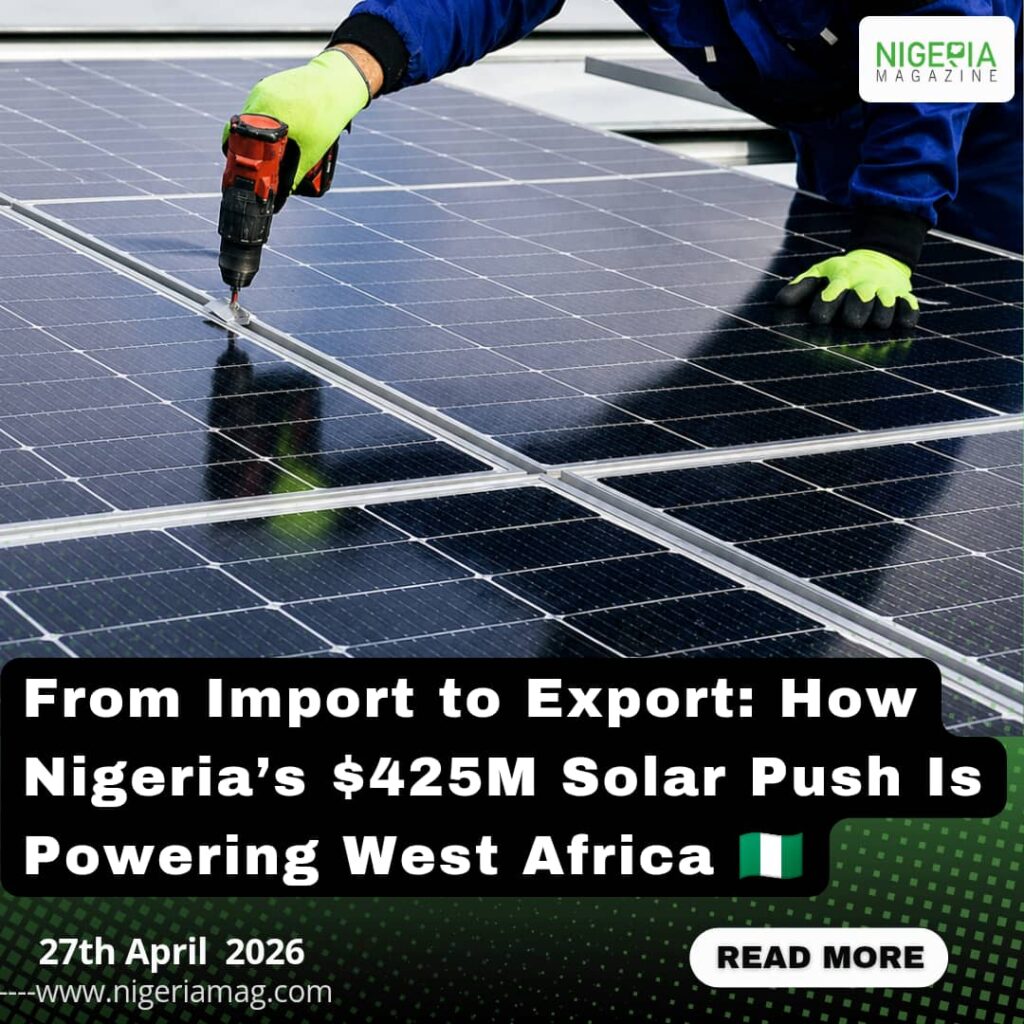
Nigeria is undergoing a quiet but transformative energy shift; moving from a heavy reliance on imported solar components to becoming a regional manufacturing and export hub. Backed by a $425 million investment secured in 2025, the country is building eight solar manufacturing plants, signaling a decisive pivot toward clean energy industrialization. At the heart of this transition is a strategic goal: localize production, reduce import dependence, and position Nigeria as West Africa’s renewable energy powerhouse.
The investment is being channeled into the development of renewable energy manufacturing facilities that will produce solar panels, components, and supporting technologies at scale. Nigeria’s solar manufacturing capacity has already grown significantly, rising from about 120MW to 300MW, with an ambitious pipeline targeting up to 3.7GW in the coming years. This rapid scale-up reflects stronger policy direction, increasing investor confidence, and a deliberate push to build local capacity. Beyond meeting domestic demand, Nigeria has also begun exporting solar products to neighboring countries such as Ghana, marking a shift from being an importer to becoming a supplier within the regional clean energy market.
Complementing this manufacturing push is a $750 million nationwide electrification program designed to expand access to reliable power, particularly in rural and underserved communities. The initiative includes the deployment of over 1,300 solar mini-grids and the integration of additional systems into the national grid. These mini-grids are decentralized energy systems that generate and distribute electricity locally using solar panels and battery storage, providing a stable alternative to Nigeria’s often unreliable grid infrastructure. The program is also structured to attract an additional $1.1 billion in private sector investment, further accelerating its implementation and impact.
This combined strategy is addressing several critical challenges at once. It is helping to close Nigeria’s energy access gap by delivering electricity to millions who currently lack reliable power, while also reducing dependence on costly and polluting diesel and petrol generators. At the same time, it is driving industrial growth by creating jobs, strengthening technical expertise, and keeping more economic value within the country. On a regional level, Nigeria’s ability to manufacture and export solar technology is strengthening its influence and positioning it as a leader in West Africa’s energy transition.
With abundant sunlight, a growing population, and rising energy demand, Nigeria is strategically positioned to lead Africa’s solar expansion. Through coordinated investments, policy support, and public-private partnerships, the country is turning its energy challenges into opportunities for economic growth and regional leadership. Nigeria’s $425 million solar manufacturing push, combined with its $750 million electrification plan, represents more than infrastructure development; it is a forward-looking blueprint for sustainable energy, industrial advancement, and long-term economic resilience across West Africa.
