


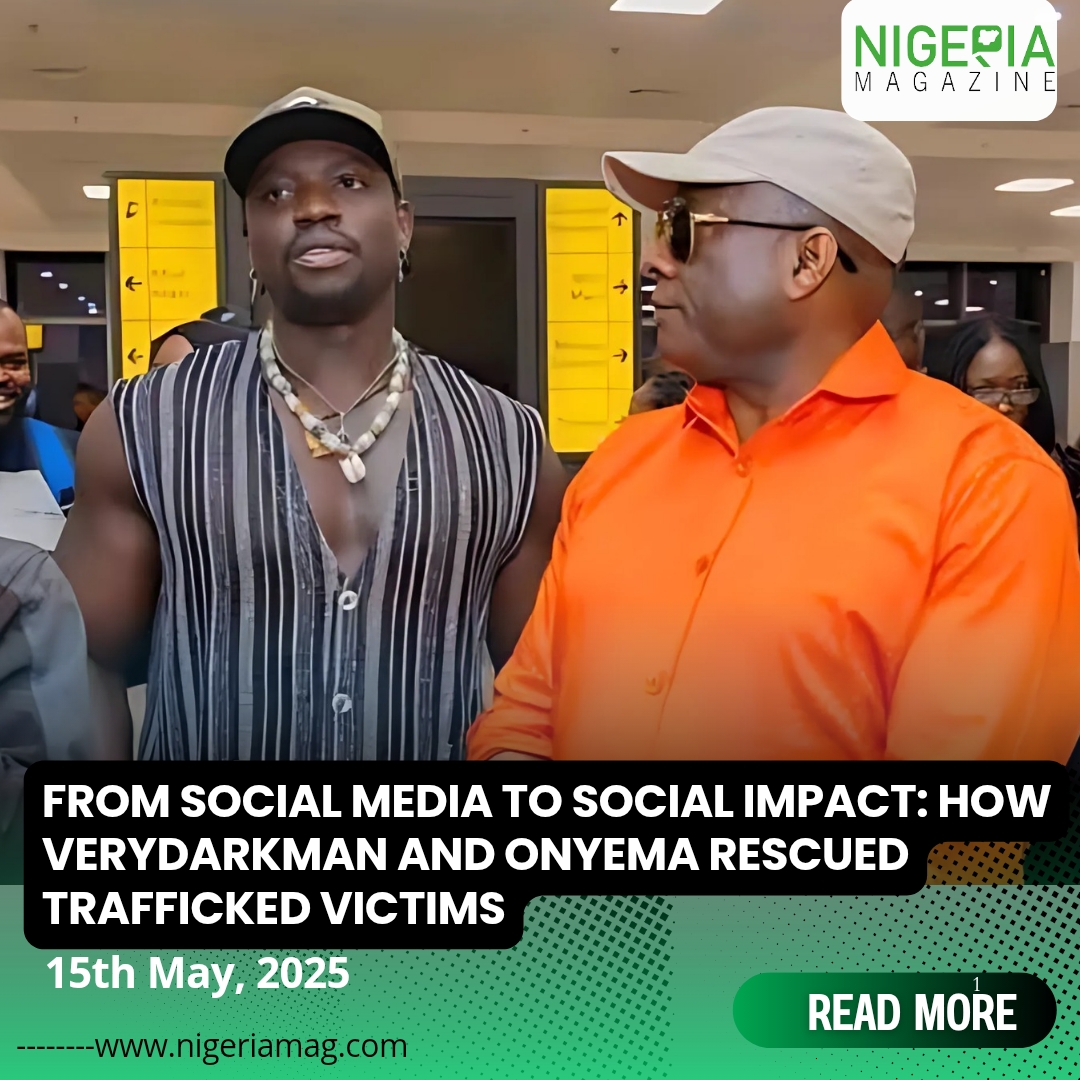
From Social Media to Social Impact: How VeryDarkMan and Onyema Rescued trafficked victims
In a country plagued by systemic issues like poverty, unemployment, and insecurity, human trafficking has thrived in the shadows, claiming thousands of vulnerable lives each year. But in an inspiring turn of events, two prominent Nigerians—social media activist Martins Vincent Otse, popularly known as VeryDarkMan (VDM), and businessman/philanthropist Allen Onyema—have stepped up to lead the charge in rescuing trafficked Nigerian girls, restoring dignity and hope where despair once prevailed.
Their recent efforts shine a spotlight on a growing wave of citizen-led activism, proving that change is possible when influence meets intention.
The Tragedy of Trafficked Nigerian Girls
For years, Nigeria has remained a hotspot for human trafficking, with young girls often deceived with false promises of jobs or education abroad. These girls, mostly underage, end up trapped in foreign lands—particularly in countries like Ivory Coast, Mali, and Libya—where they are subjected to sexual exploitation, forced labor, and inhumane conditions. The issue is not just a legal crisis but a humanitarian emergency, with entire families torn apart and communities ravaged by the consequences.
It was against this grim backdrop that the public began to take notice, thanks to a viral campaign led by VeryDarkMan, who used his social media influence to draw attention to the plight of Nigerian girls trafficked to Ivory Coast.
VDM’s Activism Beyond the Internet
Known for his bold, no-holds-barred commentary on social issues, VeryDarkMan has built a large following online. But his recent actions have shown that he is more than just a digital commentator—he is a committed activist.
On April 12, 2025, VDM announced a personal donation of ₦20 million to the National Agency for the Prohibition of Trafficking in Persons (NAPTIP). The funds were earmarked for the rescue, repatriation, and rehabilitation of underage Nigerian girls trafficked to Ivory Coast and other countries.
In a post that quickly went viral, VDM shared a receipt of the transaction, underscoring the need for transparency and calling on others to follow his lead. “This is not about clout,” he wrote. “This is about saving lives—real people, real daughters, real futures.”
This unprecedented act was followed by a strategic meeting between VDM, his legal team led by human rights lawyer Barrister Deji Adeyanju, and officials from NAPTIP. The meeting focused on collaborative efforts to expedite the rescue operations and bring the traffickers to justice.
Allen Onyema: The Quiet Force of Compassion
While VDM’s voice has been loud and clear in the media space, businessman and philanthropist Allen Onyema has quietly offered immense support. As the CEO of Air Peace, Onyema is well known for his charitable deeds, including free evacuation flights for Nigerians stranded abroad. In the case of the trafficked girls, Onyema reportedly offered logistical support to facilitate their return to Nigeria. Though less publicised, his contribution is vital in ensuring that rescued girls are safely brought back and reintegrated into society. His involvement highlights the critical role that Nigeria’s private sector can play in addressing social challenges when guided by empathy and national pride.
The Role of NAPTIP and the Government
While civil society efforts are commendable, the role of government agencies like NAPTIP remains central. The agency, which has struggled with underfunding and bureaucratic bottlenecks, received a much-needed boost from VDM’s donation and public advocacy.
The attention generated by this initiative has pressured the agency to act swiftly and more transparently. Sources within NAPTIP confirm that rescue missions have already begun, with several girls being identified and prepared for repatriation.
Minister of Humanitarian Affairs and the leadership of the Ministry of Foreign Affairs have also been briefed, setting the stage for a more coordinated, multi-agency response.
The Power of Social Media and Civic Mobilization
This campaign marks a watershed moment in Nigerian activism. Unlike traditional efforts led solely by NGOs or government institutions, this was a people-powered movement catalyzed by digital platforms.
VDM’s storytelling—through videos, interviews, and online updates—humanised the victims and galvanized action across the country. Influencers, celebrities, and everyday Nigerians donated money, shared stories, and demanded accountability from their leaders.
It’s a case study in how digital activism can lead to real-world impact when it is grounded in truth, compassion, and consistent advocacy.
Reintegration and the Road Ahead
Rescuing trafficked victims is only the beginning. The harder part lies in helping them heal and reintegrate into society. Many of the rescued girls will require psychological counseling, education, and vocational training to reclaim their lives.
VDM has called on NGOs, mental health professionals, and private companies to come forward and be part of the rehabilitation process. “These girls need more than a ticket home. They need a second chance at life,” he said. He also challenged the government to institutionalize support systems, so that future victims are not left to the mercy of goodwill alone.
A Call for Sustained Action
The collaboration between VeryDarkMan, Allen Onyema, and NAPTIP is a powerful example of what can be achieved when public influence, private resources, and institutional support converge for a common cause. But as VDM rightly stated, this is just the beginning.
Nigeria must now focus on:
Stronger border control to prevent trafficking routes.
Stricter penalties for traffickers and their accomplices.
Awareness campaigns in rural areas where most victims are sourced.
Institutional reforms in NAPTIP to improve efficiency and accountability.
In a country where trust in institutions is low and corruption is rife, the recent rescue efforts championed by VeryDarkMan and Allen Onyema offer a ray of hope. They show that it is possible to hold systems accountable, mobilise resources, and save lives—even in the face of overwhelming odds.
This is more than a feel-good story. It’s a blueprint for change. Nigeria’s daughters deserve better—and thanks to the courage of a few, they just might get it.

