


By Moses Chibuike Ezechukwu
Electric vehicles (EVs) are gradually shifting from futuristic concepts to real-world solutions across the globe. In Nigeria, this transition is still in its early stages, but the conversation is growing louder. From rising fuel prices to environmental concerns and the push for cleaner energy, EVs are beginning to represent more than just luxury—they are becoming a serious alternative worth considering.
Nigeria, Africa’s most populous nation, has long depended on petrol and diesel-powered vehicles.
However, with increasing pressure on fuel supply chains, foreign exchange volatility, and the global shift toward sustainability, the idea of electric mobility is slowly gaining attention. The question is no longer whether EVs will come to Nigeria, but how soon—and how ready the country is for them.
The Current State of EV Adoption in Nigeria
At the moment, EV adoption in Nigeria is still very limited. A few electric cars are found mostly in high-income urban areas like Lagos and Abuja, often imported as personal luxury vehicles rather than mass-market transport solutions.
Public transport electrification is still rare, though a few pilot projects involving electric buses and tricycles have begun to appear.
Companies such as local mobility startups and renewable energy firms are exploring EV solutions, especially for ride-hailing services and delivery fleets. However, infrastructure remains a major barrier. Charging stations are scarce, and many Nigerians are still unfamiliar with how EVs function in everyday use.
Despite this, interest is growing. Rising petrol prices and frequent fuel shortages have made many people curious about alternatives. In cities like Lagos, where traffic congestion and air pollution are major issues, EVs are increasingly being discussed as a long-term solution.
Why EVs Matter for Nigeria
The importance of electric vehicles in Nigeria goes beyond technology—it touches on economics, environment, and public health.
First, there is the issue of fuel dependency. Nigeria is an oil-producing country, yet it still struggles with fuel scarcity and subsidy challenges. EVs offer a way to reduce reliance on imported refined petroleum products and stabilize transportation costs in the long run.
Second, environmental concerns are becoming more visible. Major cities suffer from air pollution caused by vehicle emissions, generators, and industrial activity. EVs produce zero tailpipe emissions, which means cleaner air and improved urban living conditions.
Third, there is the economic opportunity. The EV industry could open new job sectors in vehicle assembly, battery maintenance, software systems, and renewable energy integration. With the right policies, Nigeria could become a hub for EV assembly and innovation in West Africa.
The Infrastructure Challenge
One of the biggest obstacles to EV adoption in Nigeria is infrastructure. Unlike conventional petrol stations, EVs require charging networks that are reliable, accessible, and fast.
Currently, charging stations are extremely limited. Most EV owners rely on home charging, which is only feasible for those with stable electricity supply. Unfortunately, Nigeria’s power grid remains inconsistent, with frequent outages and low generation capacity.
For EVs to scale successfully, Nigeria would need:
Reliable electricity supply
Widespread public charging stations
Incentives for private sector investment
Standardised charging systems
Without these, EV adoption will remain concentrated among a small group of wealthy early adopters.
Cost and Accessibility
Another key issue is cost. EVs are still expensive compared to traditional cars, especially when imported. Import duties, shipping costs, and currency exchange rates make them less affordable for the average Nigerian.
However, long-term savings could make EVs attractive. Electricity is generally cheaper than petrol, and EVs have fewer moving parts, which means lower maintenance costs. Over time, users could save significantly on fuel and repairs.
Locally assembled EVs could also change the equation. If Nigeria invests in local production or partnerships with global manufacturers, prices could drop and accessibility could improve.
Government Policy and Support
Government policy will play a major role in shaping the future of EVs in Nigeria. Some progress has already been made, including discussions around renewable energy adoption and transport modernization.
However, stronger action is needed. Incentives such as tax reductions on EV imports, subsidies for local assembly, and investment in charging infrastructure could accelerate adoption.
Clear regulatory frameworks are also important. Standards for charging ports, battery disposal, and vehicle safety must be established to avoid future complications.
The Role of Renewable Energy
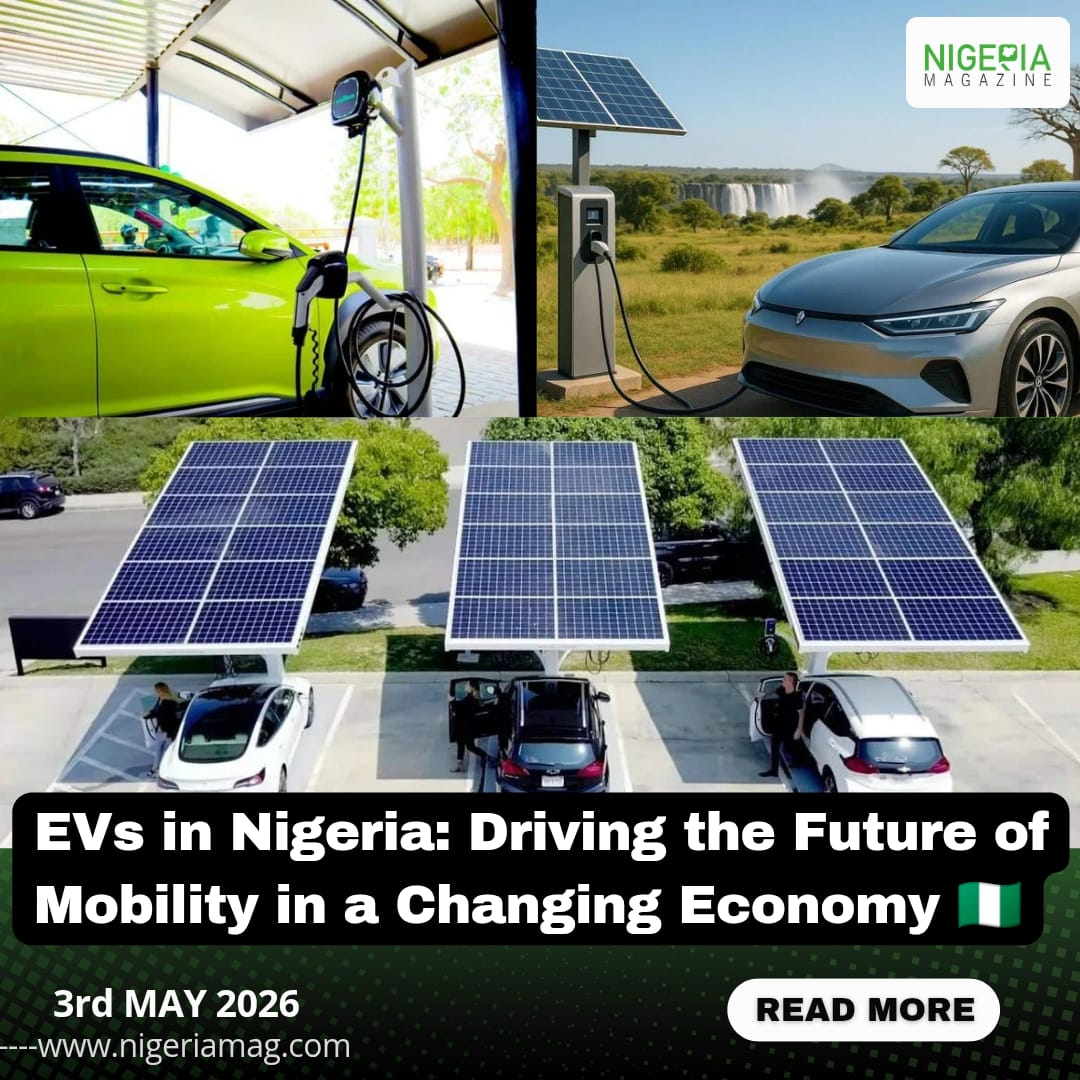
One of the most exciting aspects of EV adoption in Nigeria is the connection to renewable energy. Solar power, in particular, could complement electric mobility.
In regions with strong sunlight, solar-powered charging stations could provide decentralized energy solutions. This would reduce pressure on the national grid and make EV charging more accessible in both urban and rural areas.
Several startups are already exploring solar mini-grids and off-grid solutions, which could eventually integrate with EV infrastructure.
Public Perception and Awareness
For many Nigerians, EVs are still unfamiliar. There are concerns about battery life, maintenance, charging time, and reliability. Misinformation also plays a role in slowing adoption.
Public education will be key.
Demonstration projects, test-drive campaigns, and media awareness can help people understand how EVs work and what benefits they offer.
As more people see EVs in action—especially in ride-hailing fleets or public transport—they are likely to become more accepted.
The Road Ahead
The future of EVs in Nigeria is full of potential but also challenges. The transition will not happen overnight. It will require collaboration between government, private investors, energy companies, and consumers.
In the next decade, Nigeria could see gradual growth in electric motorcycles, buses, and delivery vehicles before private car adoption becomes widespread. Urban centres will likely lead the way, followed by gradual expansion into other regions.
What is clear is that EVs are not just a global trend—they are part of Nigeria’s evolving transportation future. With the right investments and policies, the country has the opportunity to leapfrog traditional automotive development and embrace cleaner, smarter mobility.

