


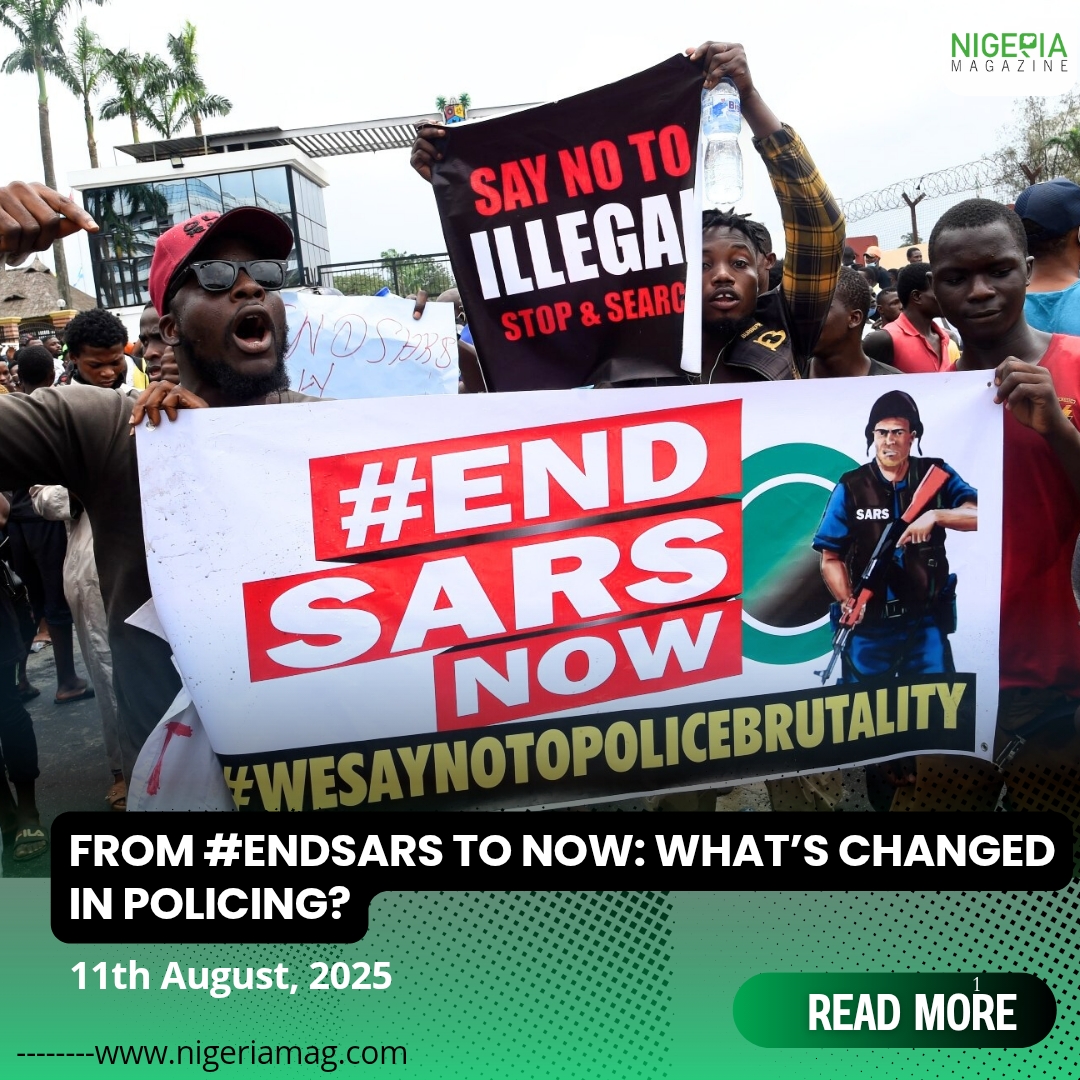
The Catalyst: #EndSARS and Its Immediate Ripples
The #EndSARS protests erupted in October 2020 following repeated reports of brutality, extortion, and extrajudicial killings by the Special Anti-Robbery Squad (SARS). The government responded by officially disbanding SARS on 11 October 2020 and creating a new unit, the Special Weapons and Tactics team (SWAT). But skepticism ran high—even the creation of SWAT triggered protests under the hashtag #EndSWAT. Judicial panels were established across the states to investigate abuses—particularly the Lagos panel, which produced 32 recommendations. However, only 11 were accepted in the subsequent white paper, and Lagos State even disputed the number of Lekki Toll Gate victims, undermining public trust.
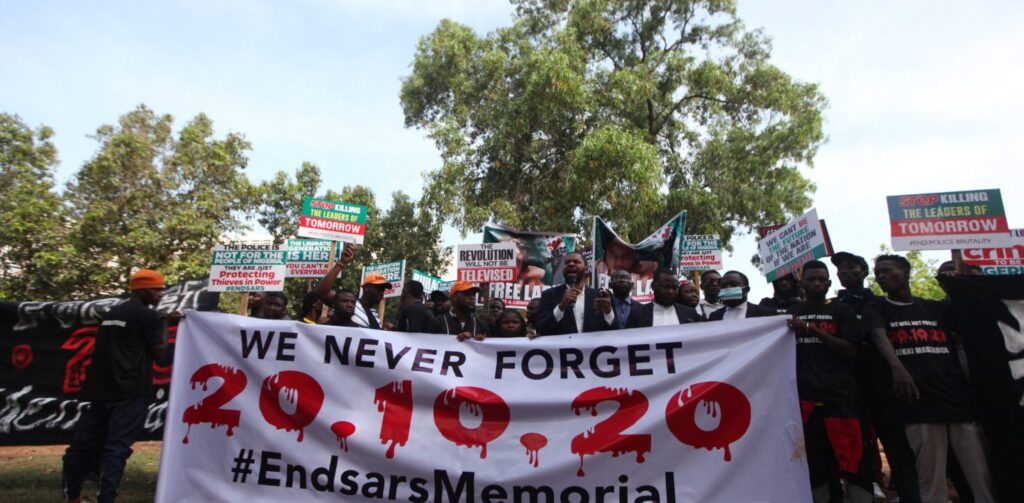
Legislative Shift: Nigeria Police Act 2020
In September 2020, just before SARS was disbanded, the National Assembly passed the Nigeria Police Act, signed into law on 16 September 2020. The legislation aimed to modernize the force, promoting transparency, accountability, and improved structure regarding appointments, discipline, welfare, and pensions. Yet, while the law represented crucial reform on paper, its implementation has been slow and uneven.
- Accountability, or the Lack Thereof
Despite the promises, accountability for crimes committed by SARS operatives remains minimal. To date, not a single officer has been criminally prosecuted under the Anti-Torture Act, even though it was a key demand of activists and passed in 2017. Also, the Complaint Response Unit—a structure intended for handling citizen grievances—has failed to publish any actionable reports or demonstrate impact.
Civil society and analysts continue to call for stronger internal and external accountability mechanisms, arguing that superficial reform cannot effectively tackle an entrenched culture of impunity.
- Ground-Level Policing: Modest Gains, Persistent Gaps
Since 2020, there have been notable but limited improvements:
Community policing initiatives received government backing and funding—e.g., ₦13 billion allocated to recruit 10,000 local constables intended to serve within their own communities.
Citizens have grown more willing to report police abuse, and the Nigeria Police has claimed to accelerate investigations and prosecute errant officers. Police salaries have also seen increments, responding partly to one of the five major protester demands.
Still, these gains are shadowed by ongoing systemic problems: widespread underfunding, poor welfare, dilapidated infrastructure, weak forensic capacity, and political interference—all of which hamper effective reform.
- Security Vacuum and Civic Space Constraints
The disbandment of SARS and the absence of a robust policing alternative coincided with surging insecurity. Weddings attacked, kidnappings, ritual killings, and robberies became frequent across regions, prompting citizens to question whether state security agencies were failing in their core duty.
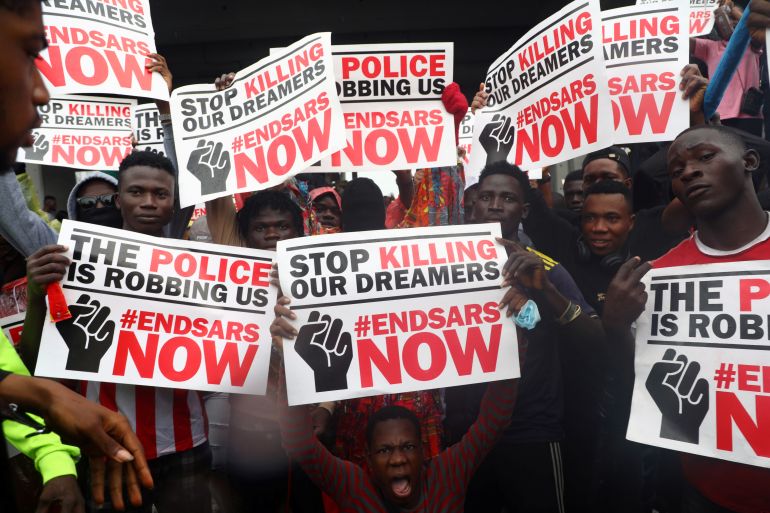
On the civic front, the government appeared increasingly adverse to dissent. For instance, ahead of the October 2021 #EndSARS memorial protests, the Lagos State Police Commissioner preemptively declared intent to clamp down on gatherings, echoing repressive precedents. Although such statements may be framed as preventing violence, they add to a climate of constrained civic space.
- Legal Reversals: Human Rights Recognition at ECOWAS
A landmark development occurred on 10 July 2024, when the ECOWAS Court of Justice found the Nigerian government guilty of human rights violations for its actions during the Lekki Toll Gate protests. The court ordered compensation of ₦10 million for each victim named in the suit—marking a rare judicial rebuke of the federal government’s heavy-handedness.
- The Voices: Public Sentiment and Reform Outlook
From street interviews to social media discussions, public commentary reveals clear frustrations and ideas:
“Only one equipment … I give you ‘THE NPF LIVE BODYCAM’ … with strict guidelines …” — highlighting the yearning for surveillance and transparency in policing.
Other voices stress a localisation and professionalisation of the police: better training, improved recruitment, incentives, and community integration.
- The Road Ahead: Towards a Decolonised, Rights-Based Policing
Beyond abolishing abusive units like SARS, analysts argue that Nigeria must fundamentally reimagine its policing paradigm. That includes embracing community ownership, where policing becomes a shared responsibility rooted in local context—rather than a colonial legacy of control. Implementing continuous human-rights education, psychological evaluation, mandatory investigations for any death in custody, and independent complaint mechanisms remain critical recommendations to transform the force’s culture.
Final Reflections
Five years after #EndSARS, Nigeria’s policing landscape reflects a mix of legislative progress, some institutional reform, and growing civic engagement—tempered, however, by weak enforcement, ongoing human rights concerns, and rising insecurity. The ECOWAS ruling opens a path for accountability, but to translate legal reforms into real change, Nigeria’s police must shift from symbolic directives to inclusive, community-grounded, rights-based practice. Without this foundational transformation, the legacy of #EndSARS risks fading into rhetoric rather than shaping durable, justice-respecting institutions.

