


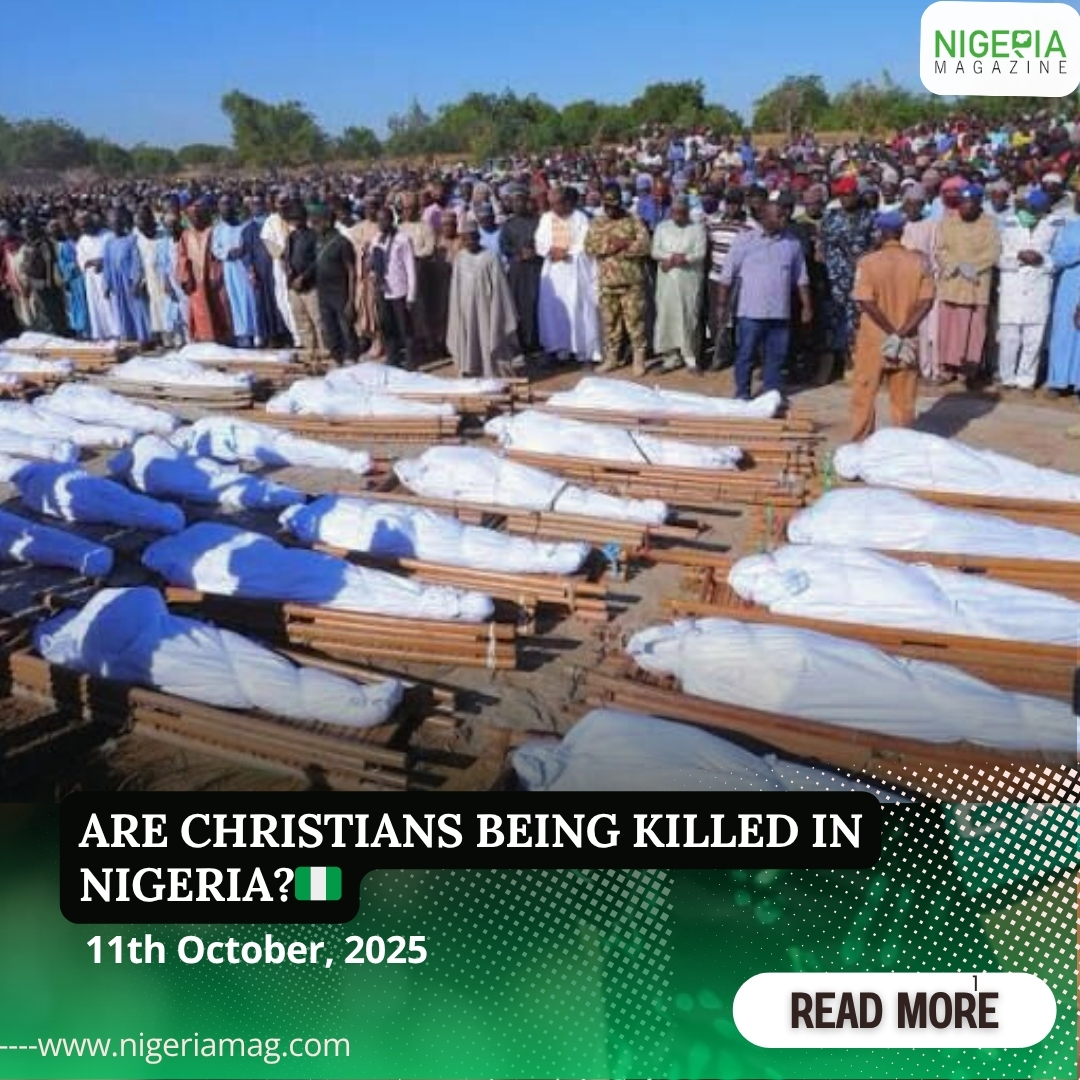
NATIONAL SECURITY | REPS REJECT U.S. BILL ALLEGING KILLING OF CHRISTIANS IN NIGERIA
The House of Representatives has rejected narratives portraying Nigeria’s security challenges as a singularly religious conflict or as a State-sponsored persecution against Christians. Lawmakers reaffirmed the country’s constitutional protections for freedom of religion and belief, emphasizing that Nigeria remains a secular nation guided by the rule of law.
This position followed a motion raised under matters of urgent national importance by the Deputy Speaker, Benjamin Kalu, and other members during plenary.
It would be recalled that on September 9, 2025, a bill titled The Nigeria Religious Freedom Accountability Act of 2025 was introduced in the United States Senate. The bill seeks to compel the U.S. Secretary of State to designate Nigeria a “Country of Particular Concern” (CPC), thereby paving the way for sanctions against Nigerian officials under Executive Order 13818 and related authorities.
Similarly, the U.S. Commission on International Religious Freedom (USCIRF) has in recent annual reports recommended that Nigeria be listed as a CPC, citing persistent violations and state failures to protect citizens from attacks by non-state actors.
However, the House expressed concern that such external legislative actions, built on incomplete or inaccurate assessments, risk undermining Nigeria’s sovereignty and misrepresenting facts about the nation’s internal security realities.
WHAT OUR LAWMAKERS ARE SAYING?
Deputy Speaker Benjamin Kalu warned against oversimplifying Nigeria’s complex security issues into a religious narrative, stressing the need to uphold the country’s unity and protect its image abroad.
House Leader Julius Ihonvbere, alongside lawmakers Oluwole Oke (Osun), Sada Soli (Katsina), and Bili Osawaru (Edo), urged the Federal Government to intensify efforts to address insecurity holistically and engage diplomatically with foreign partners to clarify the situation.
The House further resolved to set up a dialogue panel to interface with the United States for a more balanced and constructive engagement on religious freedom and national security.
Meanwhile, lawmakers also called on the National Emergency Management Agency (NEMA) to immediately provide relief materials to victims of the recent boat mishap in Kogi State.
Speaker Abbas Tajuddeen, who presided over the session, directed relevant committees to ensure prompt implementation of all legislative resolutions.
THE REALITY ON GROUND
While it is true that many Christian communities, particularly in the North and North-Central regions, have suffered attacks, the situation on ground suggests a more complex picture. Data from several independent reports reveal that most of these killings stem from tribal, political, and resource-based conflicts often disguised as religious violence.
Groups such as Boko Haram and ISWAP continue to target both Muslims and Christians in their campaigns of terror, while farmer-herder clashes, banditry, and communal violence claim thousands of lives every year. Many of these conflicts are driven by competition for land, climate change, weak governance, and ethnic rivalries, not necessarily by religious hatred alone.
Analysts also note that in some cases, attacks against Christian communities occur alongside similar violence against Muslim communities, blurring the lines between religion and other underlying causes.
RELIGIOUS FREEDOM VS SECURITY FAILURE
The USCIRF and other human-rights bodies have repeatedly faulted Nigeria for failing to protect vulnerable citizens. However, the Nigerian government maintains that it does not sponsor or condone religious persecution, insisting that the real issue lies in inadequate security infrastructure, slow judicial processes, and weak intelligence coordination.
Human rights advocates and faith leaders have called for more robust protection for worship centers, faster prosecution of perpetrators, and stronger interfaith dialogue to counter extremist ideologies.
ARE CHRISTIANS TARGETED IN NIGERIA?
The question of whether Christians are being deliberately killed in Nigeria cannot be answered with a simple “yes” or “no.”
Christians have undeniably suffered greatly from insecurity, but so have Muslims and adherents of other faiths. What remains clear is that Nigeria’s crisis is multidimensional, with religion, ethnicity, politics, and poverty all interwoven into a volatile mix.
The House of Representatives’ decision to reject the U.S. bill reflects a desire to correct misconceptions while still acknowledging the need for stronger domestic responses to protect all citizens, regardless of faith.
As Nigeria continues to battle insurgency, banditry, and communal violence, one truth stands out: every life, Christian or Muslim, matters equally. The path forward lies not in divisive narratives, but in unity, justice, and a renewed commitment to national security and peace.
Ubong Usoro for Nigeria Magazine

