



For decades, Nigerian sport has been largely defined by football. Yet by 2026, the country’s sporting narrative is increasingly shaped by achievements and opportunities in other fields. Basketball, athletics and esports are emerging as critical pillars of Nigeria’s sporting identity, offering new avenues for global recognition, youth engagement and economic growth. While challenges remain—particularly in funding, governance and infrastructure—the trajectory of these sectors suggests that Nigeria’s sporting future may be more diverse than ever before.
Basketball: Resilience Amid Structural Challenges
Basketball remains one of Nigeria’s most visible non-football sports, largely due to the success of the national teams and the presence of Nigerian players in global leagues. The men’s national team, Nigeria men’s national basketball team (popularly known as D’Tigers), showed mixed fortunes in recent years. At the FIBA AfroBasket 2025 tournament in Angola, the team finished fifth overall after reaching the quarter-finals, having earlier topped their group with victories over Madagascar, Tunisia and Cameroon. (PM News Nigeria)

Despite flashes of brilliance—including standout performances from players such as Josh Okogie and Caleb Agada—the team dropped in global rankings to 53rd in the world and eighth in Africa. (The Guardian Nigeria) This decline reflects ongoing structural issues within the sport, including administrative disputes and inconsistent preparation for international competitions.
However, Nigeria’s basketball ecosystem still has significant strengths. The country continues to produce elite players competing in the National Basketball Association and European leagues, providing a steady pipeline of talent for national teams. The women’s team, Nigeria women’s national basketball team (D’Tigress), has also maintained a reputation as one of Africa’s dominant sides in recent years.
Looking ahead, Nigeria’s participation in upcoming international qualifiers—such as those for the FIBA Basketball World Cup—will be critical in restoring the country’s continental influence. A more stable federation structure and grassroots development programmes will likely determine whether Nigerian basketball can reclaim its former heights.
Athletics: Global Talent, Limited Depth
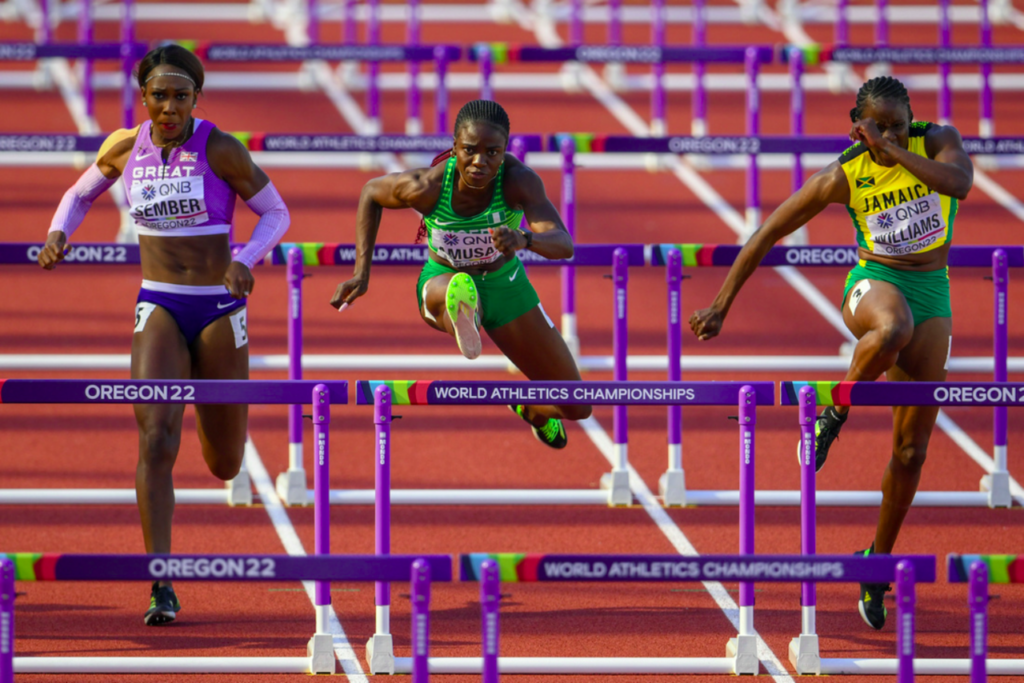
Athletics has long produced some of Nigeria’s most recognisable sporting icons, and the current generation continues that tradition. Leading the pack is Tobi Amusan, one of the world’s elite sprint hurdlers. At the World Athletics Championships in Tokyo in 2025, Amusan secured a silver medal in the women’s 100-metre hurdles, finishing in 12.29 seconds and delivering Nigeria’s only medal at the event. (The Telegraph Nigeria)
Her continued presence among the world’s top hurdlers—ranking within the global top five in her discipline—reinforces Nigeria’s reputation for producing world-class track athletes. (Pulse Sports Nigeria) But beyond Amusan, Nigeria’s athletics programme reveals both promise and limitations.
Young athletes such as Ezekiel Nathaniel have begun to emerge, with Nathaniel breaking the national record in the men’s 400-metre hurdles and finishing just outside the medals at the same championships. (Punch Newspapers)
Meanwhile, sprinters like Kanyinsola Ajayi and throwers such as Chukwuebuka Enekwechi have reached major finals, signalling a gradual expansion of Nigeria’s competitiveness across disciplines. (Punch Newspapers)
Yet Nigeria finished only 27th on the medal table at the championships, highlighting the country’s lack of depth across multiple events. (Punch Newspapers) The challenge for administrators is therefore not just producing individual stars but building a sustainable talent pipeline. Strengthening university athletics, reviving school competitions and improving coaching systems could be crucial in addressing this gap.
Esports: The Digital Frontier
Perhaps the most striking development in Nigerian sport is the rapid rise of esports. Competitive gaming—once considered niche—is now becoming a structured industry with growing institutional backing.
The Nigeria Esports Federation has played a central role in this transformation, partnering with global gaming companies to organise leagues and tournaments and to develop local talent. (en.moonton.com) The sector gained national recognition when esports debuted as a demonstration event at the National Sports
Festival in 2024, signalling official acknowledgment of gaming as a legitimate competitive activity. (Africa Sport Network)
Nigeria’s esports ecosystem is expanding rapidly. The country now hosts major competitions such as the Cade African Gaming Expo, considered one of Africa’s largest gaming tournaments. (Businessday NG) Meanwhile, the 2026 National Esports League features multiple gaming titles and prize pools worth millions of naira, with top performers gaining opportunities to compete internationally. (Punch Newspapers)
The industry’s growth is also driven by demographics. Nigeria’s youthful population and widespread mobile gaming culture make esports particularly attractive. With over 250,000 competitive gamers in the country and increasing participation in continental tournaments, Nigeria is positioning itself as a potential hub for esports in Africa. (africatravelherald.com)
However, challenges remain. Reliable internet infrastructure, sponsorship opportunities and institutional support will be necessary for Nigeria to compete with established esports markets in Europe, Asia and North America.
The Road Ahead
As Nigeria navigates the evolving global sports landscape, diversification appears increasingly essential. Football will likely remain the country’s most popular sport, but basketball, athletics and esports offer complementary pathways for international success and youth development.
For basketball, governance reforms and consistent participation in international competitions could restore Nigeria’s standing in African and global rankings. Athletics requires deeper grassroots investment to ensure that stars like Tobi Amusan are supported by a broader generation of elite competitors. Esports, meanwhile, represents a new frontier—one capable of merging sports, technology and the digital economy.
Ultimately, the success of these sectors will depend on strategic planning, public-private partnerships and sustained investment in talent development. If these conditions are met, Nigerian sport in the coming decade may no longer be defined solely by football but by a broader ecosystem of athletes—both physical and digital—competing on the world stage.

