


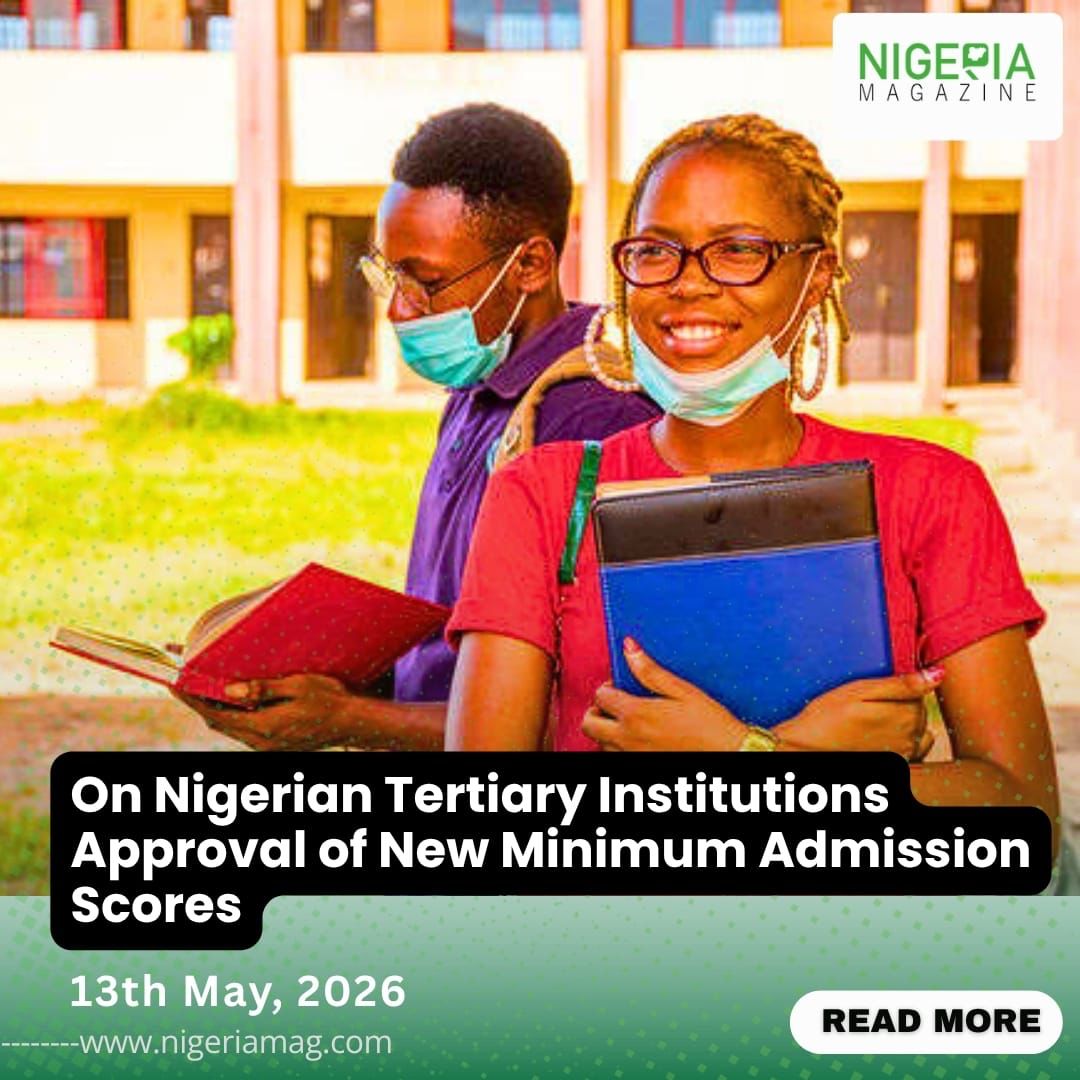
Nigeria’s education sector has once again become the focus of national conversation following the decision by heads of tertiary institutions to approve new minimum admissible scores for admissions into universities, colleges of nursing, and polytechnics across the country.
At a recent admissions policy meeting involving key education stakeholders, it was unanimously agreed that the minimum admissible score for admission into Nigerian universities would be set at 150, while colleges of nursing would also adopt 150 as their benchmark. Polytechnics, on the other hand, would accept a minimum score of 100.
The announcement, coordinated in collaboration with the Joint Admissions and Matriculation Board and leaders of various tertiary institutions, has generated widespread reactions among students, parents, teachers, and education analysts.
A Move Toward Greater Access?
Supporters of the new benchmarks believe the decision reflects the realities currently facing the Nigerian education system. In recent years, concerns have grown over declining examination performances, inadequate learning infrastructure, insecurity in some regions, teacher shortages, and economic pressures affecting students’ preparation for national examinations.
For many education stakeholders, lowering or adjusting admissible scores is viewed as a way to widen access to tertiary education and reduce the number of qualified candidates left without admission opportunities each year.
Proponents argue that admission scores alone do not determine a student’s intelligence, potential, or future success. They maintain that many students who struggle in standardized examinations may still thrive academically when given the right environment and support in higher institutions.
The policy is also expected to benefit students seeking alternatives to university education, especially through polytechnics and colleges of nursing, sectors increasingly recognized for their practical and professional relevance in national development.
Concerns About Academic Standards
Despite the optimism from some quarters, the decision has also raised concerns among critics who fear the policy could further weaken academic standards if not properly managed.
Some education commentators argue that reducing entry thresholds without simultaneously improving the quality of teaching, infrastructure, and student support systems may create additional pressure on tertiary institutions already struggling with overcrowding and limited resources.
Others worry that lower benchmarks may send the wrong message about academic excellence and preparedness for higher education.
However, education experts have pointed out that the announced figures represent only the national minimum admissible scores and not the final cut-off marks for specific institutions or courses.
Competitive programmes such as Medicine, Law, Pharmacy, Engineering, Nursing, and Computer Science are still expected to maintain significantly higher admission requirements, especially in highly sought-after universities.
Institutions Still Retain Flexibility
An important clarification from stakeholders is that tertiary institutions retain the authority to set higher departmental or institutional cut-off marks depending on competition, capacity, and programme demands.
This means that while 150 may serve as the baseline for university admission eligibility, many federal and state universities may still require considerably higher scores for admission consideration.
Similarly, colleges of nursing are expected to remain highly competitive due to increasing interest in healthcare-related careers both within Nigeria and internationally.
The Bigger Conversation
The development has reignited broader conversations about the future of education in Nigeria. Beyond admission scores, many stakeholders believe the real issues confronting the sector include:
A. Underfunding
B. Inadequate facilities
C. Unstable academic calendars
D. Poor teacher welfare
E. Curriculum relevance
F. Unequal access to quality learning opportunities
For students and parents, the announcement offers both hope and uncertainty. While more candidates may now meet the minimum eligibility criteria for tertiary education, the competition for admission into top institutions and prestigious courses is expected to remain intense.
As Nigeria continues to grapple with educational reform and youth development, the latest admission benchmarks may ultimately become part of a larger national discussion about balancing accessibility, quality, and excellence in higher education.

