


𝑩𝒚 𝑺𝒂𝒎𝒊𝒓𝒂 𝑵 𝑬𝒅𝒊-𝑴𝒆𝒔𝒖𝒎𝒃𝒆
I love Nigeria. We share the same birthday: October 1st. As a teenage Cameroonian at the University of Benin, UNIBEN, in the 1990s, I first encountered Nigeria as an ingénue abroad. Today, as a woman who has travelled widely, I can compare those youthful impressions with the seasoned reflections of 2025.
At 65, Nigeria resembles a man in late middle age—tempered by experience, yet burdened by old wounds and habits.
My Nigeria of the 1990s was a nation under prolonged military rule. Our university studies were beset by disruptions. Babangida kept the nation hanging on an endless string of promises to return power to civilian rule. His Structural Adjustment Programme (SAP) sapped Nigerians of hope, particularly after the 1993 June 12th infamy: the annulment of the presidential election. Yet glimmers of progress existed, notably the Better Life for Rural Women initiative, championed by the elegant Mariam Babangida.

It was also characterised by nationwide turbulence. University students, lecturers, doctors, civil servants—all striking. Religious violence flared in the North. Many foreign students considered abandoning their courses, yet Nigeria held a magnetic allure, especially for Anglophone Cameroonian students. We often felt closer to our vast neighbour than our Francophone compatriots. So many persevered. Babangida eventually stepped down. A brief interim government followed, headed by the Abese of Egbaland, Ernest Shonekan. He too was quickly toppled by General Sani Abacha.
The year I should have graduated—1995—we had already lost almost two years to unrest. Abacha’s repressive regime reached its nadir with the execution of Ken Saro-Wiwa and eight fellow Ogoni activists, plunging Nigeria into pariah status. Suspension from The Commonwealth and subsequent isolation deepened the nation’s economic hardship. For foreigners like us who possessed hard currencies, it was an inconvenience, not a catastrophe. I’ve since learnt why the powerful often remain insulated in the midst of economic adversity.
The era was also marked by massive brain drain. Doctors fled to Saudi Arabia, while academics, engineers, and other professionals sought positions abroad. National progress faltered. Collapsing infrastructure caused ghastly fatalities on roads. Highway robberies were rife, though kidnappings remained rare. I absorbed it all with the bewildered gaze of a doe caught in the glare of headlights. Yet even then, I was captivated by the rich vibrancy of the Benin culture unfolding around me. By contrast, politics in my own country seemed a dreary one-party affair—“peaceful,” yes, but with the lifeless stillness of a graveyard.
The strength of the CFA compared to the Naira meant the living was easy for foreign students, even for those from modest family backgrounds. The BDPA housing estate close to the university was both affordable and decent, although the water and electricity supply was so abysmal that it felt as if we survived on generators for nearly six years. Transport was equally inexpensive: the fare from UNIBEN’s Ugbowo campus to New Benin Market was a mere 50 kobo, so cheap, I could pay for ten friends without the slightest strain. At the bukateria, food was so modestly priced that I often picked up the bill for others. Even campus accommodation cost only 90 Naira per semester—a sum so negligible that more than once, I covered it for some of my Nigerian friends.
Travel, too, was affordable. A return flight home was straightforward—at best, two hours from Lagos to Douala via Port Harcourt or Calabar—costing around 100,000 CFA francs.
Behind this ease lay stark contrasts with the lives of the locals. Nigeria is a land of extremes—great wealth beside abject poverty, chaos beside creativity.
𝐍𝐢𝐠𝐞𝐫𝐢𝐚 𝐓𝐨𝐝𝐚𝐲
Fast forward to 2025, and I had an eye-watering experience in Abuja. A city of undeniable beauty but punishingly expensive. I cannot imagine a foreign student enjoying the relative prosperity we once did, even with hard currency. I recall stepping into a nail salon, during a recent visit. The cost of a single manicure matched the price of an aeroplane ticket in the 1990s. What, indeed, has happened?
Civilian rule has taken firm root, and Nigeria enjoys a global reputation for producing some of the world’s brightest minds. Few nations on earth can rival the dynamism, industry, and ingenuity of Nigerians. Yet the perennial problems of income inequality and unequal life chances remain unresolved.
Again, progress has brought its own trials: I recall being in England when the ‘Yahoo Yahoo’ internet fraud phenomenon erupted, casting a long and lingering shadow over Nigeria’s image abroad.
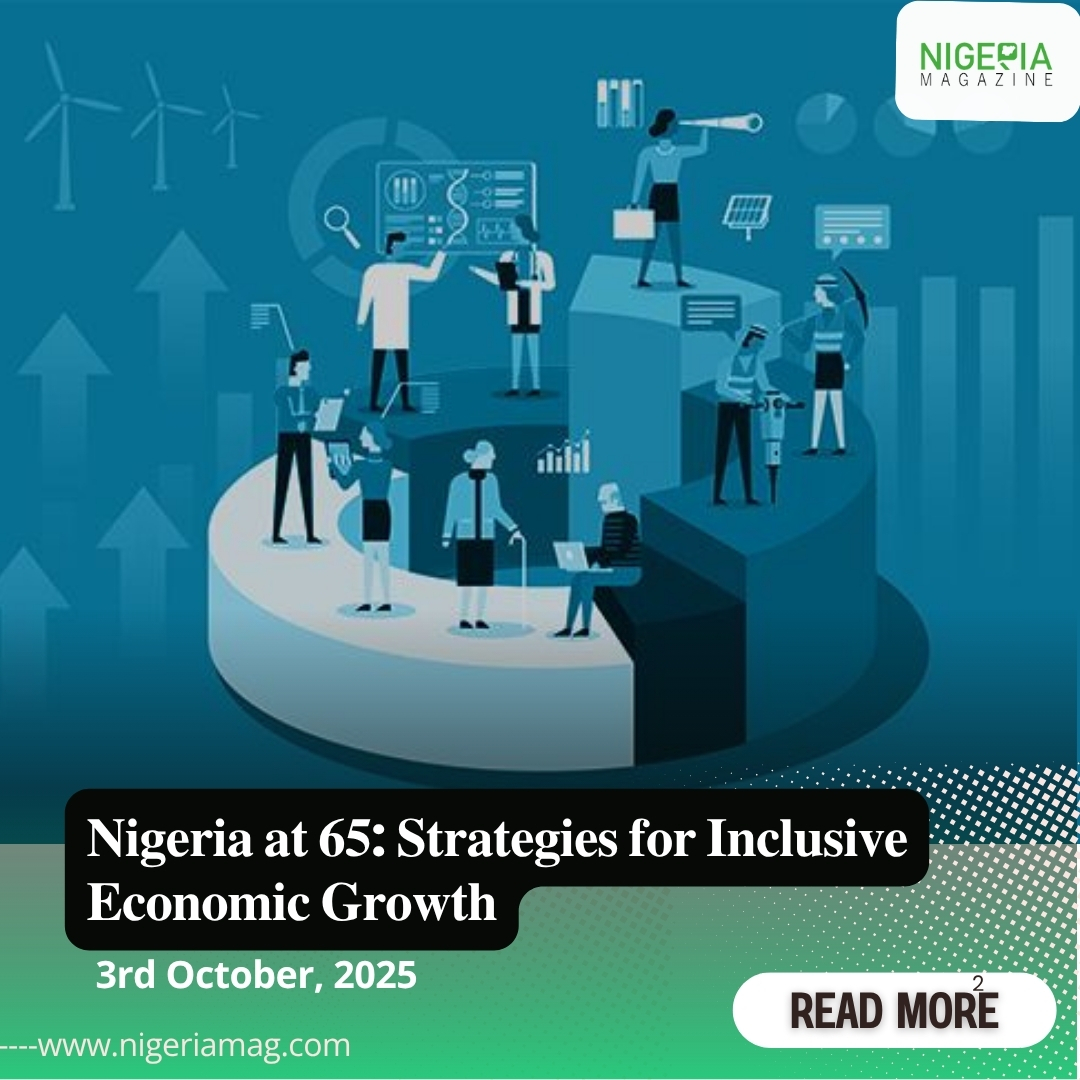
Despite immense wealth, a vibrant educated population, and cultural dynamism, prosperity has often been undermined by corruption, inequality, and inefficiency. These are some of the reasons Nigeria has consistently failed to live up to its potential as the Giant of Africa. Growth must be inclusive—felt in every region, every social group, and across generations.
𝐏𝐚𝐭𝐡𝐰𝐚𝐲𝐬 𝐭𝐨 𝐈𝐧𝐜𝐥𝐮𝐬𝐢𝐯𝐞 𝐆𝐫𝐨𝐰𝐭𝐡
Overdependence on oil revenues makes Nigeria vulnerable to global shocks. Agriculture, tourism, manufacturing, renewable energy, and the creative industries can broaden opportunities and reduce volatility.
Education and healthcare remain the bedrock of progress. Universal access to quality schools, vocational training, and affordable health services will ensure young Nigerians are employable, skilled, and innovative.
Roads, electricity, digital connectivity, and housing must not only serve major cities but also rural communities. Equitable infrastructure links the neglected to opportunity.
Governance must be transparent. Tackling corruption, strengthening institutions, and ensuring fair distribution of resources are crucial for nation building.
Women and young people are Africa’s greatest untapped potential. Gender-sensitive policies, youth entrepreneurship programmes, and access to credit can unlock creativity and drive national productivity.
Nigeria must leverage the African Continental Free Trade Area (AfCFTA) to open markets for local industries while protecting itself from unfair competition.
Inclusive growth must also be sustainable. Invest in green technologies, and shield future generations from the vulnerabilities of environmental degradation.
𝐂𝐨𝐧𝐜𝐥𝐮𝐬𝐢𝐨𝐧
At 65, Nigeria is mature enough to recognise that growth without inclusion deepens inequality. Inclusion without growth redistributes scarcity. The challenge is to balance both.
The nation has been challenged to rise above corruption and complacency, and invest in its greatest asset—the people. The best hospitals abroad are staffed by some of Nigeria’s best medical personnel. Likewise the big corporations. Nigeria must do more to retain its brightest to build the nation.
She has the maturity to acknowledge its failings and the vitality to correct them. It must not repeat cycles of squandered promises. At 65, the nation must decide whether to hobble into decline or mature into wisdom.
𝑆𝑎𝑚𝑖𝑟𝑎 𝑁 𝐸𝑑𝑖-𝑀𝑒𝑠𝑢𝑚𝑏𝑒 𝑖𝑠 𝑎 𝑓𝑜𝑟𝑚𝑒𝑟 𝑏𝑎𝑛𝑘𝑒𝑟 𝑎𝑡 𝐻𝑆𝐵𝐶, 𝑈𝐾. 𝑆ℎ𝑒’𝑠 𝑎 𝑤𝑟𝑖𝑡𝑒𝑟 𝑎𝑛𝑑 𝑝𝑜𝑙𝑒𝑚𝑖𝑐𝑖𝑠𝑡, 𝑝𝑎𝑠𝑠𝑖𝑜𝑛𝑎𝑡𝑒 𝑎𝑏𝑜𝑢𝑡 𝐴𝑓𝑟𝑖𝑐𝑎, 𝑝𝑜𝑙𝑖𝑡𝑖𝑐𝑠, 𝑎𝑛𝑑 𝑡ℎ𝑒 𝑒𝑛𝑣𝑖𝑟𝑜𝑛𝑚𝑒𝑛𝑡.
𝐸𝑚𝑎𝑖𝑙: 𝑒𝑑𝑖.𝑠𝑎𝑚𝑖𝑟𝑎@𝑔𝑚𝑎𝑖𝑙.𝑐𝑜𝑚

