


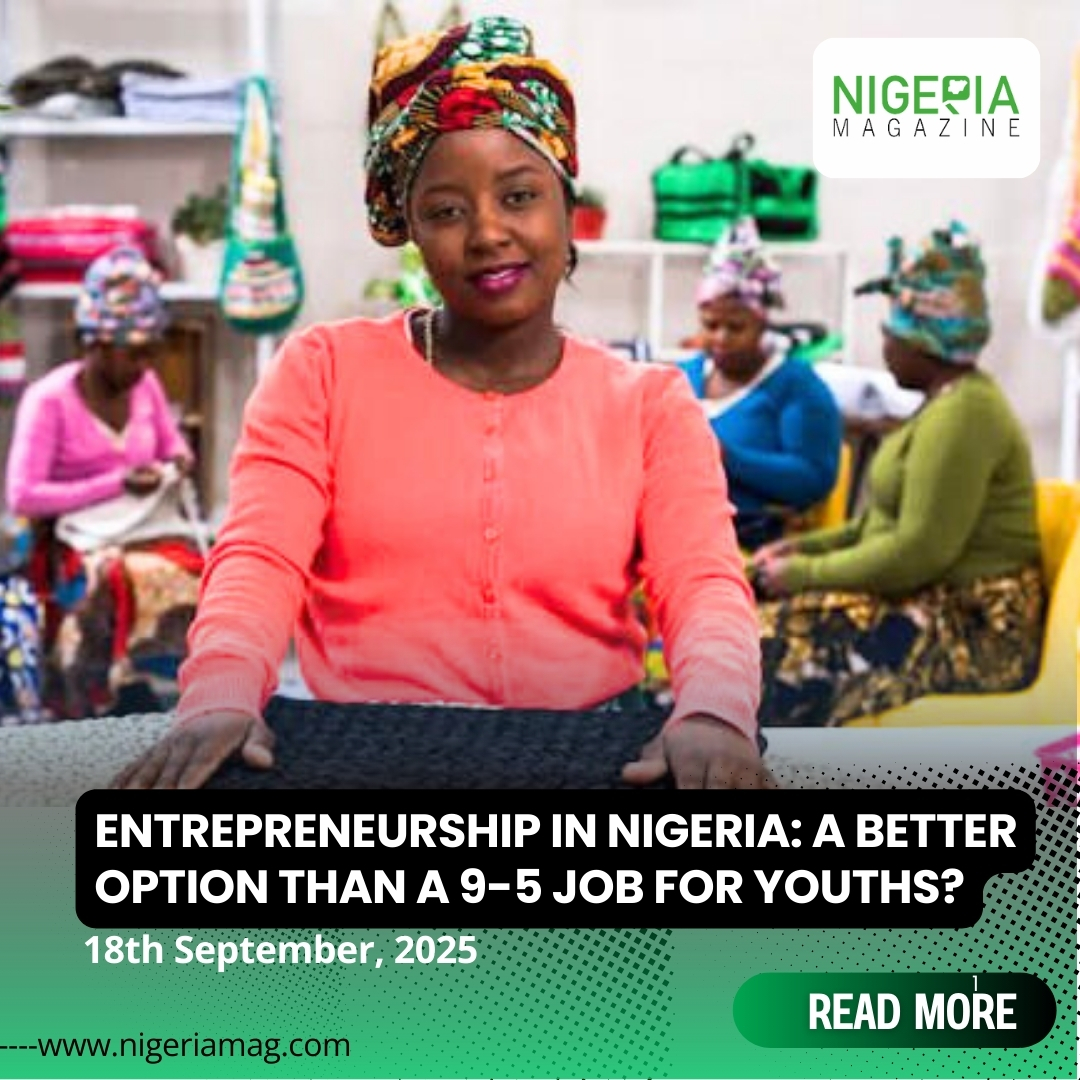
With youth unemployment and underemployment rates still alarmingly high in Nigeria, many young people are increasingly turning to entrepreneurship as an alternative to traditional paid employment. The question, however, remains: is entrepreneurship truly a better pathway for Nigerian youths compared to the conventional 9-5 job?
Nigeria is home to one of the world’s youngest populations, with more than 60 percent under the age of 25. Despite this demographic advantage, the formal job market has failed to keep up with the growing number of graduates and skilled youths entering the workforce each year. This has forced many into entrepreneurship, ranging from small-scale businesses and freelancing to tech startups and agribusiness ventures.
For many young Nigerians, the appeal of entrepreneurship lies in its promise of freedom and flexibility. Entrepreneurs have the ability to control their schedules, determine the direction of their businesses, and create work environments that suit them. Unlike salaried jobs with fixed incomes, successful entrepreneurs have the potential to expand their businesses and generate significantly higher earnings over time. For some, this creates opportunities for financial independence and even generational wealth.
The growth of digital technology has also made entrepreneurship more accessible. Platforms such as Instagram, TikTok, and WhatsApp Business provide cost-effective avenues for marketing and managing businesses with minimal capital. This has led to the rise of a new wave of digital entrepreneurs, especially among Nigeria’s urban youth.
However, the reality is far more complex than the dream. Entrepreneurship comes with high risks, including financial instability, lack of institutional support, and uncertainty in an economy often plagued by inflation, poor infrastructure, and inconsistent policies. Many startups fail within the first few years due to limited funding, poor planning, or weak market structures.
For some young Nigerians, however, the risk is worth it. “I prefer running my small clothing brand to working in an office,” said Blessing Okon, a 26-year-old entrepreneur in Abuja. “I can express my creativity, connect directly with my customers, and control my time. A 9-5 job would feel too limiting for me.”
Others see entrepreneurship as a necessity, not just a choice. “I have been applying for jobs since I graduated three years ago and nothing has worked out,” explained Ifeanyi Umeh, a 28-year-old graduate in Lagos who runs a food delivery service. “Starting my business was tough, but at least I can earn something and support myself. If the job market improves, I wouldn’t mind combining both.”
On the other hand, salaried jobs, though increasingly scarce, still offer structure, stability, and security. Regular monthly income, access to benefits such as pensions or health insurance, and opportunities for gradual career growth are factors that cannot be overlooked. Nevertheless, many entry-level jobs in Nigeria pay below a living wage, and career progression in both the public and private sectors is often slow, influenced more by connections than merit.
This has given rise to the “side hustle” culture. A growing number of young Nigerians now combine 9-5 jobs with small businesses or freelance ventures, diversifying their income streams and reducing the risks associated with relying solely on one source of livelihood.
Ultimately, entrepreneurship holds great promise in a country where formal jobs are scarce and innovation is urgently needed. Yet, it is not a guaranteed path to success, and many young people are unprepared for the challenges it entails. Conversely, while 9-5 jobs provide stability, they can be limiting in terms of income and personal growth.
For Nigerian youths, the choice between entrepreneurship and salaried employment may not be about which is “better,” but about how best to balance the opportunities and challenges of both.
Ubong Usoro for Nigeria Magazine

