


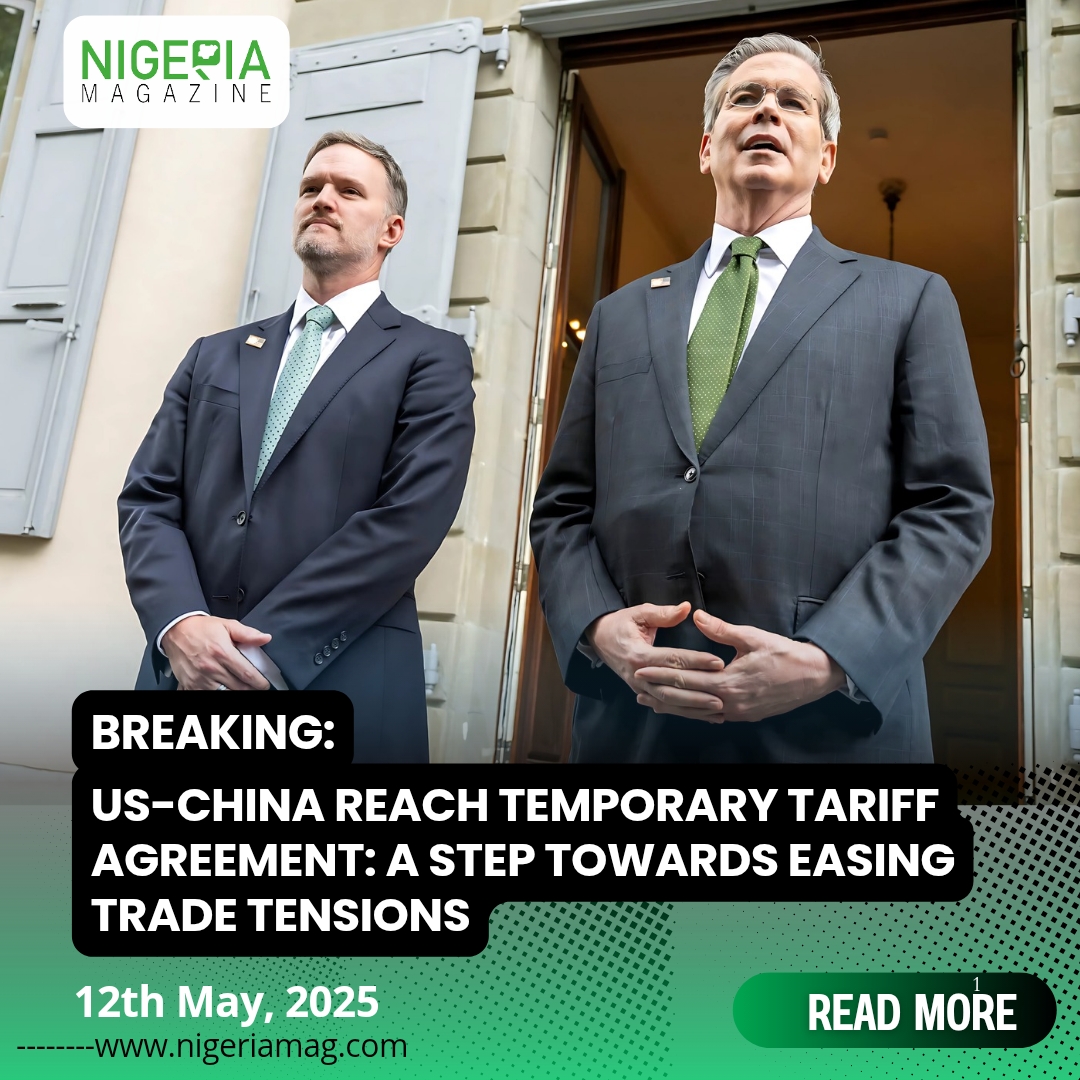
The United States and China have reached a tentative agreement to temporarily reduce tariffs on each other’s imports for a 90-day period, in a bid to ease trade tensions between the two nations. This development comes after high-level talks in Switzerland, marking a significant step towards de-escalating the trade war that has impacted global markets.
Key Points of the Agreement:
- Tariff Reduction: The US will lower its tariffs on Chinese imports from 145% to 30%, while China will reduce its tariffs on US goods from 125% to 10%.
- 90-Day Window: The tariff cuts will be in effect for 90 days, during which both countries will engage in negotiations to address trade differences and work towards a sustainable, long-term economic relationship.
- Joint Statement: Both governments have emphasized the importance of their bilateral economic and trade relationship, committing to “mutual respect,” “continued communication,” and cooperation.
Implications of the Deal:
- Economic Impact: The temporary tariff reduction is expected to provide relief to businesses and markets, potentially boosting economic activity and investor confidence.
- Negotiations: The 90-day period will be crucial for both countries to make progress on key issues and work towards a more comprehensive agreement.
- Global Significance: The US-China trade relationship has significant implications for the global economy, and this development may have far-reaching consequences for international trade and economic stability.
Next Steps:
- Talks: Negotiations between the two countries will resume under a new bilateral framework, led by US Treasury Secretary Scott Bessent and Chinese Vice Premier He Lifeng.
- Uncertainty: While the agreement signals a positive shift in tone, the outcome of the negotiations remains uncertain, and any breakdown could quickly reverse the current optimism .

