


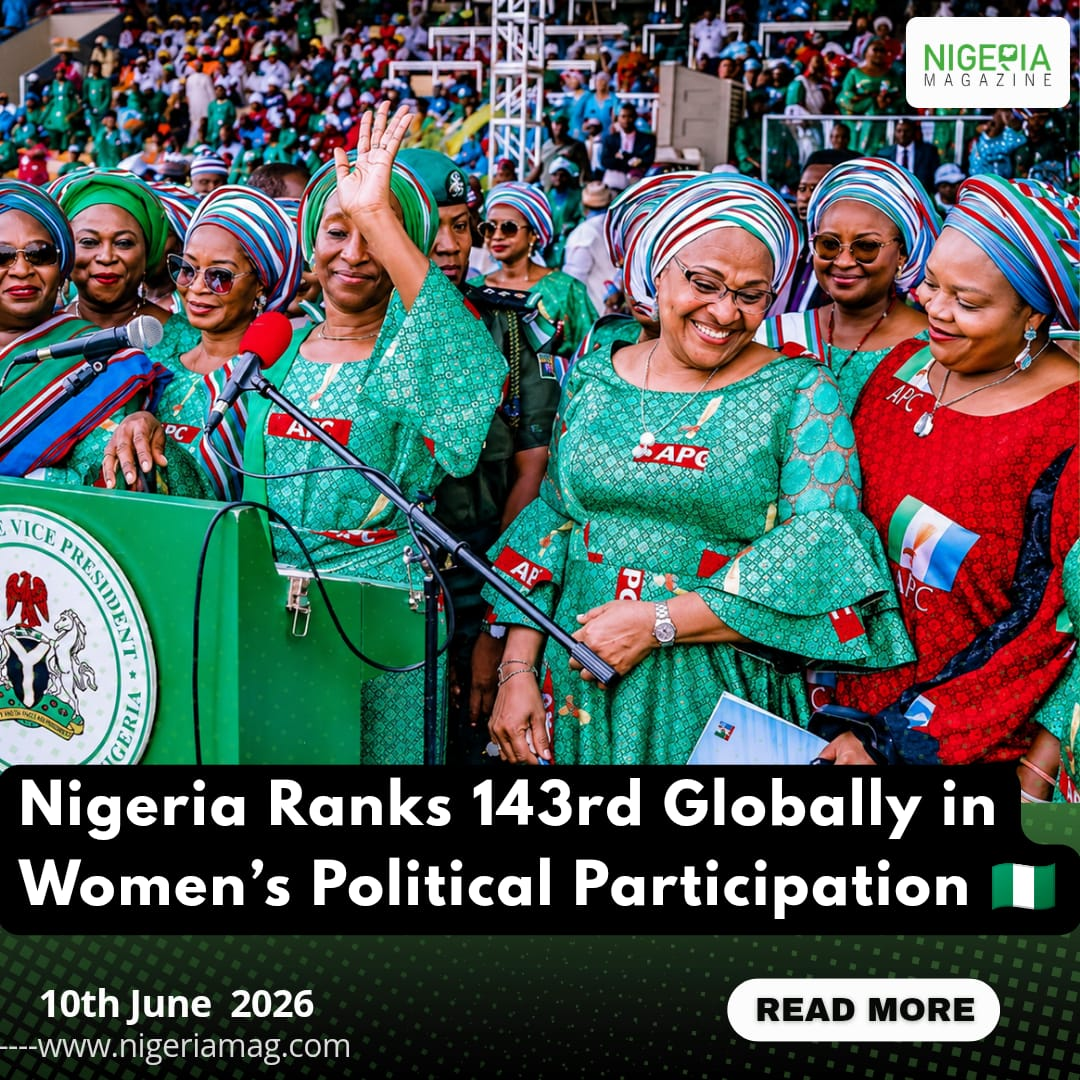
Nigeria has been ranked 143rd out of 144 countries in women’s political participation, highlighting the country’s continued struggle with gender inclusion in governance.
The ranking was referenced at a United Nations Women webinar held ahead of the 2027 general elections, where stakeholders expressed concern over the low number of women in elective and appointive positions.
According to UN Women Country Representative, Ms. Eyong Beatrice, women currently occupy only 4 out of 109 Senate seats and 16 out of 360 seats in the House of Representatives. She also noted that 13 state Houses of Assembly have no female representation.
The figures place Nigeria near the bottom of the global ranking, reflecting long-standing concerns about women’s participation in politics despite repeated calls for inclusion.
Participants at the webinar said the issue is no longer about the ability of women, but about the barriers within the political system that limit their access to leadership positions.
Ms. Eyong stressed that Nigerian women are qualified and capable of contributing to governance at all levels, adding that the debate about competence has already been settled.
Attention was also drawn to internal party processes, with calls for reduced nomination fees and fairer opportunities for female candidates during elections.
The League of Women Voters of Nigeria (NILOWV) described the situation as a matter of democratic fairness and national development, urging stronger commitment to inclusion.
Policy analyst Eduje Russel, MBA, also noted that the challenge is not lack of capable women, but the systems that prevent their emergence in political leadership.
He said improving women’s participation should be seen as both a governance and development issue.
As the 2027 elections approach, stakeholders are calling for deliberate reforms to improve women’s representation across all levels of government.
Observers warn that without concrete action, Nigeria risks maintaining its poor global ranking and continued exclusion of women from decision-making spaces.
Ubong Usoro, Nigeria Magazine

