


From the Nigeria Magazine Desk
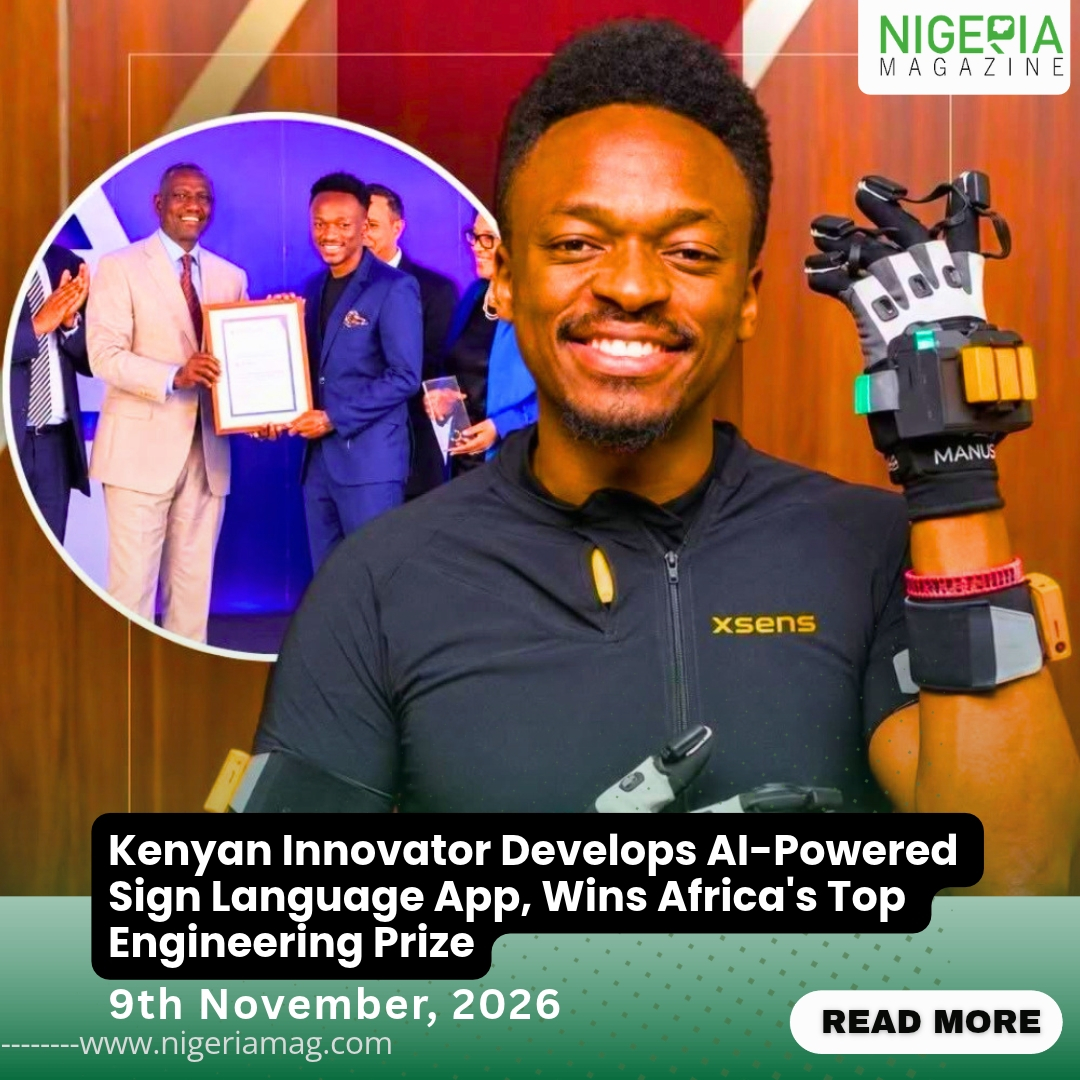
A Kenyan innovator, Elly Savatia, has developed an innovative technology designed to improve communication for deaf and hard-of-hearing people, addressing one of the major barriers they face in workplaces, schools and healthcare facilities.
The innovation, known as Terp 360, uses artificial intelligence and a lifelike 3D avatar to translate spoken words into sign language in real time, making communication more accessible to people with hearing disabilities.
Savatia was inspired to develop the technology after recognising the difficulties deaf people encounter in accessing essential services and participating fully in everyday activities. The shortage of sign language interpreters and the high cost of hiring professional interpreters have continued to create communication gaps across different sectors.
The application supports Kenyan Sign Language, English and Swahili, with a database of more than 2,300 signs developed using motion-capture technology. Importantly, the development process involved deaf and hard-of-hearing Kenyans, ensuring that the technology reflects the communication needs and experiences of the people it is designed to serve.
Savatia’s inspiration for the innovation dates back to a robotics class in Northern Kenya, where he observed that just one interpreter was available to serve 300 deaf students. The experience exposed the scale of the communication challenges within educational institutions and encouraged him to explore technology as a practical solution.
His work earned him the 2025 Africa Prize for Engineering Innovation, organised by the Royal Academy of Engineering. The award, regarded as Africa’s largest dedicated engineering prize, came with £50,000 in funding to support the next stage of the innovation’s development and expansion.
Beyond education, the team behind Terp 360 is preparing to expand its application into corporate environments and healthcare facilities, where effective communication is essential for equal access to opportunities and services. The innovation has also engaged more than 2,000 members of the deaf and hard-of-hearing community during its development and testing journey.
The development represents an important example of how African innovators are using technology to address challenges within their communities. It also highlights the importance of designing solutions with people with disabilities rather than making assumptions about their needs.
As Africa continues to explore the possibilities of artificial intelligence, innovations such as Terp 360 demonstrate that technology can go beyond convenience and commercial success to promote inclusion, accessibility and social impact.
Savatia’s achievement is a reminder that some of the most meaningful innovations begin with recognising a problem in society and having the determination to create a solution.
Source: Royal Academy of Engineering and the original LinkedIn post.

