


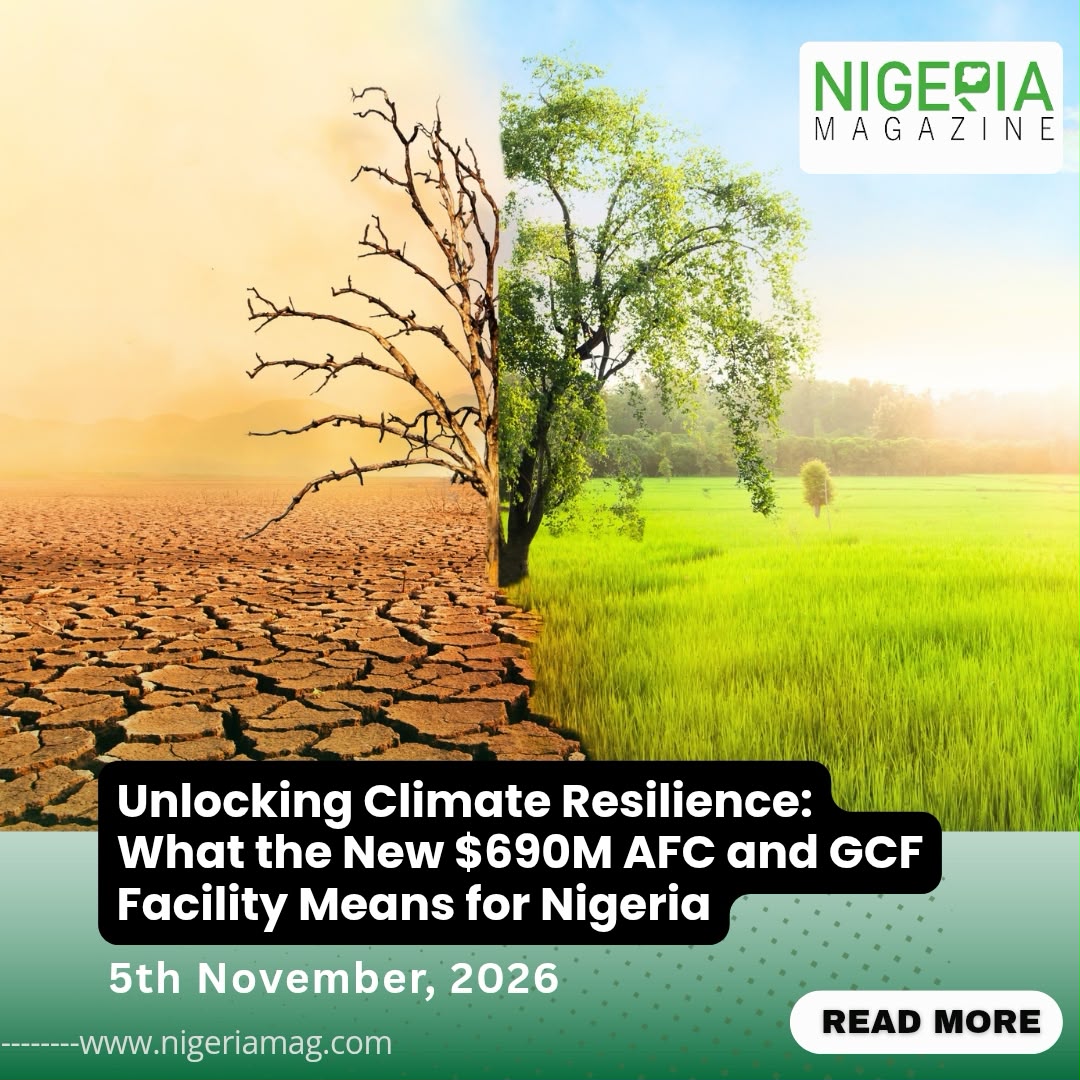
A newly launched multi-million-dollar climate financing initiative promises to reshape how developing nations tackle environmental vulnerabilities and infrastructure deficits. However, as the initial excitement settles, important questions remain about how much of these funds will directly benefit Nigeria.
The Africa Sovereign Climate Facility at a Glance
Developed in partnership with the Green Climate Fund (GCF), the newly approved Africa Sovereign Climate Facility (ASCF) represents a total financial commitment valued at approximately $690 million (with specific core components including a GCF contribution of around $280 million and a parallel commercial facility of up to $260 million arranged by the Africa Finance Corporation).
The primary objective of the ASCF is to bridge the gap between national climate strategies and bankable, investable infrastructure. By combining concessional climate finance, technical assistance, capacity-building, and commercial loans, the facility is designed to help governments integrate climate considerations directly into national development planning.
Where Does Nigeria Stand?
Following the GCF’s approval of the facility, the Africa Finance Corporation (AFC) announced that the programme’s rollout will initially target four participating countries:
Nigeria
Angola
Benin
Côte d’Ivoire
While Nigeria’s inclusion as a pilot and participating nation is a significant step forward, there is currently no fixed or dedicated financial allocation guaranteed exclusively for the country. Because the $690 million envelope is shared across all four nations, individual country disbursements will depend on project readiness, the structuring of specific proposals, and competitive implementation timelines.
Bridging the Infrastructure Gap
Nigeria faces compounding climate pressures—ranging from severe flooding and unpredictable rainfall patterns to prolonged droughts that threaten food and water security. Large-scale infrastructure projects require robust funding models that traditional public budgets alone struggle to support.
The ASCF aims to solve this by providing a country-led framework that identifies projects capable of withstanding future climate shocks while driving sustainable economic growth. For Nigeria, successfully tapping into this facility will require strong institutional coordination between the federal government, finance ministries, and project developers to turn broad climate commitments into concrete, fundable assets.

