


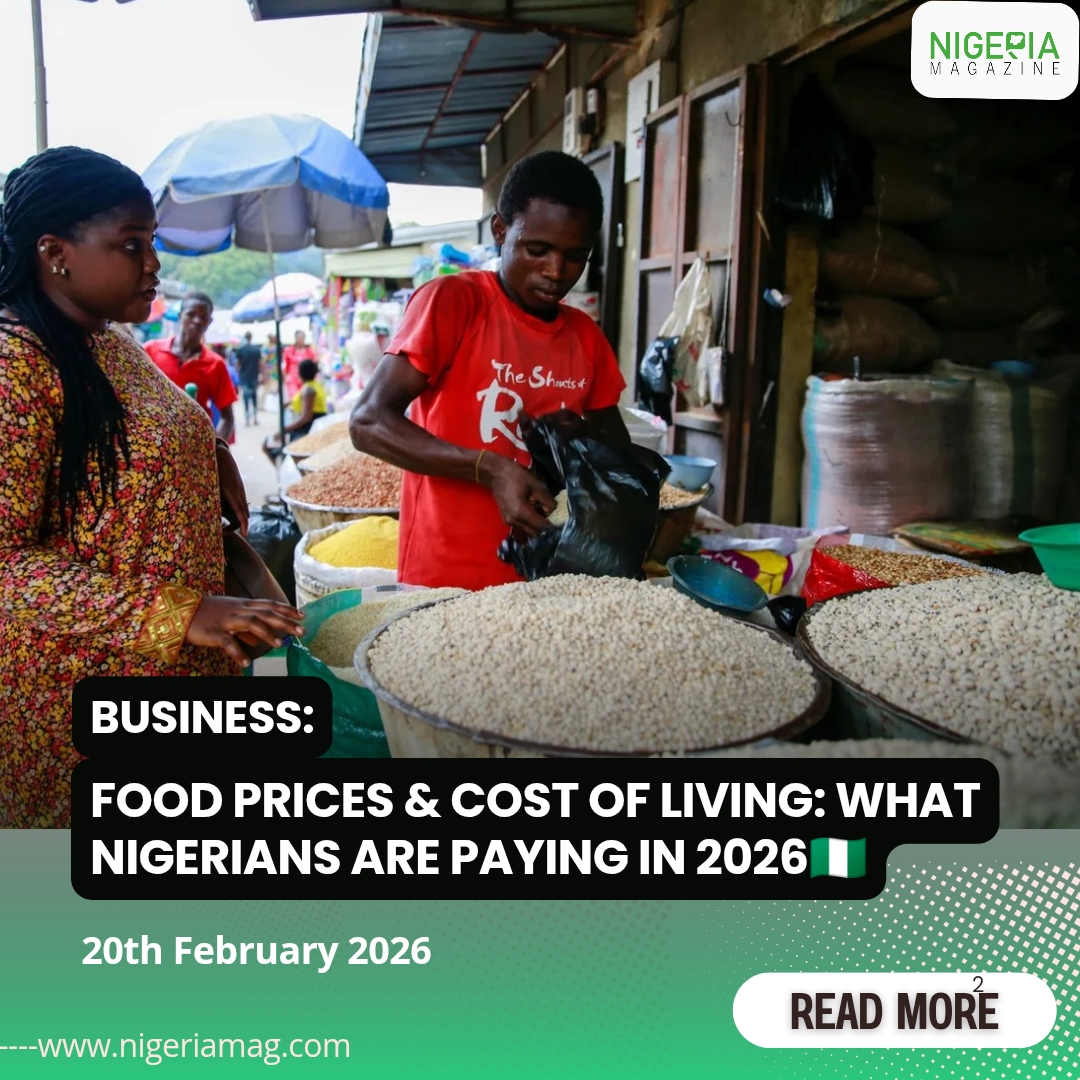
A Market Survey and Data-Backed Explainer
As Nigeria enters 2026, the cost of living — long a pressing issue for households across the country — remains at the forefront of everyday concerns. After years of steep inflation driven by global shocks, exchange rate volatility, policy reforms and supply chain disruptions, Nigerians are now grappling with what has been described as both a relief in inflation figures and an ongoing affordability crisis that still bites deep into household budgets.
Headline Inflation & Food Prices: A Snapshot in 2026
According to the latest Consumer Price Index (CPI) data from the National Bureau of Statistics (NBS), Nigeria’s headline inflation rate was 15.10% year-on-year in January 2026, slightly lower than December 2025. This marked the tenth consecutive month of declining annual inflation, a trend that policymakers have welcomed even as many consumers insist they feel little relief in their wallets. (Reuters)
The most notable development is in food inflation, traditionally the most burdensome component of household expenditures. In January 2026, food inflation slowed dramatically to 8.89% — its lowest level in more than a decade. The last time food inflation was in single digits was in May 2015. (abujapress.com)
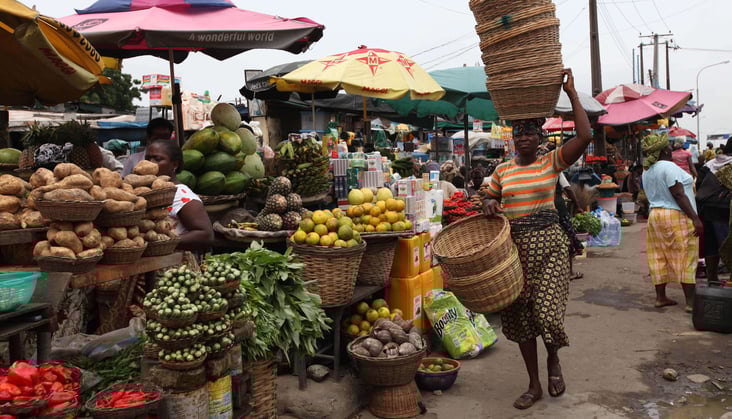
This sharp deceleration is largely attributed to improved harvests, enhanced supply flows, and relative exchange-rate stability. The NBS report highlighted that average prices of major staples — from yam and beans to palm oil and maize — contributed to lower food inflation. (abujapress.com)
Yet, analysts caution that lower inflation does not automatically translate into cheaper food on the shelves. As numerous consumer voices have pointed out, inflation measures the rate of price change, not the absolute price level. In practical terms, many Nigerians are still paying historically high amounts for basic food items — just not rising as quickly as before. (Reddit)
What Nigerians Are Actually Paying: Market Reality vs. Data Trends
While food inflation has eased, staple food prices remain elevated compared to pre-inflation-shock levels. Independent reports show that, over the past decade, prices for everyday items have increased dramatically. For example, an analysis of staple categories — including rice, beans, garri, bread, eggs and yams — found that combined prices have risen more than 400% between 2016 and late 2025. Imported rice alone jumped from around ₦239 per kilogram in early 2016 to more than ₦2,255 by late 2025 — an increase of over 800%. (ICIR News)
These staggering increases help explain why food remains the largest single share of household spending: most Nigerian families spend well over half their monthly income on food alone, squeezing budgets for rent, education, healthcare and transportation.
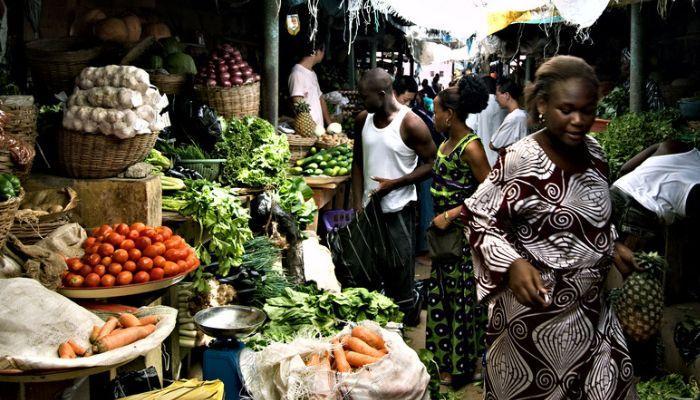
In anecdotal market checks and informal price surveys, consumers report vivid examples of these pressures: a basic loaf of bread, bottles of cooking oil, cartons of eggs, and even locally produced staples often cost multiples of what they did a few years ago. While official inflation has slowed, actual prices — especially for meat, poultry, and imported goods — remain significantly higher than in 2022 or 2023.
Regional Variations: Cost of Living Across States
Cost pressures also vary sharply between states. Recent state-level inflation data shows clear disparities — influencing how affordable everyday life feels across the federation.
According to the latest figures, some of the most affordable states to live in early 2026 — based on lowest headline and food inflation rates — included:
Ebonyi — 8.72% overall inflation, food inflation 1.7%
Katsina — 8.94% overall, food inflation 5.8%
Imo — 10.61% overall, food inflation 3.7%
Enugu & Kaduna — in the low-12% to low-11% range
Gombe & Delta — ~13.5% overall with moderate food inflation
At the other end of the spectrum, states such as Benue and the Federal Capital Territory recorded higher overall inflation, highlighting that living costs can be significantly more burdensome depending on location. (Nairametrics)
These regional differences reflect a mix of local supply conditions, agricultural productivity, transport costs, and consumption patterns. States with stronger local agricultural output and shorter supply chains tend to see lower food price pressures than those heavily reliant on imports or long trade routes.
Why Prices Remain High Despite Lower Inflation
The story of Nigeria’s cost of living in 2026 is one of structural pressures intersecting with positive statistical trends. Several key factors help explain why Nigerians often still feel the pinch:
- High Base Effects
Inflation statistics are relative. A slowdown in the rate of price increases — even a sharp one — may still leave prices far above previous years. The fact that food inflation dropped from nearly 30% a year earlier to under 9% this January reflects a deceleration, not a reversal. (Nairaland)
- Weak Purchasing Power
Wages for many Nigerians — especially in formal sectors — have not kept pace with past price rises. For low- and middle-income households, stagnant incomes paired with elevated food costs mean that real purchasing power remains squeezed.
- Structural Bottlenecks
Persistent challenges such as supply chain inefficiencies, inadequate storage and processing infrastructure, insecurity in agricultural zones, and ongoing currency volatility continue to shape the food market. These structural bottlenecks can keep prices high even when inflation metrics improve.
- Import Costs and Exchange Rates
Nigeria remains a net importer of several key food commodities and inputs, meaning fluctuations in global prices and the exchange rate directly influence domestic prices. Although the naira has shown relative stability, ongoing external pressures and import costs still trickle down to retail prices.
Impact on Households: Consumption and Coping Mechanisms
Nigeria’s cost-of-living realities in 2026 have tangible effects on everyday behaviour:
Diets are adjusting: Families are substituting more expensive items with cheaper alternatives. For example, rice or meat might be replaced with cassava products or locally sourced grains as monthly staples.
Frequency of purchases has changed: Households sometimes reduce shopping frequency or buy in smaller quantities due to cash constraints.
More informal survival strategies: Consumers rely on credit at markets, bulk family purchases, and even skipping meals during lean periods.
These patterns reflect a broader trend observed globally, where even in countries with falling measured inflation, the sense of affordability crisis persists because price levels — especially for essentials — remain high relative to incomes. Researchers note that once consumers experience sustained high prices, it reshapes expectations and perceptions of affordability. (TIME)
Looking Ahead: What Could Change in 2026
Despite ongoing hardships, there are tentative signs of improvement:
The 2026 harvest seasons and stronger agricultural outputs could further cushion food prices.
Policy moves — such as import waivers on select staples, investment in food logistics, and efforts to stabilise the exchange rate — may ease market pressures.
Continued declines in headline inflation could pave the way for monetary policy adjustments that support credit and investment.
Yet, analysts emphasise that sustainable relief for Nigerian households requires structural reforms in agriculture, food processing, rural infrastructure, and distribution networks — not just short-term statistical improvements.
As Nigeria enters 2026, the narrative of food prices and cost of living is complex and multifaceted. On paper, food inflation has slowed dramatically to single digits for the first time in a decade, and headline inflation continues a downward trend that offers policymakers room for cautious optimism. But on the ground in markets across Lagos, Kano, Port Harcourt and rural towns alike, the price of basic staples remains high relative to incomes — a reality that leaves many Nigerians feeling little relief.
The clash between easing inflation statistics and persistent cost-of-living pressures underscores a core challenge of 2026: transforming headline data into tangible affordability in everyday life.

