


By Kede Aihie
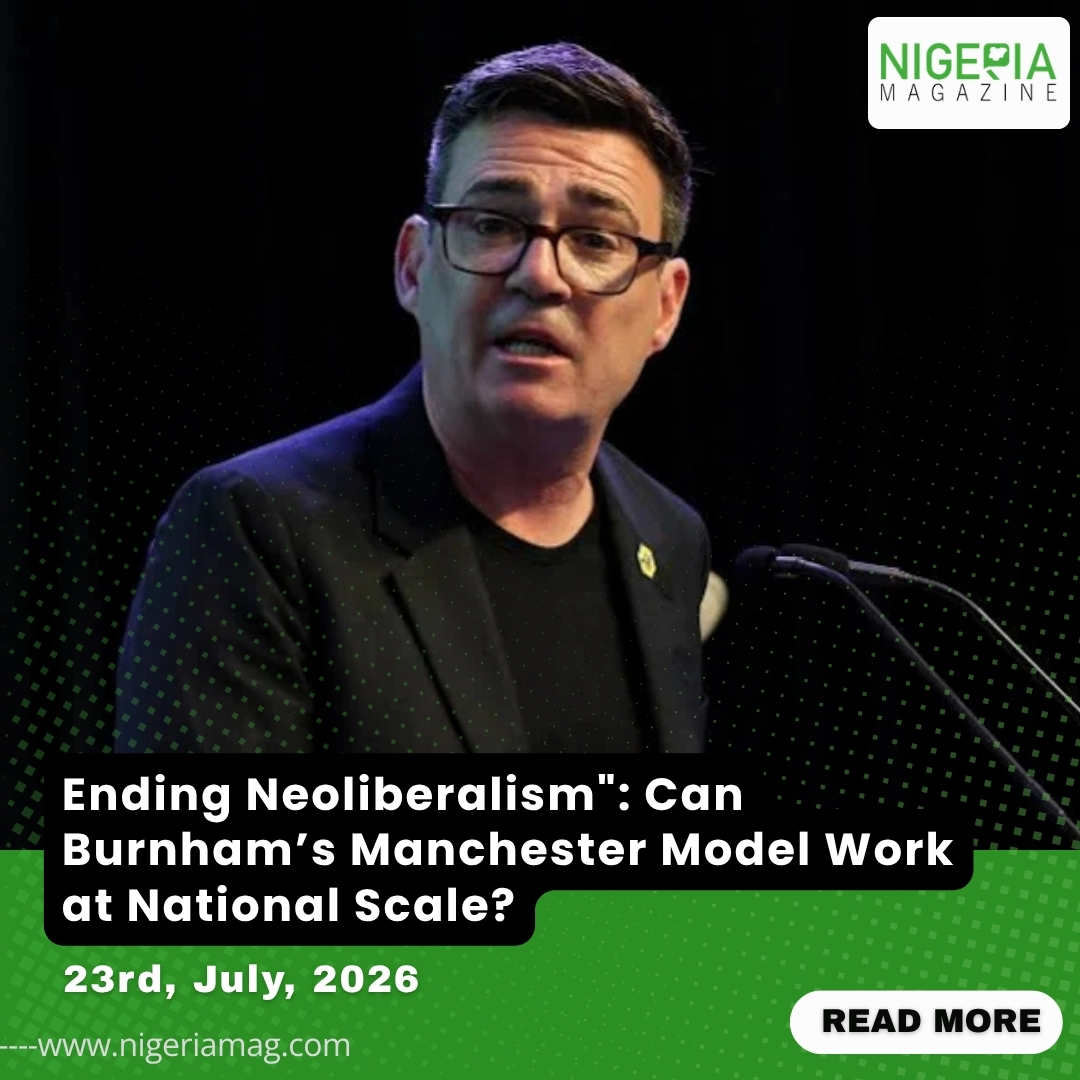
Prime Minister Andy Burnham has made reversing “40 years of neoliberalism” the defining promise of his government. Branded as “Manchesterism” or “business-friendly socialism,” it rejects Thatcher-era privatisation and promises greater public control of essentials, regional devolution, and a new definition of infrastructure. The problem is the pitch is already running into fiscal reality, and into a very different message from his Chancellor, John Healey.
Burnham blames the 1980s for Britain’s current malaise. Political power was centralised in Westminster, economic power handed to private firms, and the country “surrendered control” of housing, water, energy and transport. The result, he argues, was higher costs, concentrated wealth, and industrial communities left behind by trickle-down economics that never trickled down. That, he says, is why voters are turning to extremes.
He is not proposing 1970s nationalisation. His model is regulated franchising. The Bee Network in Manchester is the template: private operators run the buses, but the public sets fares, routes and standards. He wants the same for water and energy. Alongside that: devolution, reindustrialisation through public procurement, and “breathing space” on living costs — lower energy and bus fares, possible rent freezes, higher tax thresholds, free adult social care. Crucially, he wants to count care and childcare as infrastructure and use fiscal flexibility to borrow billions for it.
The criticism is all about delivery. There is no clear funding for the biggest council house build since the war while the IMF urges deficit reduction. The Bee Network works locally, but can it scale to national utilities? Markets reacted badly, with 10-year borrowing costs hitting a two-month high. And the message is muddled: Burnham talks of a “bigger, muscular state,” while Healey tells business leaders the priority is stability, discipline and investor confidence.
It is also a gift to Kemi Badenoch, who is likely to tear down the argument robustly. She can point to the funding gaps, the market reaction, and the contradiction between “pro-business” talk and greater state control, and frame it as ideology without a plan.
It feels like Blair/Brown 2.0. Bold rhetoric up front, Treasury reassurance behind. But the politics have changed. Voters want structural change, not just better management. If Healey’s rules block Burnham’s borrowing, Manchesterism stalls. If Burnham gets the money, Healey has to sell it to the markets.
The next six months will decide it. The Budget and 10-year plan will show whether this is a real economic model or just a slogan. For business, the question isn’t if the state gets bigger. It’s what rules it sets — and whether they are consistent enough to invest against.

