


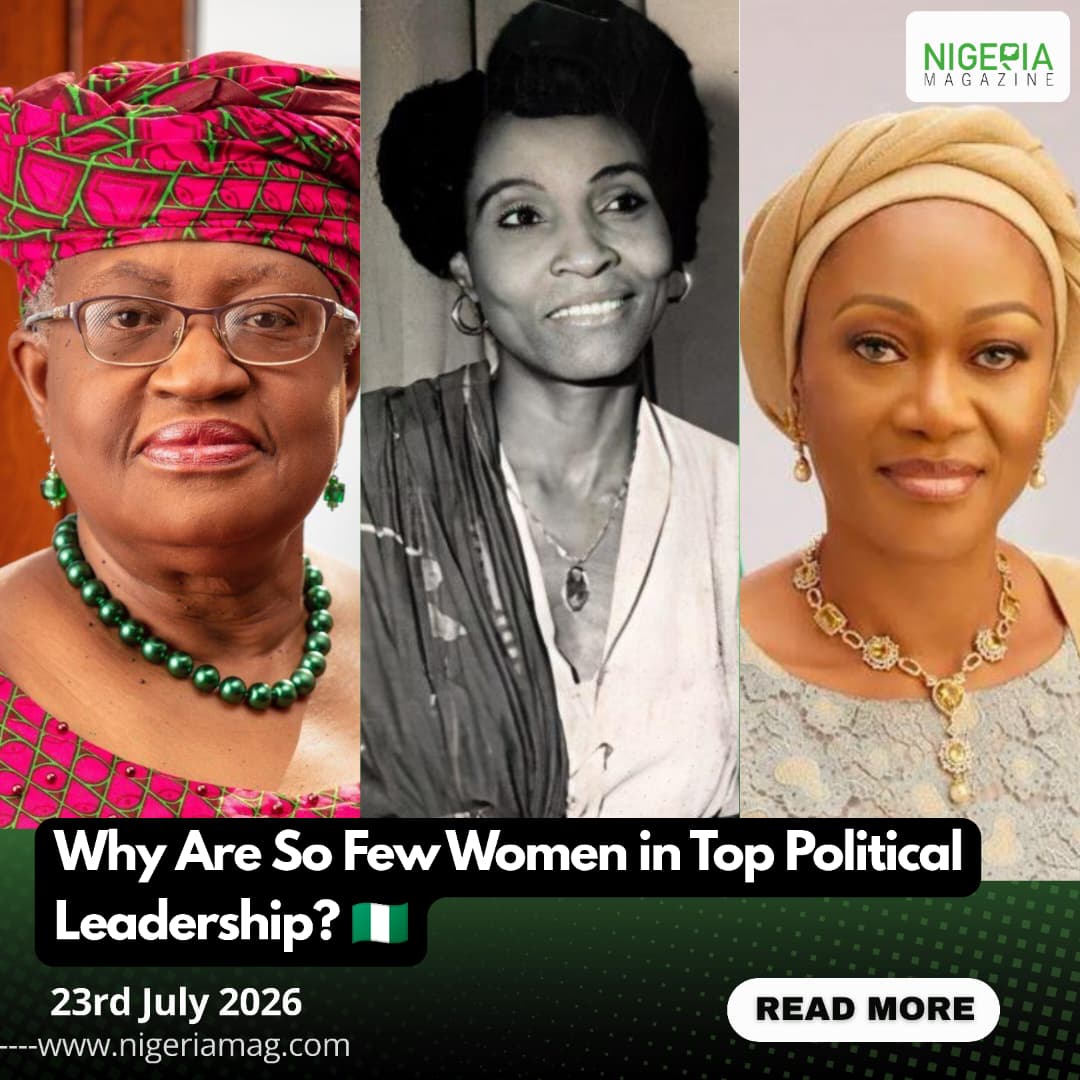
Despite decades of progress, women remain underrepresented in the highest levels of politics. This article explores the barriers they face, why representation matters, and what can be done to create a more balanced political landscape.
By Moses Chibuike Ezechukwu
Politics is often described as a game of influence, power, and decision-making. Yet, across much of the world, one question continues to linger: why are there still so few women occupying senior political positions? While more women are participating in elections, public service, and political activism than ever before, the number who eventually reach the highest levels of leadership remains surprisingly low.
This is not simply about statistics. It is about whose voices are heard when decisions are made, whose experiences shape national policies, and whether leadership truly reflects the diversity of the people it serves. The conversation is especially relevant in countries like Nigeria, where women make up nearly half of the population but continue to occupy only a small fraction of elected offices.
At first glance, it may seem that the playing field is equal. Women have the constitutional right to vote, contest elections, and hold public office. However, equal rights on paper do not always translate into equal opportunities in practice. The journey to political leadership is often much steeper for women than it is for men.
One of the biggest obstacles is cultural expectation. In many societies, leadership has traditionally been associated with men, while women are expected to focus on family responsibilities. Although these views are gradually changing, they still influence public perception. Female politicians are often judged more harshly than their male counterparts, not only for their political decisions but also for their appearance, personal lives, and family choices. A man who is assertive may be praised as confident, while a woman displaying the same qualities may be unfairly labelled as aggressive or difficult.
Financial barriers also play a significant role. Politics is expensive. Campaigns require funding for advertising, transportation, rallies, media engagement, and grassroots mobilisation. In many countries, women generally have less access to financial resources, influential political networks, and wealthy sponsors. This financial disadvantage makes it harder to compete against established male politicians who may already have years of political connections and institutional support.
Political parties themselves also influence who rises through the ranks. While many parties publicly support gender equality, leadership positions within these organisations are still overwhelmingly dominated by men. Candidate selection processes often favour individuals who have spent years building relationships within political structures that have historically excluded women. Even when women are active members of political parties, they may struggle to receive nominations for highly competitive positions.
Another factor that cannot be ignored is political violence and intimidation. Elections in several countries can become tense, with reports of harassment, threats, and physical confrontations. Such an environment discourages many qualified women from entering politics or continuing their political careers. Families may also discourage female relatives from participating, fearing for their safety.
The media has a role to play as well. Coverage of female politicians sometimes focuses more on their clothing, age, marital status, or personality than on their policies and achievements. While this is gradually improving, the difference in media treatment still shapes public opinion. When voters repeatedly see women portrayed differently from men, unconscious biases are reinforced.
Despite these challenges, there has been meaningful progress. Around the world, women have demonstrated exceptional leadership as presidents, prime ministers, ministers, governors, legislators, and local government officials. Their successes prove that leadership is not determined by gender but by competence, vision, and integrity.
Research has consistently shown that greater female representation in government often brings broader perspectives to policymaking. Issues such as healthcare, education, child welfare, gender-based violence, and economic inclusion frequently receive greater attention when women are part of decision-making processes. This does not mean that women only advocate for women’s issues. Rather, diverse leadership teams tend to consider a wider range of experiences when creating policies that affect society as a whole.
In Nigeria, the conversation about women’s political participation has become increasingly important. Although women have served as ministers, commissioners, judges, and special advisers, their overall representation in elective offices remains among the lowest in Africa. Election after election, many highly qualified female candidates struggle to secure party nominations or win seats.
However, blaming women for this imbalance would be both unfair and inaccurate. Many capable women have shown interest in politics but face systemic obstacles that make the journey more difficult.
Addressing these barriers requires more than encouraging women to run for office. It also demands institutional reforms that create fairer opportunities.
Education remains one of the strongest tools for change. When young girls grow up seeing women in leadership positions, politics becomes a realistic career path rather than an impossible dream.
Schools, families, and communities all have a role in encouraging leadership skills from an early age, regardless of gender.
Mentorship is equally important. Experienced politicians can guide aspiring female leaders through the realities of campaigning, governance, and public service. Strong support networks help women navigate challenges that might otherwise discourage them from pursuing leadership roles.
Political parties can also introduce more inclusive internal policies. Transparent candidate selection processes, leadership training, and deliberate efforts to support qualified female candidates can make a meaningful difference. Some countries have introduced gender quotas to increase female representation. While opinions on quotas differ, they have successfully increased women’s participation in several democracies.
Society itself must also rethink outdated assumptions about leadership. Effective governance is built on ideas, competence, accountability, and service—not gender. Voters should evaluate candidates based on their vision, integrity, experience, and ability to deliver results rather than relying on stereotypes about who “looks” like a leader.
Social media has become another powerful tool for change. Unlike traditional political structures, digital platforms allow female politicians to communicate directly with citizens, share their ideas, build support, and challenge negative narratives. Although online abuse remains a serious issue, these platforms have opened new opportunities for visibility and engagement.
Ultimately, increasing the number of women in senior political roles is not about replacing men or creating unfair advantages. It is about ensuring that leadership reflects the societies it serves. Democracies function best when different voices, experiences, and perspectives contribute to decision-making.
The question should perhaps no longer be why there are so few women in senior political positions. Instead, we should ask what more governments, political parties, institutions, and citizens can do to remove unnecessary barriers that prevent capable leaders from reaching their full potential.
Progress may not happen overnight, but history has shown that meaningful change is possible when societies choose inclusion over tradition and merit over prejudice. The future of politics will be stronger when leadership is defined not by gender, but by the ability to inspire, unite, and serve.

