


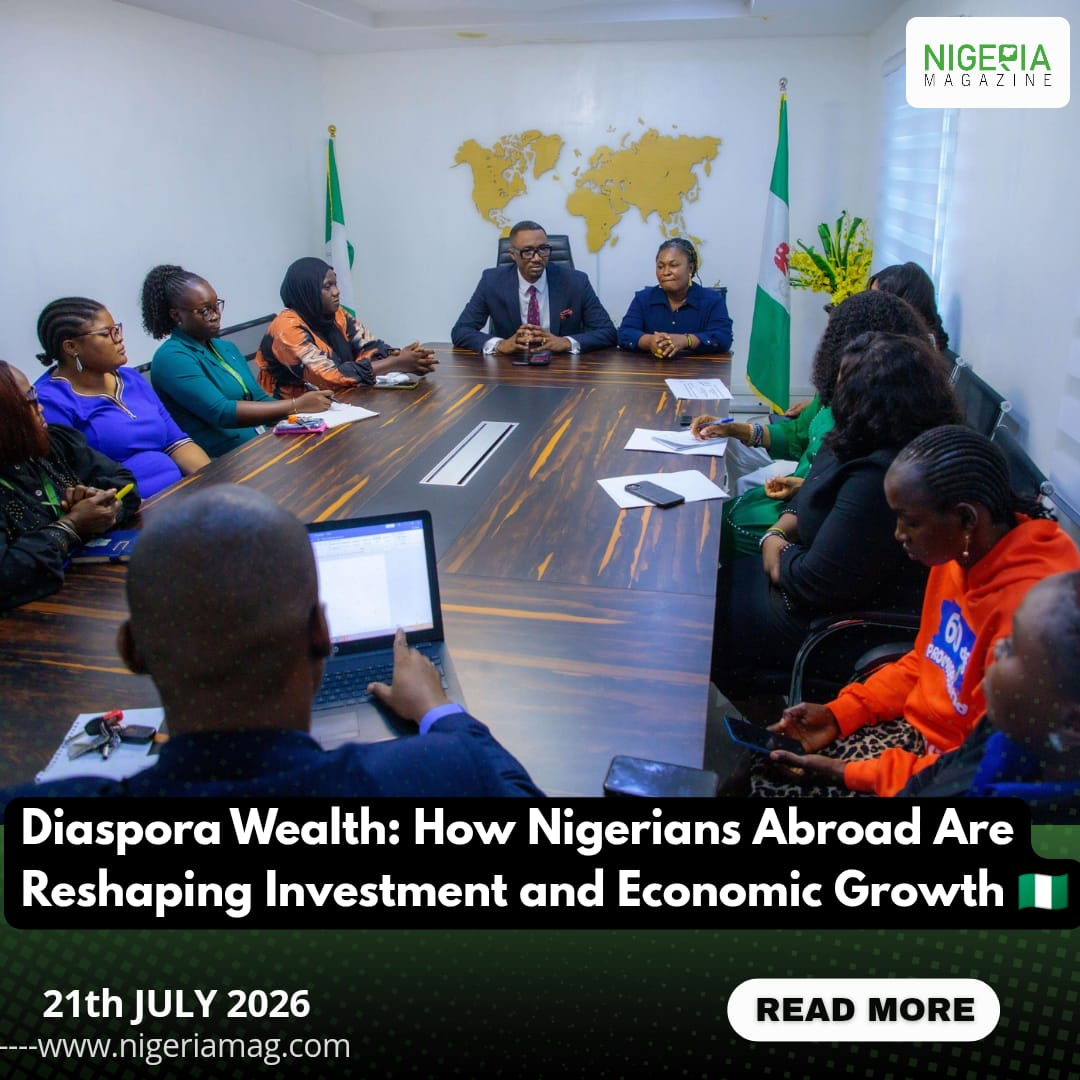
As millions of Nigerians build successful careers and businesses across the world, their financial contributions are becoming more than remittances. Diaspora wealth is increasingly fueling entrepreneurship, real estate, technology, and long-term economic development back home.
By Moses Chibuike Ezechukwu
For decades, conversations about Nigerians in the diaspora have revolved around one familiar theme: remittances. Every year, billions of dollars flow into the country to support families, pay school fees, cover medical expenses, and meet everyday needs. While these financial transfers remain vital, a bigger story is unfolding—one that deserves far more attention.
Nigerians living abroad are no longer just sending money home; they are investing in the country’s future.
Diaspora wealth has evolved into a powerful economic force capable of transforming industries, creating jobs, and stimulating innovation. From technology startups and agricultural ventures to real estate developments and manufacturing businesses, Nigerians abroad are increasingly taking calculated risks by investing in opportunities that promise long-term returns while contributing to national development.
This shift marks an important turning point. Instead of viewing remittances simply as financial support for relatives, many members of the diaspora now see Nigeria as a place where they can build sustainable wealth and leave lasting legacies.
One of the strongest drivers of diaspora investment is emotional connection. For many Nigerians abroad, home is more than a geographical location. It is where their roots lie, where family memories were made, and where they hope future generations will maintain a connection. This emotional attachment often inspires investments that go beyond profit.
Whether it’s building schools in rural communities, funding healthcare initiatives, opening hospitality businesses, or launching fintech companies, these investments often carry a dual purpose: generating income while making a meaningful impact.
Technology has also made cross-border investing significantly easier than it was a decade ago. Secure digital payment systems, online banking, virtual business meetings, cloud-based management tools, and improved communication platforms allow investors to oversee businesses without needing to relocate permanently. Distance is no longer the obstacle it once was.
The Nigerian technology ecosystem offers perhaps the clearest example of diaspora influence. Many startup founders have studied or worked abroad before returning with valuable international experience, while others continue to live overseas and invest remotely. Their global exposure often provides access to capital, mentorship, strategic partnerships, and international markets that local businesses might otherwise struggle to reach.
Beyond technology, agriculture presents enormous opportunities. Nigeria possesses vast arable land and a growing population that guarantees increasing demand for food production. Diaspora investors are recognising this potential by supporting mechanised farming, food processing, storage facilities, and agricultural exports. These investments not only create employment but also strengthen food security and reduce dependence on imported products.
Real estate remains another attractive sector. Residential housing, commercial developments, short-let apartments, and mixed-use properties continue to attract Nigerians living overseas who view property as a relatively stable long-term investment. Although the sector faces challenges such as land documentation and regulatory hurdles, demand for quality housing continues to encourage investment.
Healthcare is another area where diaspora professionals are making significant contributions. Nigerian doctors, pharmacists, nurses, and healthcare specialists working abroad increasingly invest in hospitals, diagnostic centres, telemedicine services, and medical training initiatives. Their international experience often introduces improved standards, modern equipment, and best practices that strengthen healthcare delivery.
Education follows a similar trend. Several Nigerians who built successful academic or professional careers overseas are establishing private schools, vocational training centres, scholarship programmes, and educational technology platforms. These efforts help bridge knowledge gaps while preparing young Nigerians for a competitive global economy.
However, investing in Nigeria is not without its challenges. Bureaucratic delays, inconsistent government policies, infrastructure deficits, currency volatility, and concerns about transparency continue to discourage some potential investors. Stories of fraudulent business partnerships or poorly managed projects have also created caution among members of the diaspora.
Despite these realities, many investors argue that the opportunities still outweigh the risks—provided proper due diligence is conducted. Successful diaspora investors often stress the importance of verifying business partners, engaging qualified legal advisers, maintaining accurate documentation, and adopting transparent governance structures before committing funds.
Government also has an important role to play. Creating investor-friendly policies, simplifying business registration, improving infrastructure, strengthening the legal system, and ensuring policy consistency would significantly increase diaspora confidence. Trust remains one of the most valuable currencies in investment, and governments that build trust often attract more capital.
Financial institutions are beginning to recognise this opportunity as well. Banks and investment firms now offer products specifically tailored to diaspora clients, including mortgage financing, investment portfolios, diaspora savings accounts, and digital banking solutions designed for Nigerians living abroad. These services make cross-border financial management easier and encourage larger investments.
Another encouraging development is the growing number of diaspora investment networks and professional associations. These groups bring together entrepreneurs, investors, industry experts, and professionals who share knowledge, identify investment opportunities, and collaborate on large-scale projects. By pooling resources and expertise, they reduce individual risk while increasing collective impact.
Young Nigerians also stand to benefit immensely from this trend. Diaspora-funded businesses create employment opportunities, provide mentorship, introduce international business standards, and encourage innovation. Exposure to global practices can improve productivity while inspiring local entrepreneurs to compete on an international stage.
Perhaps the greatest value of diaspora wealth lies not in the money itself but in the knowledge, networks, and experience that accompany it. Capital can finance projects, but expertise sustains them. Nigerians returning from different parts of the world often introduce fresh perspectives on leadership, governance, customer service, technology adoption, and operational efficiency. These intangible assets frequently become the true engines of long-term success.
Looking ahead, the future of diaspora investment in Nigeria appears promising. As younger generations establish themselves professionally across Europe, North America, Asia, the Middle East, and other regions, their capacity to invest will likely continue to grow. At the same time, digital innovation is reducing geographical barriers and making cross-border entrepreneurship more accessible than ever before.
To fully harness this potential, collaboration is essential. Government agencies, financial institutions, private businesses, community organisations, and diaspora communities must work together to create an environment where investment can thrive. Policies that encourage transparency, accountability, and ease of doing business will not only attract diaspora capital but also strengthen investor confidence across the board.
Nigeria’s greatest resource has always been its people. That resource extends far beyond its borders. Millions of Nigerians abroad continue to excel in medicine, engineering, finance, technology, education, entertainment, and countless other professions. Their success represents more than personal achievement; it represents an opportunity to contribute meaningfully to the country’s development.
Diaspora wealth is no longer simply about sending money home during festive seasons or supporting relatives through difficult times. It has become a strategic tool for nation-building, business expansion, innovation, and economic transformation. If properly supported and effectively harnessed, diaspora investment could become one of the defining pillars of Nigeria’s economic future.
The story of Nigerians abroad is gradually changing. It is no longer just a story of migration. It is becoming a story of partnership, opportunity, resilience, and shared prosperity. As more investors choose to reconnect with their homeland through meaningful investments, the dividends will extend beyond financial returns, helping to shape a stronger, more competitive, and more prosperous Nigeria for generations to come.

