


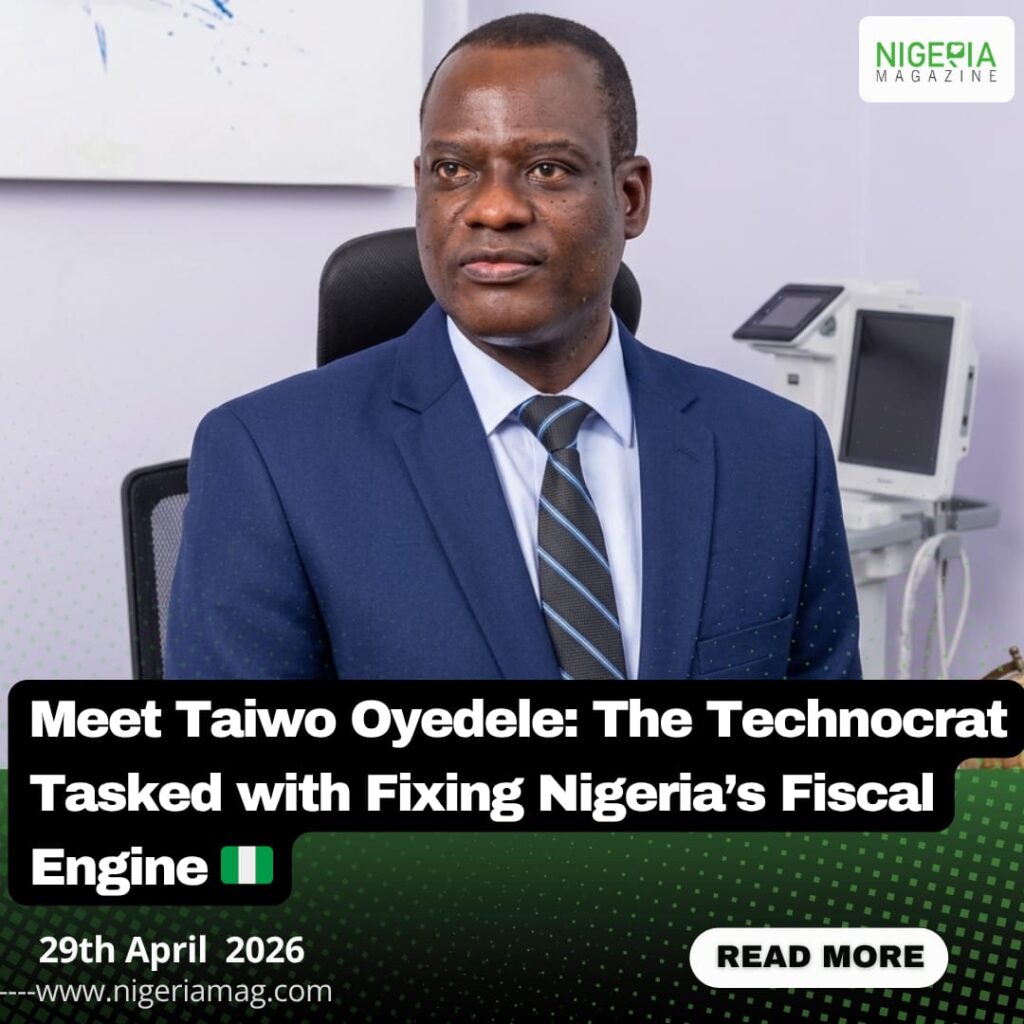
The rise of Taiwo Oyedele signals more than a career transition. It reflects a deeper shift in Nigeria’s governance instinct: a growing reliance on technocrats to fix problems that are fundamentally political.
As a fiscal policy partner at PricewaterhouseCoopers, Oyedele advised governments on tax systems, revenue mobilisation, & fiscal reform. His work focused on a persistent structural weakness: how to build a tax system capable of funding a modern state in an economy where compliance is low & informality is high.
From Boardroom to Cabinet
Oyedele’s appointment as Minister of Finance moves him from advising on the rules to owning the outcomes. That matters. Nigeria’s tax-to-GDP ratio hovers around 10.8% — one of the lowest globally. The state struggles to fund basics: schools, roads, healthcare. The gap isn’t just technical. It’s trust.
Businesses fear multiple taxation. Citizens see little return for compliance. State governments rely on federal allocation, not internal revenue. Oyedele’s challenge is to rewrite that social contract.
Why This Appointment Matters
Oyedele’s PwC track record gives markets & multilateral partners a signal — reform may be driven by data, not patronage.
Tax reform experience: He chaired the Presidential Fiscal Policy & Tax Reforms Committee. His proposals included harmonising taxes, reducing 60+ levies to under 10, & protecting vulnerable households. Now he has to implement them.
Private sector fluency: He speaks the language of investors & SMEs. In an economy where 80%+ of employment is informal, bridging that gap is critical.
The Political Problem
But technocrats don’t operate in a vacuum. Tax is political. Removing fuel subsidies sparked inflation. Widening the tax net hits traders, artisans, & market women who form the political base. Digital tax reforms face pushback from governors guarding local revenue.
Oyedele’s success will hinge on whether he can build coalitions — with governors, with the National Assembly, with citizens — to do what is fiscally necessary but politically costly.
What to Watch
Tax harmonisation bill: Will he get political backing to scrap nuisance taxes?
Informal sector strategy: Can he raise revenue without crushing micro-enterprises?
Transparency: Will budget implementation match reform rhetoric?
Nigeria has had brilliant ministers before. The graveyard of policy is full of good ideas. The test for Oyedele is execution in a system wired for resistance. If he succeeds, it won’t just be a win for fiscal policy. It will be proof that competence can survive politics.
The background work is done. The hard part starts now.
