


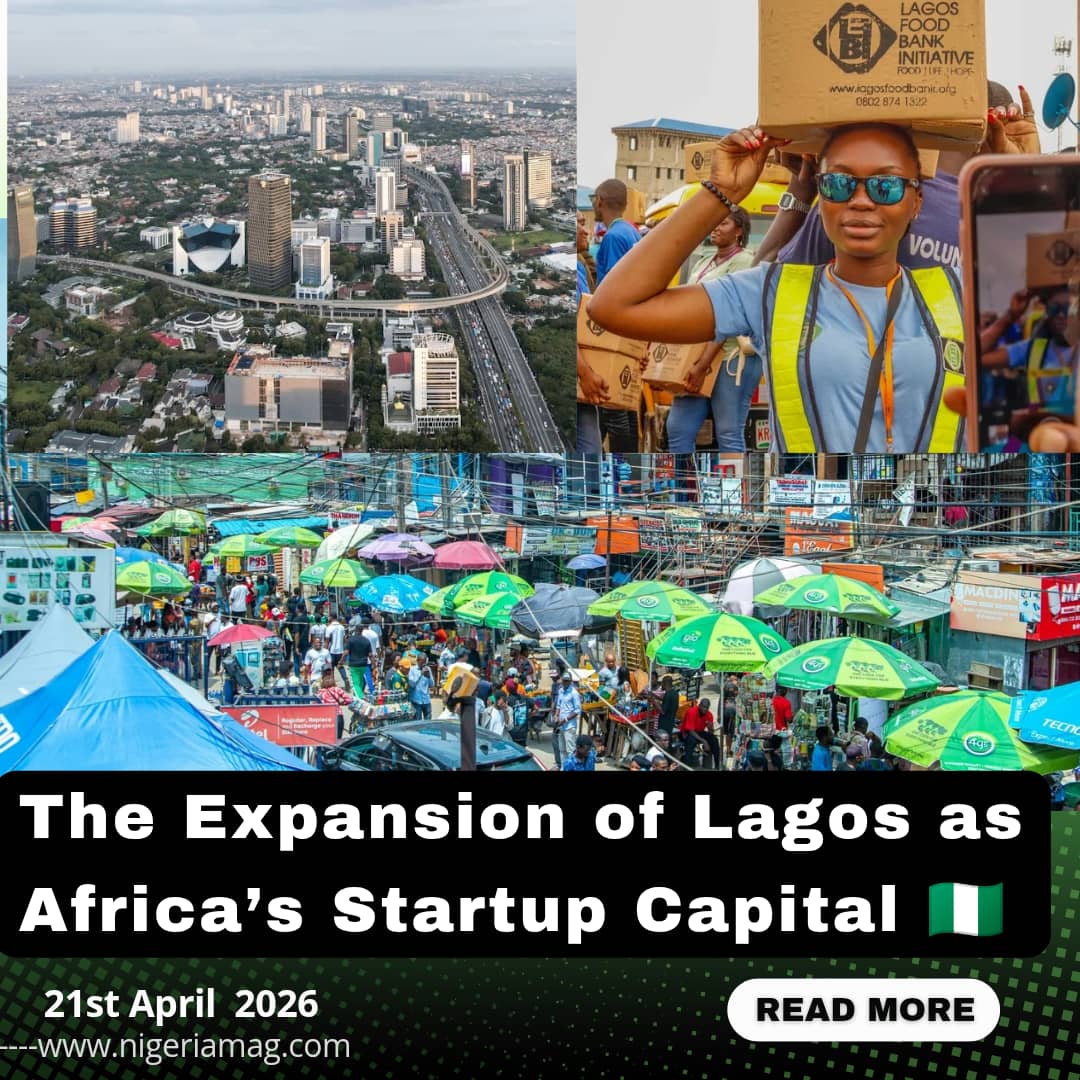
Why Lagos Continues Attracting Venture Capital and International Technology Investors
In 2026, Lagos has firmly established itself as Africa’s leading startup capital, drawing attention from venture capital firms, global technology companies, and international investors. What began as a modest innovation movement in the early 2010s has evolved into one of the fastest-growing tech ecosystems in the world. Today, Lagos is not only the economic engine of Nigeria but also a central hub for innovation across the African continent. The city’s rapid expansion as a startup powerhouse reflects a combination of demographic advantages, market size, technological adoption, and increasing investor confidence.
Lagos: Africa’s Fastest-Growing Startup Ecosystem
Lagos’ rise to prominence in the global technology landscape has been swift and remarkable. In 2025, the city was officially ranked as the world’s fastest-growing tech ecosystem according to the Global Tech Ecosystem Index, outperforming major cities such as Istanbul and Mumbai. This milestone marked a turning point in Africa’s digital transformation and underscored Lagos’ role as a major innovation hub. (Pulse Nigeria)
The city’s startup ecosystem has experienced explosive growth over the past decade. Since 2017, Lagos’ startup enterprise value has increased more than elevenfold, reaching an estimated $15.3 billion by 2025. This growth reflects both the maturity of existing companies and the steady emergence of new ventures across sectors such as fintech, logistics, health technology, and e-commerce. (Where Founders are Stars)
Equally significant is the number of startups operating within the city. Lagos hosts thousands of startups and accounts for between 80% and 90% of Nigeria’s entire startup ecosystem, making it the undisputed centre of innovation in the country. (Vanguard News)
The Role of Unicorn Startups in Lagos’ Expansion
One of the defining features of Lagos’ growth is its ability to produce unicorn companies—startups valued at over $1 billion. The city has generated several high-profile unicorns that have attracted global attention and validated Lagos as a serious investment destination.
Companies such as Interswitch, Flutterwave, OPay, Jumia, and Moniepoint have played a critical role in shaping the city’s startup ecosystem. These firms have demonstrated that African technology companies can scale rapidly and compete internationally, encouraging venture capital firms to consider Lagos as a viable market for large-scale investments. (Where Founders are Stars)
Beyond their financial success, these unicorn startups have helped create a network effect. They have trained engineers, managers, and founders who later establish new startups, thereby strengthening the overall ecosystem and expanding innovation capacity across the city.
Why Lagos Continues to Attract Venture Capital
A major reason Lagos remains attractive to investors is the substantial volume of venture capital already flowing into the city. Between 2019 and 2024 alone, Lagos attracted more than $6 billion in foreign startup funding, accounting for over 70% of Nigeria’s total technology investment inflows during that period. (Nairametrics)
This sustained inflow of capital reflects strong investor confidence in the city’s long-term growth potential. Venture capital firms are increasingly drawn to Lagos because of its proven track record of successful startups and the ability to generate returns despite economic challenges.
Furthermore, Lagos has become a gateway to the broader African market. Investors view startups in Lagos as vehicles for regional expansion, allowing them to scale operations into neighboring countries across West Africa and beyond.
Large Market Size and Demographic Advantage
Perhaps the most powerful driver of Lagos’ startup expansion is its population size and demographic profile. Lagos is one of the largest cities in the world, with millions of residents and a rapidly expanding urban population. This large consumer base offers startups immediate access to customers, making it easier to test products and achieve rapid growth. (Financial Times)
Nigeria itself has a youthful population, with a median age of approximately 18 years. This young demographic is highly adaptable to digital technologies and plays a critical role in driving demand for mobile applications, digital payments, and online services. (Pulse Nigeria)
In addition, widespread smartphone adoption and increasing internet penetration have transformed Lagos into a digital-first environment. These conditions create fertile ground for innovation and encourage investors to fund startups that serve a tech-savvy audience.
Infrastructure and Technology Ecosystem Development
Another key factor behind Lagos’ success is its growing technological infrastructure. The expansion of fibre-optic networks, data centers, and submarine cable systems has improved internet connectivity across the city. These developments have significantly lowered operational barriers for startups and increased investor confidence. (Tekedia)
Government initiatives have also played a role in shaping the startup landscape. Policies that support digital innovation, regulatory reforms, and infrastructure development have helped create a more business-friendly environment for entrepreneurs.
Additionally, Lagos has seen the emergence of innovation hubs, incubators, and co-working spaces that provide mentorship, funding opportunities, and technical support to early-stage startups. These collaborative spaces strengthen the ecosystem and encourage knowledge sharing among founders.
Fintech Leadership and Sectoral Dominance
Lagos is widely regarded as Africa’s fintech capital, with financial technology startups accounting for a significant share of venture capital investments. In 2024 alone, Nigeria’s fintech sector attracted over $2 billion in investments, highlighting its dominance within the broader technology ecosystem. (Pulse Nigeria)
The popularity of fintech startups in Lagos stems from the city’s financial challenges, including limited access to traditional banking services. Entrepreneurs have leveraged these challenges as opportunities to create digital payment solutions, mobile banking platforms, and financial inclusion tools.
Other fast-growing sectors include health technology, logistics, artificial intelligence, and creative technology. These industries are expanding rapidly due to rising consumer demand and increasing digital adoption.
Global Investor Confidence and International Partnerships
International investors are increasingly viewing Lagos as a strategic destination for technology investment. Global venture capital firms, multinational corporations, and development finance institutions are establishing partnerships with Lagos-based startups to tap into Africa’s rapidly expanding digital economy.
Reports indicate that Lagos is recognized as one of Africa’s most dynamic centres of venture-backed innovation. Analysts predict that with continued improvements in infrastructure and policy, the city could compete directly with leading global technology hubs. (Punch Newspapers)
Furthermore, Lagos’ reputation as an innovation hub continues to attract multinational technology companies seeking access to African markets. These partnerships provide local startups with access to international funding, expertise, and market opportunities.
The Entrepreneurial Culture of Lagos
Beyond infrastructure and funding, Lagos’ entrepreneurial spirit remains one of its most valuable assets. The city is known for its resilience, creativity, and problem-solving mindset. Entrepreneurs in Lagos often build solutions tailored to local challenges, such as transportation inefficiencies, unreliable power supply, and financial exclusion.
This culture of innovation has produced startups capable of solving real-world problems at scale. Investors recognize this practical approach as a major advantage, as it increases the likelihood of product adoption and long-term success.
Moreover, Lagos has developed a reputation as a place where ambitious individuals are willing to take risks. This mindset fuels startup creation and encourages venture capitalists to invest in bold and scalable ideas.
Challenges That Shape Continued Growth
Despite its remarkable progress, Lagos still faces challenges that influence its expansion as a startup capital. Infrastructure limitations, traffic congestion, power shortages, and regulatory complexities remain significant hurdles.
Talent retention is another ongoing concern.
Many skilled professionals seek opportunities abroad due to better living conditions and higher salaries. However, ongoing investments in infrastructure and technology parks aim to address these issues and improve the working environment for startups. (Financial Times)
Nevertheless, these challenges have not slowed Lagos’ growth. Instead, they have inspired innovative solutions and strengthened the resilience of its startup ecosystem.
The Future of Lagos as Africa’s Startup Capital
Looking ahead, Lagos is expected to maintain its position as Africa’s leading startup hub. Continued population growth, increased digital adoption, and expanding investment networks are likely to drive further expansion.
As artificial intelligence, renewable energy technology, and digital finance become more prominent, Lagos startups are expected to play a major role in shaping Africa’s digital future. The city’s ability to adapt to global technological trends will determine its long-term success.
Furthermore, ongoing partnerships between government agencies, private investors, and international organizations are expected to enhance the city’s infrastructure and improve access to funding.
The expansion of Lagos as Africa’s startup capital is not accidental—it is the result of deliberate investment, demographic advantage, entrepreneurial drive, and sustained global interest. With billions of dollars in venture capital, a thriving ecosystem of unicorn startups, and a massive consumer market, Lagos continues to attract international technology investors seeking high-growth opportunities.
As the city evolves, its influence on Africa’s digital economy will only grow stronger. Lagos is no longer just a regional technology hub—it is emerging as a global innovation center capable of shaping the future of startups across the continent and beyond.

