


By Moses Chibuike Ezechukwu
Exploring how Nigeria’s vast waterways and ocean resources can transform jobs, trade, and national development if properly harnessed.
Nigeria is often discussed in terms of oil, agriculture, and technology, but one of its most powerful yet underdeveloped assets lies in plain sight: water. From the Atlantic coastline stretching across the south to inland rivers like the Niger and Benue, water covers a large and strategic part of the country. Yet, for decades, it has remained an underutilised driver of economic growth. Today, as global economies shift toward sustainability and diversification, the concept of the “blue economy” presents Nigeria with a major opportunity to rethink its future.
The blue economy refers to the sustainable use of ocean and water resources for economic growth, improved livelihoods, and environmental protection. It includes sectors such as fishing, aquaculture, maritime transport, coastal tourism, renewable ocean energy, and marine biotechnology. For a country like Nigeria, with over 850 kilometres of coastline and vast inland waterways, the potential is enormous.
Nigeria’s Untapped Water Wealth
Nigeria’s water resources are often overlooked in national development conversations. The country has one of the largest inland waterway networks in West Africa, including major rivers like the Niger and Benue, as well as lagoons, creeks, and a coastline that opens directly into the Gulf of Guinea. Despite this, much of Nigeria’s transport and trade still depends heavily on road infrastructure, which is often congested and inefficient.
The irony is that water transport is often cheaper, safer for heavy goods, and more environmentally friendly than road transport. In countries where the blue economy is well developed, inland waterways help reduce logistics costs significantly and improve trade efficiency. Nigeria is yet to fully tap into this advantage.
Beyond transportation, Nigeria also has one of the richest fishing zones in West Africa. However, the country still imports large quantities of fish annually. This gap between potential and reality highlights a major opportunity for investment in aquaculture and sustainable fishing practices.
Economic Growth Through Maritime Trade
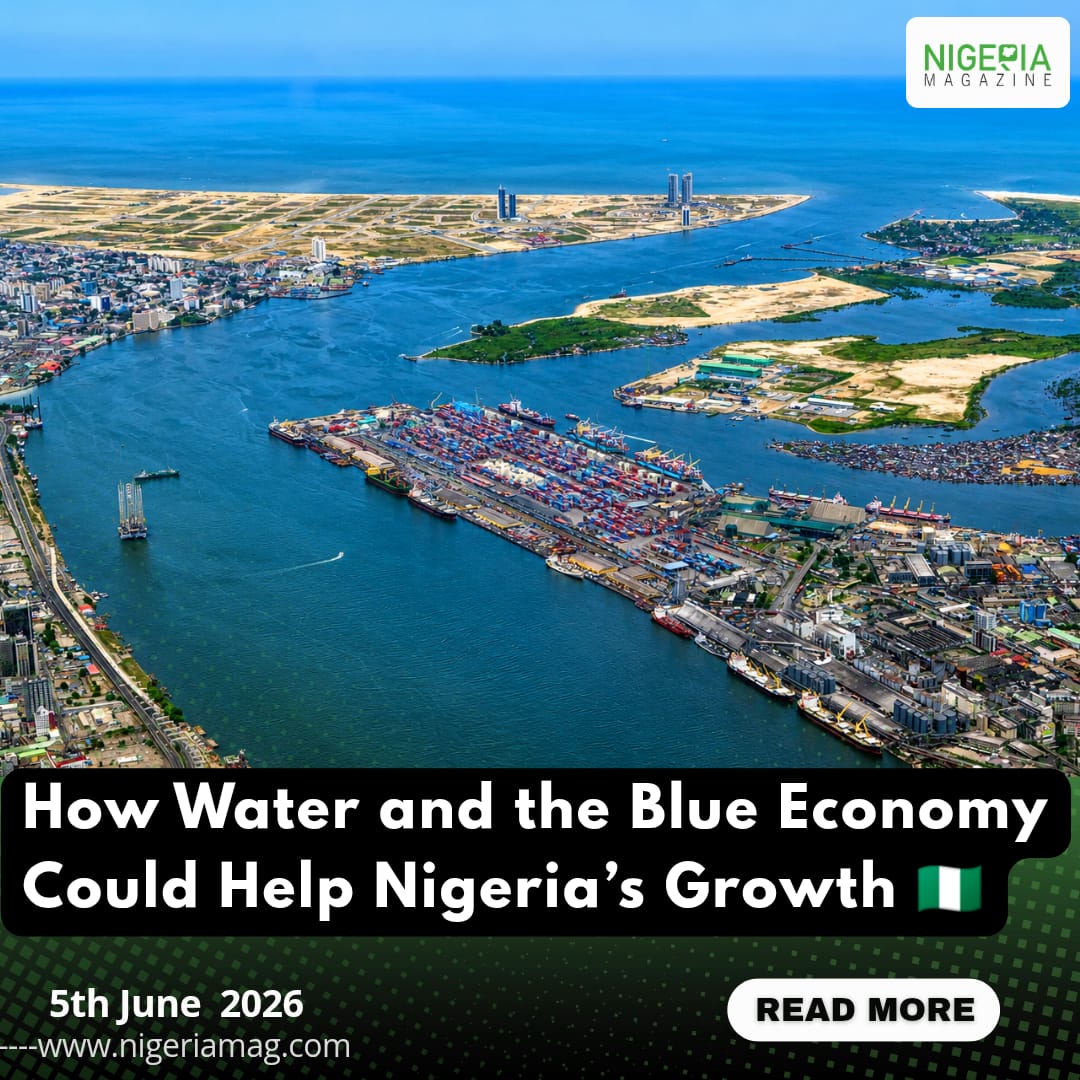
One of the most direct ways the blue economy can boost Nigeria’s growth is through maritime trade. The country already relies heavily on seaports such as Lagos Port Complex, Tin Can Island Port, and Onne Port for imports and exports.
However, inefficiencies, congestion, and outdated infrastructure continue to slow down operations.
Improving port efficiency and expanding coastal trade routes could significantly increase revenue and reduce the cost of doing business. If inland waterways are properly integrated into the transport system, goods could move more easily from coastal ports to inland markets, reducing pressure on highways and cutting logistics costs for businesses.
In addition, Nigeria’s position along the Gulf of Guinea gives it a strategic advantage in regional trade.
Strengthening maritime security and infrastructure could make the country a hub for West African shipping and logistics.
Fishing, Aquaculture, and Food Security
Another major pillar of the blue economy is fisheries. Nigeria’s demand for protein is rising rapidly due to population growth, yet local fish production still falls short. This has led to heavy reliance on imports, draining foreign exchange reserves.
Investing in modern aquaculture—fish farming in controlled environments—could dramatically change this situation. With proper support, training, and financing, small and medium-scale fish farmers could scale production and supply both local and regional markets.
Sustainable fishing in coastal waters is also essential. Overfishing and illegal fishing activities have threatened marine ecosystems, reducing fish stocks and affecting livelihoods in coastal communities. A well-regulated blue economy would balance economic activity with environmental protection, ensuring long-term benefits.
Job Creation and Youth Opportunities
Nigeria’s blue economy has the potential to become a major job creation engine, especially for young people. Maritime logistics, shipbuilding, coastal tourism, marine engineering, and fish farming are all sectors that can absorb large numbers of workers.
With unemployment remaining a major challenge in the country, diversifying into water-based industries could provide alternative career paths beyond traditional sectors like oil and government jobs. Training programs and partnerships between government and private investors would be key to unlocking this potential.
Climate Change and Environmental Protection
The blue economy is not just about profit; it is also about sustainability. Nigeria faces increasing environmental challenges such as coastal erosion, flooding, and pollution of water bodies. Climate change has made these issues more severe, especially in coastal cities like Lagos.
A well-managed blue economy would prioritize environmental protection alongside development.
For example, investing in mangrove restoration can protect coastlines from erosion while supporting fish breeding ecosystems. Similarly, cleaner maritime transport systems can reduce pollution in waterways.
Challenges Holding Nigeria Back
Despite the potential, several challenges continue to slow down progress. Poor infrastructure, weak enforcement of maritime laws, limited investment, and inadequate technology all contribute to underdevelopment in the sector.
Corruption and policy inconsistency also discourage long-term investment. Many private investors are hesitant to commit capital to large-scale maritime projects due to uncertainty in regulations and governance.
Additionally, lack of awareness about the blue economy among policymakers and the general public has limited its prioritization in national development plans.
The Way Forward
For Nigeria to fully benefit from its water resources, a coordinated national strategy is needed. This includes investing in modern port infrastructure, developing inland water transport systems, supporting aquaculture industries, and strengthening maritime security.
Education and awareness are also important. Universities and technical institutions should begin to focus more on marine sciences, ocean engineering, and blue economy-related disciplines.
Public-private partnerships will play a crucial role in funding and implementing large projects. With the right policies, Nigeria could transform its waterways into engines of growth.
The blue economy represents one of Nigeria’s most promising but underexplored paths to sustainable development. If properly harnessed, water could become more than just a natural resource—it could become a foundation for economic transformation, job creation, and environmental resilience.
As global economies continue to evolve, Nigeria has an opportunity to look beyond traditional industries and embrace its maritime identity.
The question is no longer whether the blue economy matters, but whether Nigeria is ready to fully invest in it.

