


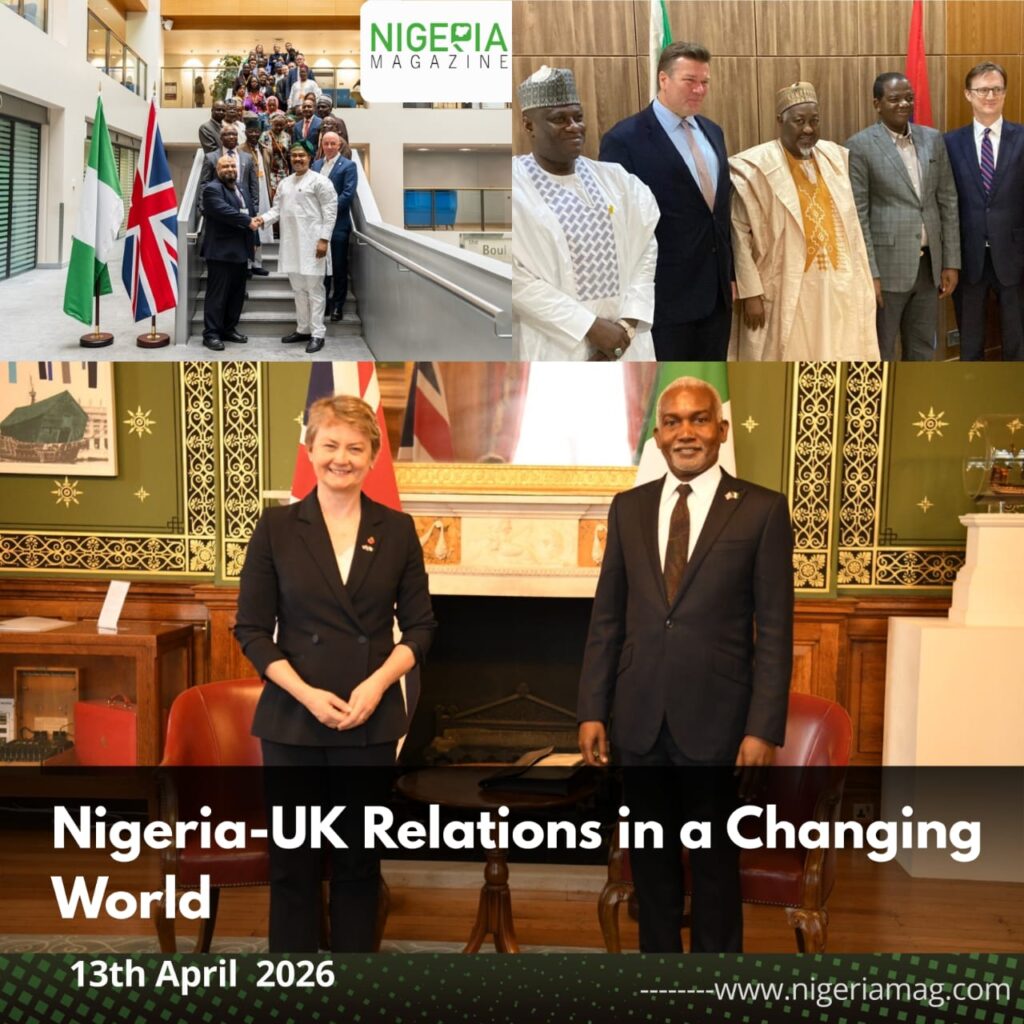
Examining new trade agreements, migration issues, education partnerships, and diplomatic developments🇳🇬🇬🇧
The relationship between Nigeria and the United Kingdom remains one of the most enduring bilateral partnerships linking Africa and Europe. Rooted in colonial history but reshaped by modern economic, political, and cultural ties, Nigeria–UK relations are evolving in response to global shifts in trade, migration policy, education, and diplomacy. In 2026, both countries are redefining their engagement to reflect a changing world—one shaped by post-Brexit economic priorities, global migration debates, and expanding educational and strategic partnerships.
Trade and Economic Cooperation
Trade remains a central pillar of Nigeria–UK relations. Nigeria is currently the United Kingdom’s 36th largest trading partner, with bilateral trade in goods and services estimated at around £8.1 billion in recent figures. (House of Commons Library) This trade relationship includes energy exports, manufactured goods, financial services, and growing cooperation in technology and investment.
A major development in economic relations is the Enhanced Trade and Investment Partnership (ETIP), launched in 2024. The agreement aims to deepen economic cooperation by improving market access, supporting Nigerian exports, and encouraging British investment in sectors such as renewable energy, infrastructure, agriculture, and digital technology. (Facebook)
For the United Kingdom, Nigeria represents one of the most significant markets in Africa, due to its large population, entrepreneurial economy, and regional influence. For Nigeria, the UK remains an important source of investment, finance, and technological expertise. British firms have historically played a role in sectors such as oil and gas, banking, telecommunications, and education.
Another important dimension of economic ties is the Nigerian diaspora in the United Kingdom. Remittances sent home by Nigerians abroad contribute significantly to Nigeria’s economy. Nigeria receives tens of billions of dollars in diaspora remittances annually, with a large share coming from Nigerians living in the UK, reinforcing economic links between the two societies. (The Whistler Newspaper)
Institutions such as the Nigerian-British Chamber of Commerce continue to support business collaboration, facilitating trade dialogue, investment opportunities, and policy engagement between the private sectors of both countries. (Wikipedia)
Migration and Mobility
Migration remains one of the most sensitive and politically significant aspects of Nigeria–UK relations. The movement of students, professionals, and families between both countries has strengthened people-to-people ties, but it has also raised policy challenges.
In recent years, Nigeria and the UK have worked to manage migration through structured cooperation. A Migration Returns Memorandum of Understanding (MoU) signed in 2022 established mechanisms for returning individuals who do not have the legal right to remain in either country. The agreement also focuses on ensuring migration processes are lawful, orderly, and humane. (GOV.UK)
Further discussions in 2025 and 2026 between Nigerian and British officials have focused on updating this framework to address migration management, security cooperation, and economic opportunities linked to mobility. (The Nation Newspaper)
However, migration policy in the UK has become increasingly restrictive. Political pressure to reduce net migration has led to tighter visa rules and debates about student migration routes. Some policy decisions have sparked controversy, particularly concerning international student visas and asylum claims. (The Guardian)
For Nigerians, the UK remains a major destination for education and employment. Balancing stricter immigration controls with the benefits of international mobility remains a key challenge for policymakers in both countries.
Education Partnerships and Academic Exchange
Education is one of the strongest links between Nigeria and the United Kingdom. Thousands of Nigerian students attend British universities each year, making Nigeria one of the largest sources of international students in the UK. (The Guardian Nigeria)
Scholarship programs such as Chevening and the Commonwealth Scholarship have played a significant role in shaping Nigerian leadership across politics, business, academia, and civil society. Over the past four decades, more than 1,500 Nigerians have received Chevening scholarships, creating a powerful network of alumni who maintain strong ties with British institutions. (The Guardian Nigeria)
In recent years, the UK has also adopted a new approach to international education. Rather than relying solely on overseas students travelling to Britain, the government is encouraging British educational institutions to expand internationally. This strategy includes establishing campuses and partnerships in countries such as Nigeria. (Financial Times)
Several prestigious British schools and universities have already launched or planned campuses in Nigeria. For example, well-known institutions have begun establishing schools in Lagos, reflecting both the demand for British-style education and Nigeria’s growing middle class. (The Times)
Additionally, British universities are increasingly partnering with Nigerian institutions to deliver degree programs locally. This model allows students to obtain British qualifications while studying in Nigeria, expanding access to global education without the need for international travel. (Businessday NG)
These educational collaborations strengthen cultural ties, support knowledge transfer, and contribute to capacity building in Nigeria.
Diplomatic and Strategic Relations
Diplomatic engagement between Nigeria and the United Kingdom remains active and multifaceted. High-level meetings between foreign ministers and officials from both countries regularly address issues such as economic cooperation, security, governance, and climate change. (Businessday NG)
Security cooperation has become particularly important. Both countries collaborate on counter-terrorism efforts, law enforcement training, and initiatives aimed at addressing organized crime and regional instability in West Africa.
The UK also supports development and governance programs in Nigeria, including projects focused on democratic institutions, economic reforms, and conflict prevention. These initiatives reflect Britain’s broader engagement with Africa as part of its post-Brexit foreign policy strategy.
At the same time, Nigeria’s global influence is growing. As Africa’s largest economy and most populous nation, Nigeria plays an increasingly important role in regional diplomacy and international organizations. The UK recognizes Nigeria as a key partner in addressing global challenges such as climate change, migration, and economic development.
Challenges and Opportunities
Despite strong ties, Nigeria–UK relations face several challenges. Differences over migration policies, visa restrictions, and trade barriers occasionally generate tensions. Additionally, economic volatility and political changes in both countries can affect the pace of cooperation.
Nevertheless, opportunities for collaboration remain significant. Nigeria’s expanding digital economy, creative industries, and energy transition plans present new areas for British investment and partnership. Meanwhile, the United Kingdom’s expertise in finance, education, and innovation offers valuable support for Nigeria’s development goals.
The Nigerian diaspora in the UK also continues to play a bridging role, fostering cultural exchange, business partnerships, and political dialogue between the two nations.
In a rapidly changing global landscape, Nigeria–UK relations are evolving beyond their historical foundations. Trade agreements, migration cooperation, educational partnerships, and diplomatic engagement are shaping a modern relationship based on mutual interests and shared challenges.
As both countries adapt to new economic realities and geopolitical shifts, their partnership is likely to deepen further. Strengthening economic ties, improving mobility frameworks, and expanding educational collaboration will be crucial in ensuring that Nigeria and the United Kingdom continue to benefit from one of the most important bilateral relationships linking Africa and Europe.
