


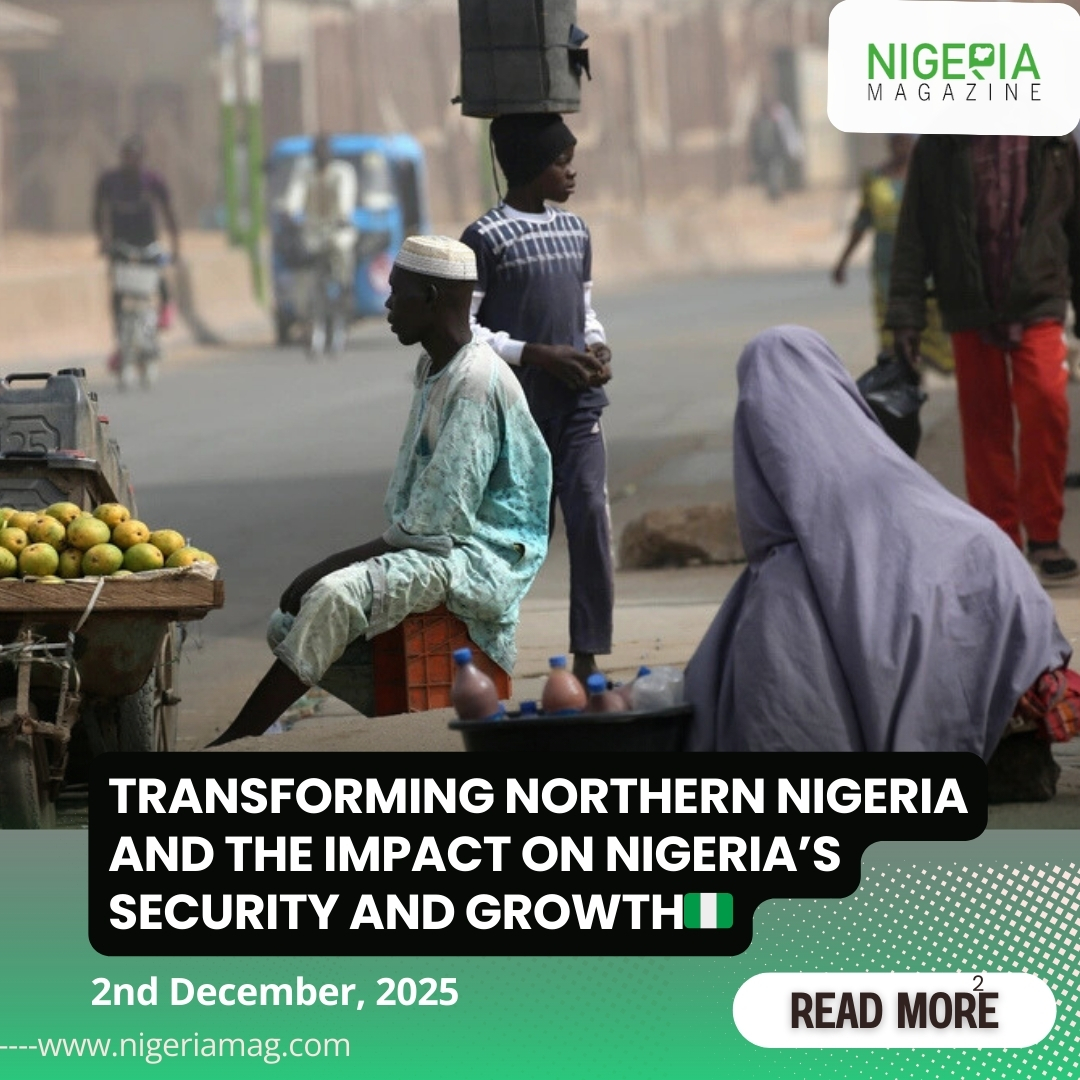
In his classic reflection There Was a Country, Chinua Achebe lamented a Nigeria that failed to live up to its promise. Many today reinterpret that lament, arguing that Nigeria’s fault lines were never accidental—they were the result of political arrangements built on convenience, imbalance, and decades of unspoken assumptions.
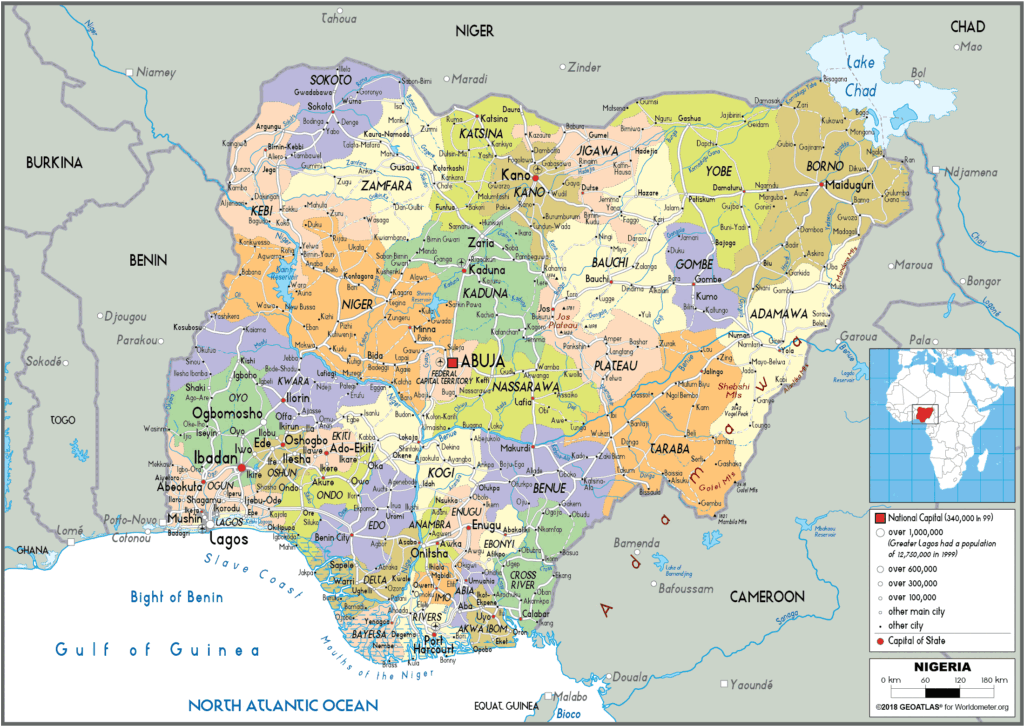
Few issues expose these uncomfortable truths more sharply than the crisis in Northern Nigeria and its consequences for national security and development. The recent debates surrounding negotiation with bandit groups, advocacy by certain Northern leaders for financial compensation, and the deepening distrust between regions have revived questions about how Nigeria reached this point—and what meaningful transformation must look like.
How Did Nigeria Get Here?
Northern Nigeria, as a political identity, was shaped long before independence. It emerged not as a homogenous cultural bloc but as a colonial administrative creation—one that grouped together ethnic nationalities, belief systems, and histories with little in common. Over time, political elites consolidated that identity into a voting bloc and power structure that gave the region numerical advantage but not necessarily economic transformation.
This imbalance became most visible in the rise of violent extremism and banditry. For years, the public assumed that calls for negotiation with bandits—popularised by figures like Sheikh Ahmad Gumi—were personal opinions rooted in conflict resolution strategies. However, statements by officials from the Arewa Consultative Forum (ACF) suggesting that bandits should be engaged and even compensated “just like Niger Delta militants” have raised deeper concerns.
These positions do not reflect isolated thoughts—they reveal a long-standing internal debate within the North itself about identity, governance, and the future.
Niger Delta Militancy vs. Banditry: A False Comparison
The comparison between Niger Delta militancy and Northern banditry has become increasingly contentious.
The Niger Delta militants mobilized around environmental degradation, marginalization, and the paradox of poverty within the region that produced Nigeria’s primary revenue. Their agitation was tied to identifiable grievances, which eventually informed the Amnesty Program.
Banditry in the Northwest and North-Central, however, does not stem from a political or environmental injustice against a defined people. It evolved from a mix of economic desperation, collapsed local governance, armed pastoral conflicts, proliferation of weapons, and extremist infiltration. Unlike the Niger Delta situation, there is no foundational ideological demand—only criminality, ransom taking, and territorial violence.
To equate both is to misunderstand the roots of Nigeria’s complex security challenges.
Northern Transformation: What Is Missing?
The security crisis in Northern Nigeria cannot be divorced from the region’s socioeconomic landscape:
Education gaps: The North still hosts the highest numbers of out-of-school children despite having public schools available. The problem is not mere availability—it is long-term systemic neglect.
Governance failures: Many northern communities have suffered decades of underinvestment, corruption, and political patronage systems that rarely prioritize development.
Economic contribution: While northern agriculture remains vital, the region’s participation in national revenue remains disproportionately low compared to its population size.
These realities raise a sensitive but necessary question: What does the North bring to the national table—and how can it bring more? Addressing this is not an attack; it is a prerequisite for balanced national development.
The Internal Divide: The Middle Belt Question
Lost within the broader northern narrative is the Middle Belt—a culturally diverse region that often feels overshadowed by the monolithic concept of “Northern Nigeria.” Many Middle Belt communities have suffered greatly from banditry, land conflicts, and extremism, yet their voices remain underrepresented in national conversations.
For transformation to occur, the Middle Belt must articulate its identity, interests, and demands with clarity. Insecurity in these states is not merely “a northern problem”—it is a national emergency.
Nigeria’s 2025 Political Calculus
The political tensions leading up to Nigeria’s next election reflect these divisions. Accusations that certain actors are committed to undermining President Bola Ahmed Tinubu’s government—whether for power rotation or ideological reasons—mirror the broader struggle within the federation.
But Nigeria cannot afford to reduce its future to ethnic or regional absolutism. A stable federation cannot function on threats of exclusion or political revenge. What is required is a leadership that understands the complexity of Nigeria’s security landscape and resists pressures to appease criminal elements.
Tinubu’s administration, like those before it, faces a dual challenge: combating insecurity while negotiating the power dynamics of a diverse nation. Transformation requires more than political continuity—it requires political courage.
The Path Forward: Rethinking the Northern Question
The transformation of Northern Nigeria is essential not only for the North but for the entire country. No region can progress while another is trapped in cycles of poverty and violence.
Nigeria must therefore adopt a multi-layered approach:
- Redefine Regional Identity and Representation
Northern Nigeria is not a monolith. The Middle Belt, minority ethnic groups, and other communities must be given stronger political platforms and voices. - Prioritise Education and Human Capital
Security cannot improve where millions of youths remain uneducated and vulnerable to recruitment by violent groups. - Demand Accountability from Regional Leaders
Northern political elites must answer for decades of underdevelopment. Blaming the federal government is no longer sustainable. - Reject Incentivisation of Criminality
Negotiating with bandits risks legitimizing violence. Any engagement must be structured around disarmament, justice, and reintegration—not financial reward. - Pursue Economic Diversification in the North
Agricultural modernization, renewable energy projects, mining reforms, and small-scale industry development must be central to policy. - National Unity on New Terms
Unity cannot thrive on silence or suppression. Nigerians must openly confront the realities of inequality, regional tensions, and the need for a restructured federation.
The Future Depends on Honesty
The transformation of Northern Nigeria is not optional—it is foundational to Nigeria’s security and economic growth. The country can no longer afford political arrangements built on propaganda or sentimental unity. A new path requires truth, courage, and a willingness by all regions to define their identities, responsibilities, and aspirations.
Nigeria stands at a crossroads. Whether it becomes the country Achebe once envisioned—or a nation forever fractured—depends on what choices are made today.

