


Science & Imagination
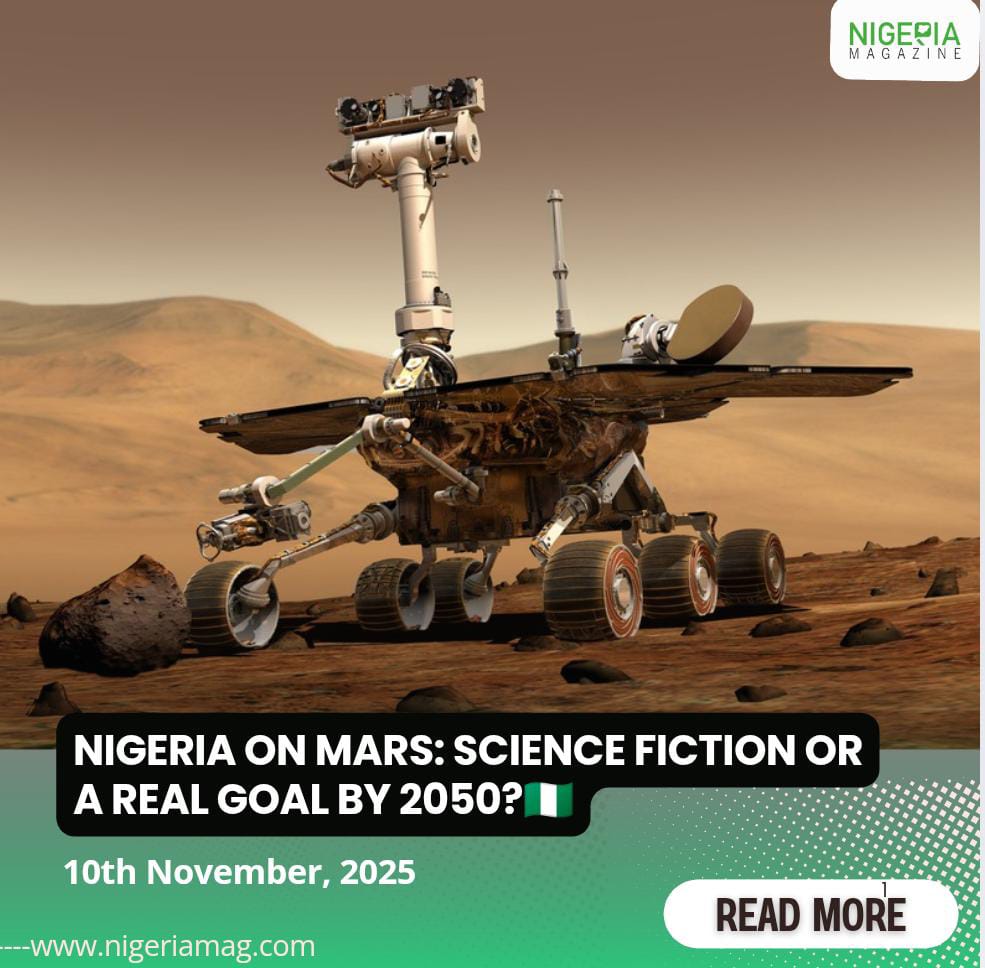
When you close your eyes and picture Nigeria on Mars, what springs to mind first? A Nigerian flag planted in the red dust beside an “Ife” rover? A cohort of Nigerian scientists monitoring a Martian greenhouse from Abuja? Both images are intoxicating — and both expose the tension between aspiration and engineering reality.
Nigeria already has a space story to build on.
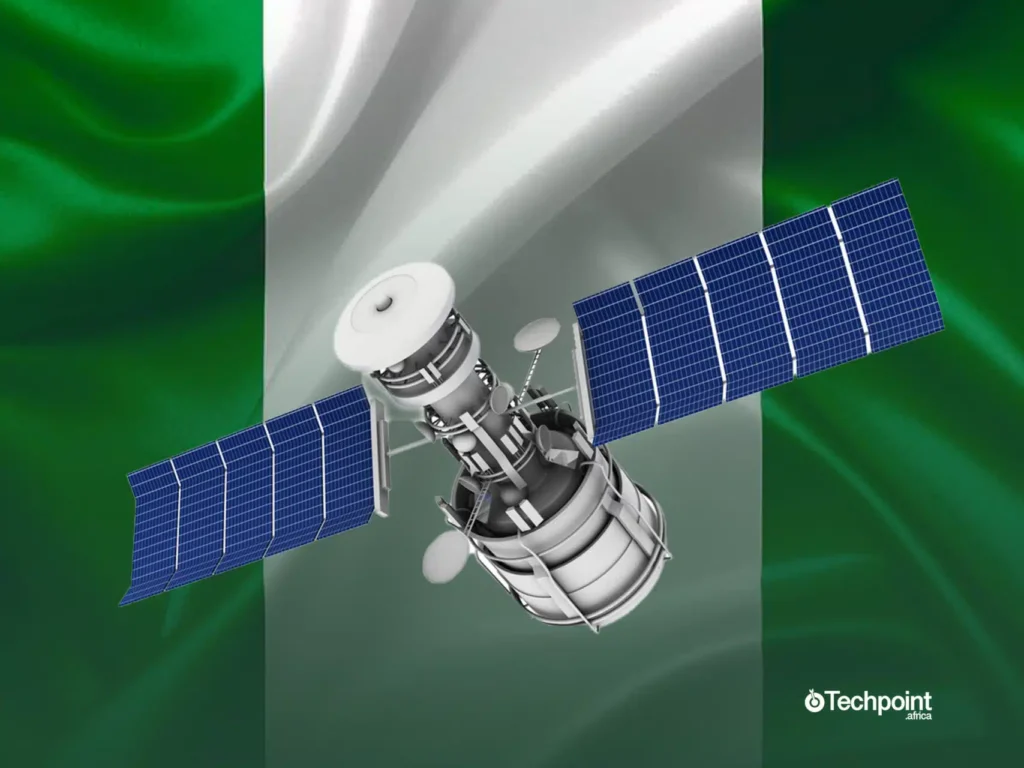
Since the early 2000s, the National Space Research and Development Agency (NASRDA) has shepherded a series of Earth-observation satellites — NigeriaSat-1, NigeriaSat-2 and others — that have provided valuable tools for agriculture, disaster monitoring, and national development planning. The country has also taken steps to strengthen regulation and institutional capacity in its space sector.
But Mars is a different scale of ambition.
Reaching and operating on the Red Planet requires long-duration deep-space hardware, launch vehicles capable of interplanetary flight, ground networks for communication across millions of kilometres, human-rated life-support systems, and — crucially — sustained funding and global partnerships. For a nation whose space programme has so far focused on satellite operations and remote sensing, the gap between “we can build and launch satellites” and “we can send people or landers to Mars” remains enormous.
Where Nigeria Realistically Stands
Nigeria has made credible advances in space engineering, training, and policy — and has recently taken visible steps toward human spaceflight collaborations. NASRDA has signed memoranda of understanding with international partners to explore astronaut training and joint missions, while new multi-satellite projects aim to build domestic expertise and infrastructure.
At the same time, the broader African context is changing rapidly. The establishment of the African Space Agency and a growing number of regional partnerships are opening new doors for shared research, technology transfer, and infrastructure. This continental momentum means Nigeria no longer operates in isolation but as part of an emerging African space ecosystem.
Geopolitics will inevitably shape this journey. Major global powers — from China to private U.S. launch companies — are expanding their involvement in Africa’s space sector. These partnerships can bring launch capacity, technology transfer, and training, but they also require careful diplomacy to avoid long-term dependency or loss of strategic autonomy.
The Hard Physics — and the Hard Price Tag
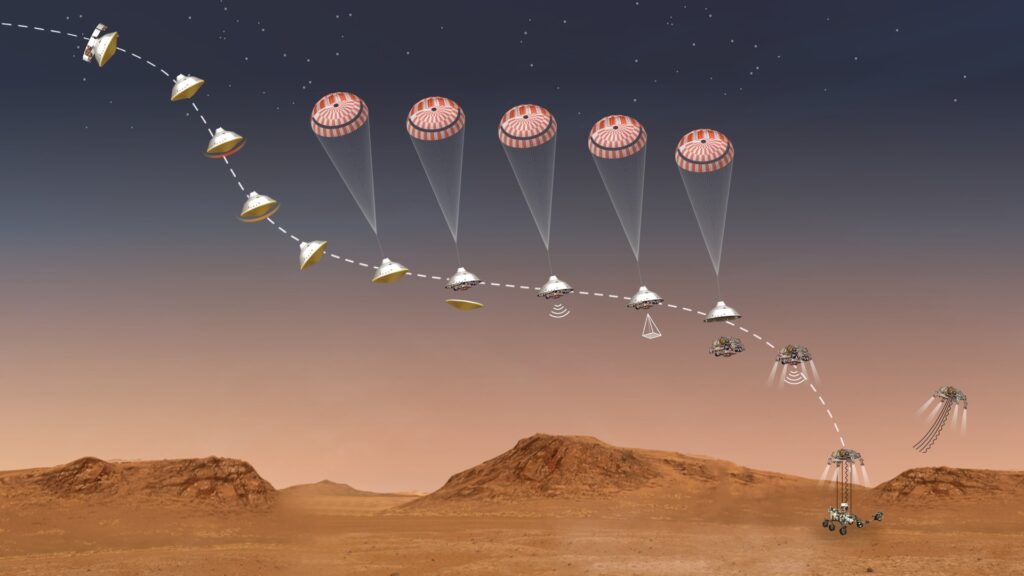
A human mission to Mars demands far more than current satellite-launch capabilities. It requires rockets powerful enough to push payloads out of Earth’s gravity well, sophisticated guidance and landing systems to operate in the thin Martian atmosphere, and life-support systems that can function autonomously for years.
The Apollo lunar programme, the closest historical analogue, cost the United States the equivalent of hundreds of billions of dollars in today’s terms. Even robotic Mars missions from NASA, ESA, or China routinely cost hundreds of millions to billions of dollars.
Given that reality, a fully independent Nigerian crewed mission to Mars by 2050 is implausible on purely technical and financial grounds. But a staged, collaborative approach — focusing on robotics, scientific instruments, and astronaut participation in international missions — is entirely within reach.
A Plausible Roadmap to 2050
If Nigeria, working with partners and its African neighbours, aims to have a presence on Mars by 2050, the path could unfold in stages:
- Consolidate National Capability (Now–2030)
Continue developing domestic expertise in satellite design, small-launcher technology, and mission control operations. Strengthen STEM education pipelines and expand mission systems engineering programmes to ensure Nigeria can design and build its own scientific payloads.
- Regional and International Partnerships (2025–2035)
Deepen collaboration through joint projects, ride-share payloads, and shared ground networks. Participate in global astronaut training initiatives and space science programmes. Strategic partnerships — with Africa’s emerging space agencies and established international players — will be key.
- Robotic Science Leadership (2030–2040)
Focus on designing and flying Nigerian-built instruments on international Mars missions — spectrometers, communication relays, or robotic scouts. These are achievable goals that build credibility and experience while delivering valuable science.
- Domestic Manufacturing & Launch Ecosystem (2035–2050)
Develop medium-class launch vehicles and expand satellite manufacturing capacity through public-private partnerships. Establish regional manufacturing hubs and communication infrastructure to reduce dependency on foreign launches.
- Human Spaceflight Participation (2040–2050)
By mid-century, Nigerians could be astronauts aboard international lunar or Mars logistics missions. Nigerian instruments could operate on the Martian surface, and Nigerian engineers could support mission control operations from Earth. Independent Nigerian boots on Mars may be unlikely by 2050 — but Nigerian participation in global Mars exploration is entirely feasible.
The Challenges Ahead
Funding and continuity: Space programmes need decades of consistent investment. Political turnover and shifting national priorities can easily derail long-term projects.
Launch independence: Nigeria currently lacks a heavy-lift rocket capable of deep-space missions. Without one, international collaboration remains essential.
Workforce scale: A Mars-capable space industry needs thousands of highly trained engineers, technicians, and scientists. Expanding this workforce will take sustained education and industrial policy.
Geopolitical balance: Partnerships with China, the U.S., Europe, or private firms each come with expectations and influence. Nigeria must maintain strategic autonomy while leveraging collaboration.
Science + Imagination: Why the Dream Matters
Even if the goal of a Nigerian-led mission to Mars remains aspirational, the vision serves a powerful national purpose. Bold scientific goals can drive education reform, inspire young people, and catalyze investment in technology, research, and industry.
The pursuit of Mars — even symbolically — encourages nations to push their scientific boundaries. For Nigeria, it can mean better satellite systems for weather prediction, more precise agricultural monitoring, improved telecommunications, and a stronger STEM culture. In this sense, Mars is less a destination than a direction — a north star guiding innovation and ambition.
The Bottom Line
A fully Nigerian-built, crewed Mars mission by 2050 may be beyond reach, but meaningful participation in Mars exploration is not. Nigerian engineers, astronauts, and instruments could play key roles in international missions, while the nation’s space industry continues to grow and mature.
By aiming high, Nigeria signals that it sees space not as fantasy, but as the next frontier of development and sovereignty. The journey to Mars will likely be collective, continental, and collaborative — and Nigeria, with its growing expertise and ambition, can be one of its leading voices.

