


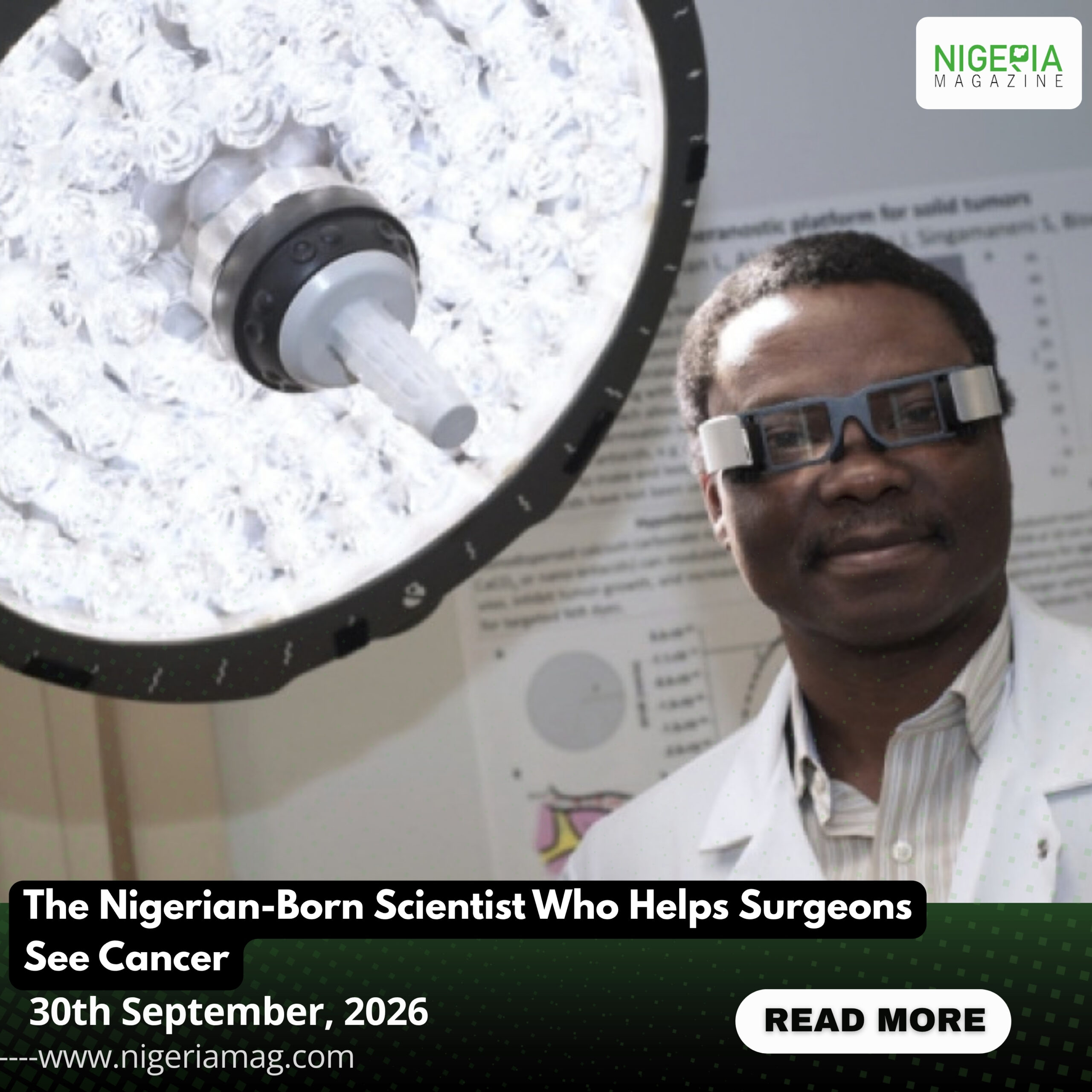
For a surgeon, removing a tumour means separating diseased tissue from healthy tissue by eye, and cancer does not always make that easy. Samuel Achilefu, a Nigerian-born scientist and biomedical engineer, built a tool to help.
From Nigeria to the operating room
Achilefu was born in 1963 in northern Nigeria, and his family moved to the southeast when he was five, for safety during the Civil War. He grew up in Aba. He later went to France on a French Government Scholarship to continue his education.
Today he is the inaugural Chair of Biomedical Engineering at UT Southwestern Medical Center in Dallas. Before joining in February 2022, he spent more than 20 years at Washington University in St. Louis.
The goggles
The idea grew out of frustration. Achilefu heard from surgeons who struggled to remove every remnant of a patient’s tumour. He wondered whether imaging technology could be made wearable, like military night-vision goggles, so surgeons could see the cancer while operating.
The result is the CancerVision Goggles. A fluorescent dye is injected into the patient and binds to cancer cells. The goggles emit near-infrared laser light that makes the dye fluoresce invisibly, and a specialised camera inside the goggles detects the glow. The surgeon therefore sees where the cancer is while operating. The dye is what finds the cancer, and the goggles make it visible.
The technology moved from the lab to patients quickly. By January 2015, the goggles had been worn in 27 surgeries on patients with breast cancer, liver cancer and melanoma. Explaining why he built them, Achilefu said: “Medicine becomes more objective if you can see what you are treating.”
A wider body of work
The goggles are his best-known invention, but not his only one. Achilefu’s research covers portable imaging devices and nanotechnology as well as molecular imaging. UT Southwestern credits him with more than 300 published scientific articles and over 70 issued US patents.
The recognition has followed. In February 2025 he was elected to the National Academy of Engineering, and he is also a member of the National Academy of Medicine and a Fellow of the National Academy of Inventors.
Why it matters for Nigeria
Achilefu’s career shows what Nigerian talent can achieve when it has support and opportunity. It also points to what Nigeria stands to gain if more of that talent can work on problems like cancer care at home.
He has also spoken about reach. He has said he wants the goggles to become easily accessible in low-resource areas, such as urban centres and rural hospitals. That hope matters in countries where specialist cancer care is hard to reach.
So how many more Achilefus could Nigeria produce if its laboratories and universities had the same support?

