


At the United Nations Headquarters in New York, the global education community delivered a clear message: education cannot wait.
Co-hosting the Global Partnership for Education (GPE) Multiply Possibility High-Level Pledging Event alongside Italy, Nigeria joined an international effort that mobilized more than $3 billion in global funding and approximately $471 billion in domestic commitments across more than 50 partner countries.
Yet, beneath the high-level diplomacy and staggering financial figures lies a critical reality that Nigeria’s delegation highlighted on the world stage: pledges are only the starting point. The real test lies in delivery—turning billions into classrooms, classrooms into quality learning, and commitments into opportunities for children who need them most.
For Nigeria, closing the education gap is not simply a policy ambition. It is an urgent economic and social imperative.
The Scale of the Challenge
To understand the significance of the global commitment, it is important to consider the education landscape at home.
Sub-Saharan Africa remains at the centre of the global education crisis, and as Africa’s most populous nation, Nigeria carries both the weight and opportunity of this demographic reality.
Educational disparities across the country are driven by a complex combination of economic hardship, geographic barriers, inadequate infrastructure, and regional security challenges.
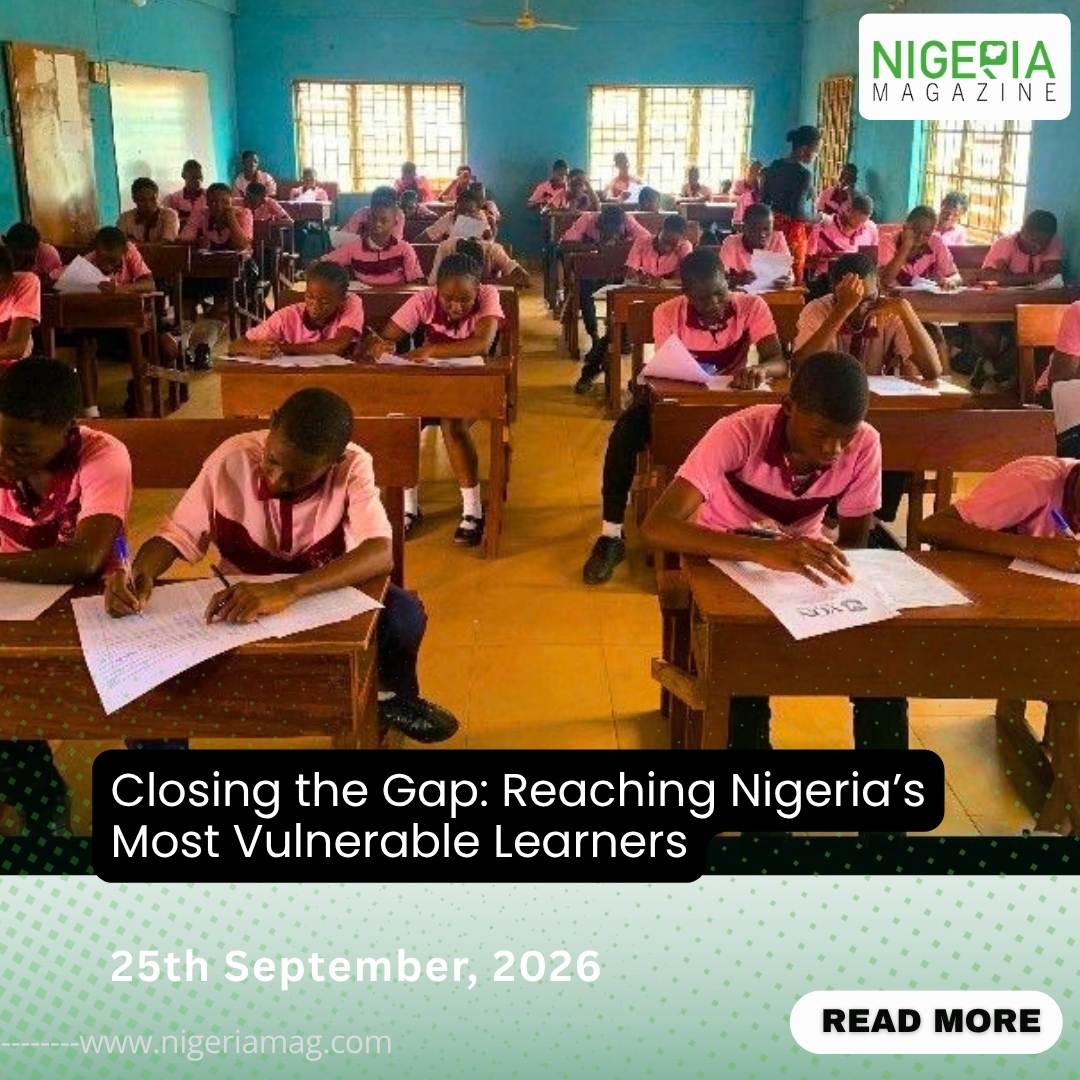
Millions of children—particularly those in underserved rural communities, informal urban settlements, and conflict-affected areas—remain out of school or attend schools that lack basic infrastructure, trained teachers, and modern learning materials.
For girls, children with disabilities, and young people living in hard-to-reach riverine or nomadic communities, the barriers can be even greater.
These are the children whose lives must be transformed when global and domestic education resources are mobilised.
Turning Commitments into Action
Under the leadership of President Bola Ahmed Tinubu, GCFR, and with the direct engagement of Vice President Kashim Shettima, GCON, Nigeria’s education strategy is increasingly focused not only on access, but also on building resilient systems capable of delivering quality learning.
Reaching the most vulnerable learners will require targeted action across three critical areas.
1. Targeted Infrastructure in Underserved Communities
Education funding must prioritise geographic equity.
Investing in and modernising learning environments in high-density urban settlements, remote rural communities, and underserved Local Government Areas can help remove the physical barriers that prevent children from enrolling and remaining in school.
For children living far from functioning schools, access begins with having a safe and adequately equipped place to learn.
2. Upskilling and Retaining Local Educators
A classroom is only as effective as the quality of teaching taking place inside it.
Investment in professional development, modern teaching methods, digital learning tools, and appropriate incentives for teachers serving in difficult-to-reach communities will be essential.
Strengthening the capacity and retention of educators can help ensure that increased school access translates into meaningful improvements in foundational literacy and numeracy.
3. Digital Inclusion and Flexible Learning
Not every child can immediately return to a traditional classroom.
For young people affected by displacement, poverty, geographic isolation, or other barriers, flexible and non-formal learning pathways can provide an important bridge back into mainstream education.
Community-based learning hubs, supported by appropriate digital tools and flexible programmes, can help extend educational opportunities to children who might otherwise remain excluded.
Measuring Success: The 36-Month Imperative
As international development partners, civil society organisations, and the private sector align around the GPE framework, the success of these commitments should ultimately be measured not by the size of the funds announced, but by the changes experienced by children and communities.
Key indicators could include:
| Focus Area | 12-Month Target | 36-Month Horizon |
|---|---|---|
| Out-of-School Re-entry | Enrollment mapping and pilot re-entry hubs in high-risk LGAs | Verifiable reduction in regional out-of-school numbers |
| Foundational Literacy | Baseline learning assessments across primary cohorts | Standardised improvements in reading and basic mathematics |
| Teacher Capacity | Deployment of digital training resources to rural educators | Measurable improvement in the number and capacity of certified primary teachers |
These measures provide a pathway for translating financial commitments into outcomes that can be seen, measured, and sustained.
The Possibility of the Next Generation
When a nation invests in its most vulnerable learners, it does more than fulfil a social responsibility. It invests in its economic future.
Every child brought back into the classroom represents a potential innovator, skilled worker, entrepreneur, professional, and leader. Giving these children access to quality education strengthens families, communities, and ultimately the wider economy.
The high-level gathering in New York demonstrated that there is international willingness to support Nigeria’s education ambitions. The next challenge is ensuring that this support reaches the communities and children who need it most.
The mandate now moves from global pledges to local delivery—from commitments on the international stage to functioning classrooms, capable teachers, accessible learning opportunities, and measurable improvements in the lives of Nigeria’s most vulnerable learners.
For millions of children waiting for their chance to learn, that is where the real possibility begins.

