


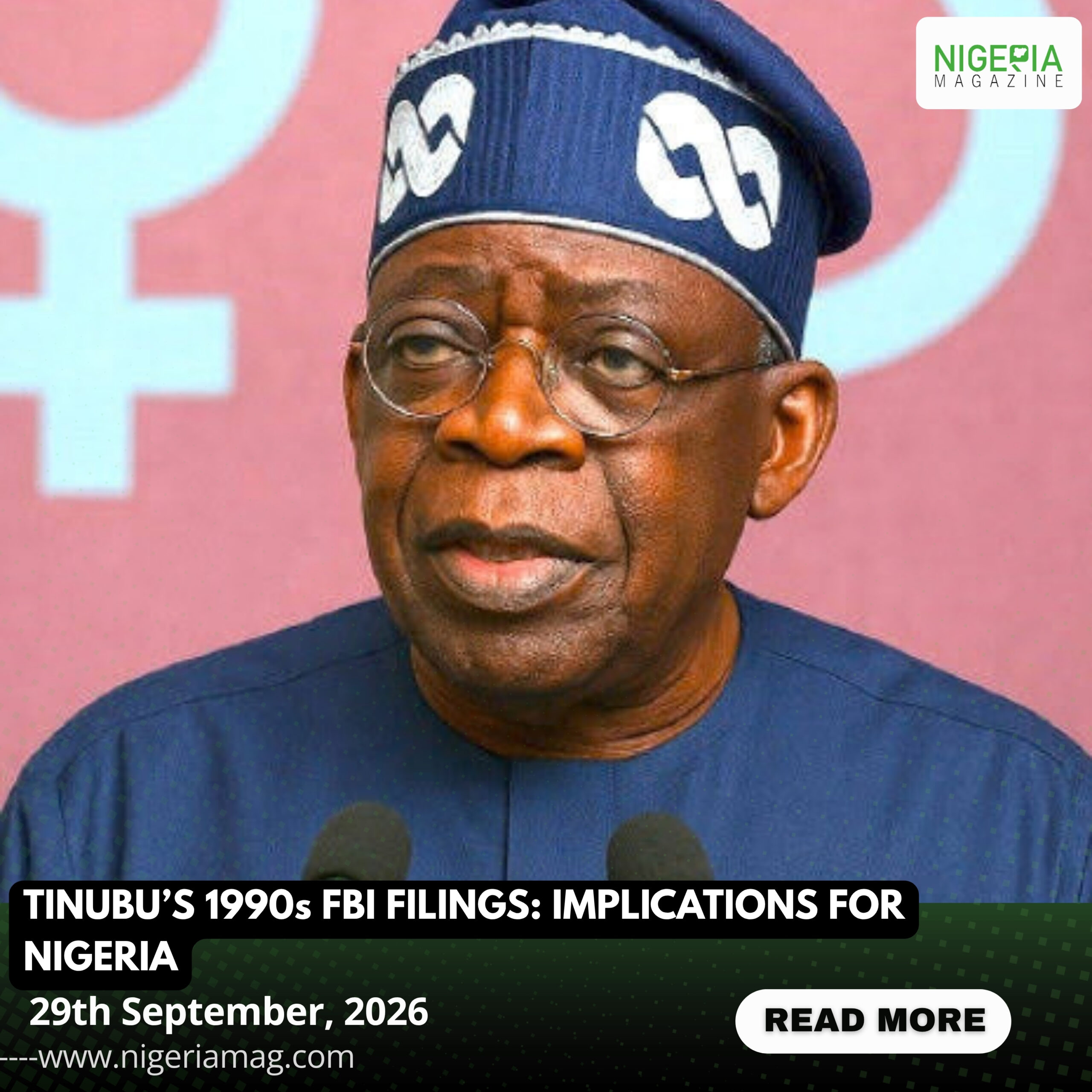
Fresh developments in a long-running Freedom of Information Act case in the United States have again brought President Bola Ahmed Tinubu’s activities and associations in the early 1990s into the spotlight.
The case, before the United States District Court for the District of Columbia, was filed by American transparency activist Aaron Greenspan, who is seeking historical records from the FBI, the Drug Enforcement Administration and other US agencies.
The records are connected to investigations in the early 1990s involving an alleged international drug-trafficking and money-laundering network.
A 2025 ruling showed that Greenspan had specifically requested FBI records relating to Tinubu and Nigerian businessman Abiodun Agbele, including interview records from 1992 and 1993.
WHAT THE NEW FILINGS SHOW
Recent filings and sworn declarations by US law-enforcement agencies have brought renewed attention to the case.
Reports on a September 23 filing indicate that the FBI searched a multi-subject investigative file using the names “Bola” and “Tinubu”.
The records reportedly include information relating to drug-trafficking investigations, controlled purchases involving a cooperating witness, confidential sources, electronic surveillance and grand-jury proceedings.
The US government is seeking to keep significant portions of the material withheld, citing protections for confidential sources, investigative methods, grand-jury information, privacy and other law-enforcement interests.
However, the existence of investigative records does not, by itself, establish criminal wrongdoing.
The Nigerian Presidency has maintained that the matter is a civil FOIA dispute over access to historical records and not a criminal prosecution against President Tinubu.
WHY IT MATTERS
The records could provide more information about what US authorities investigated and documented about Tinubu and others more than three decades ago.
If further documents are released, they could shed light on the nature of the investigation, the individuals involved and what eventually happened to the cases.
But any document released would have to be considered in context. A person’s name appearing in an investigative file does not automatically establish criminal conduct.
THE POLITICAL DIMENSION
The controversy comes as Nigeria approaches the 2027 general elections, giving the issue an added political dimension.
Opposition groups and other critics are likely to continue demanding greater transparency, while the Presidency has rejected attempts to portray the FOIA proceedings as a criminal case against the President.
One of the most serious claims circulating is that the records could show that Tinubu cooperated with US authorities against alleged associates in a heroin-trafficking operation.
That claim has not been established by the court and remains an allegation.
THE BIGGER QUESTION
The next stage of the case could determine how much of the historical material becomes public.
If more records are released, Nigerians will be able to examine the evidence and draw their own conclusions. If the records remain sealed or heavily redacted, questions over the reasons for withholding them are likely to continue.
For Nigeria, the issue ultimately comes down to evidence.
As the US court continues to consider the FOIA dispute, attention will remain on what the FBI records actually contain, what the court has established, and what remains allegation.
With the 2027 elections approaching, that distinction could become increasingly important in Nigeria’s political debate.
Ubong Usoro for Nigeria Magazine

