


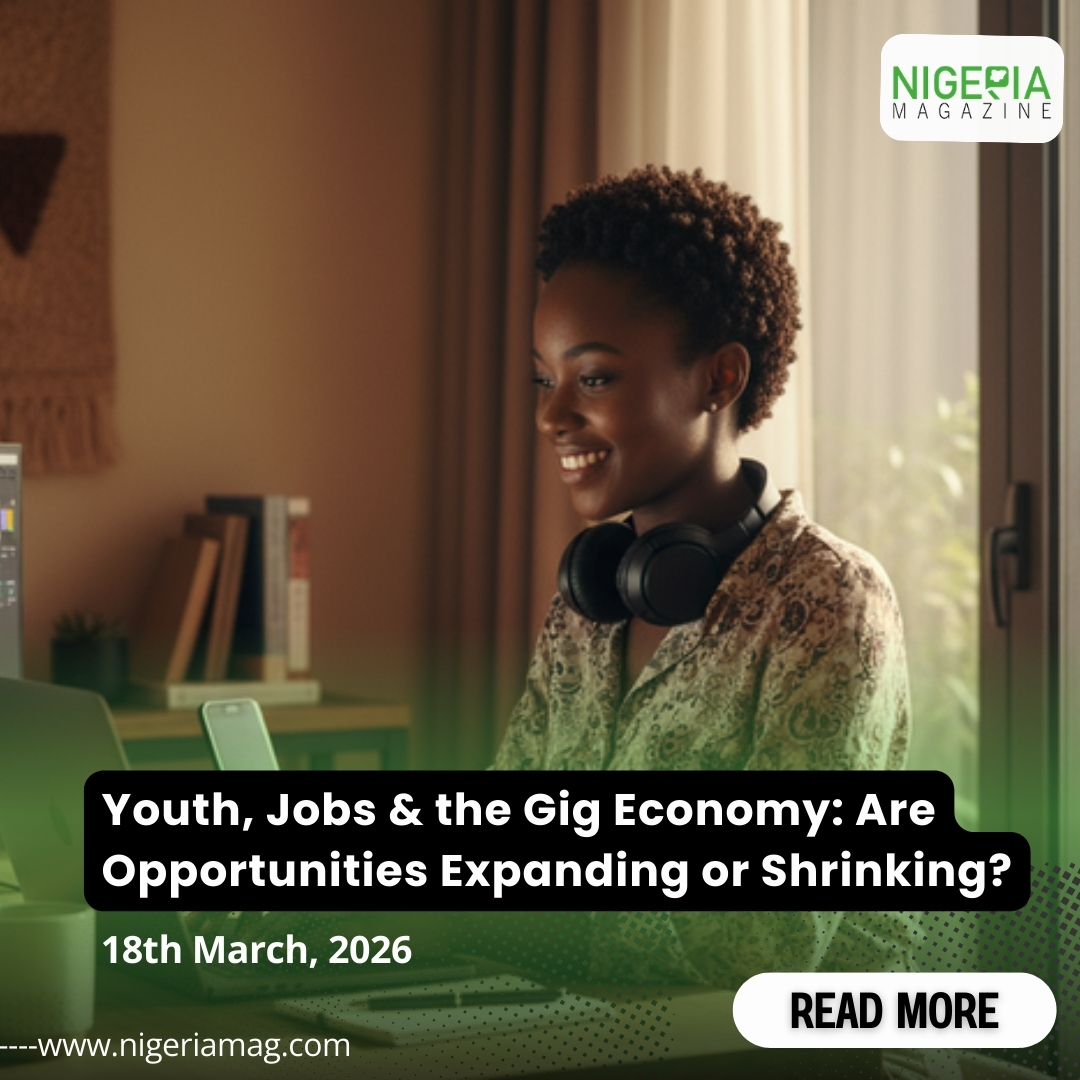
Labour trends, remote work, and skills in the digital age
Across the world, the relationship between young people and work is undergoing a profound transformation. Traditional full-time employment is no longer the only pathway into the labour market. Instead, a growing number of young workers are entering the gig economy—a system built around freelance, short-term, and digitally mediated work.

For some, this shift represents an expansion of opportunity. For others, it signals a more uncertain future. As technology reshapes labour markets and remote work breaks geographical barriers, the key question remains: Are opportunities for young people expanding—or simply becoming more precarious?
The Rise of the Gig Economy
The gig economy has grown rapidly over the past decade, fueled by digital platforms and changing employer needs. Globally, it now represents up to 12 percent of the labour market, with hundreds of online platforms connecting workers and clients across borders. (World Bank)

Young people dominate this new workforce. Gen Z and millennials make up the majority of freelancers and digital platform workers, reflecting their familiarity with smartphones, digital tools, and flexible work models. (GigsCheck)
Several factors explain this trend:
Flexibility: Young workers can combine gigs with education or other jobs.
Lower entry barriers: Freelance platforms allow individuals to start working without traditional hiring processes.
Global access: Digital marketplaces connect workers in developing economies with clients worldwide.
For many youth—especially in regions with limited formal employment—the gig economy offers a new entry point into the workforce.
Remote Work and a Borderless Labour Market
Another major transformation is the surge in remote work. Companies increasingly recruit talent from anywhere, accelerating the globalisation of labour.
In 2025 alone, cross-border remote hiring rose by about 38 percent, with workers aged 18–30 making up nearly half of the remote workforce. (Career Ahead Magazine)
This shift is redefining career possibilities for young people:
A graphic designer in Lagos can work for a startup in Berlin.
A software developer in Nairobi can collaborate with teams in Silicon Valley.
A virtual assistant in Manila can support clients across several continents.
For youth in developing economies, remote work can reduce geographic barriers to employment and increase income opportunities.
However, this global competition also intensifies pressure. Workers from different countries now compete for the same projects, often driving down wages for lower-skill tasks.
The Skills Race: Digital Competence as Currency
The expanding gig economy has created a labour market that rewards specialized skills rather than general qualifications.
Demand for freelancers is strongest in fields such as:
Software development
Artificial intelligence
Cybersecurity
Digital marketing
Graphic design and creative media
Workers with these niche skills often command higher earnings and more stable freelance careers. (StartupTalky)
Across Africa and other emerging markets, digital upskilling has become central to youth employment strategies. In some regions, AI-related jobs have grown by more than 50 percent in recent years, while cybersecurity roles continue to expand steadily. (LinkedIn)
This trend highlights a widening divide in the gig economy:
Highly skilled workers thrive, accessing global clients and better pay.
Low-skill workers face intense competition, often competing for lower-paid microtasks.
Education systems and training programs therefore play a critical role in preparing youth for this new labour landscape.
The Hidden Risks of Gig Work
Despite its promise, the gig economy also presents significant challenges for young workers.
One major concern is the lack of job security. Most gig workers are classified as independent contractors, meaning they typically do not receive benefits such as paid leave, health insurance, or retirement contributions. (World Bank)
Income volatility is another challenge. Because gigs depend on demand and project availability, earnings can fluctuate dramatically from month to month.
In addition, remote digital labour markets often reward workers with advanced skills or strong reputations, leaving newcomers struggling to gain visibility and stable income.
Even in advanced economies, youth employment challenges remain significant. Recent reports show rising youth unemployment in some countries, illustrating that traditional labour markets still struggle to absorb young workers. (The Guardian)
These trends suggest that while new forms of work are emerging, they are not always replacing the stability once offered by long-term employment.
Changing Attitudes Toward Work
Young people’s expectations about work are also evolving. Flexibility and autonomy are highly valued, but many young workers still seek mentorship, collaboration, and stability.
Recent surveys show that while remote work remains popular, younger employees increasingly prefer hybrid arrangements that combine remote flexibility with in-person professional development and social interaction. (Axios)
This shift reflects a broader recognition that career growth often requires networks, guidance, and workplace experience—elements that purely remote or gig-based work may struggle to provide.
Expanding or Shrinking Opportunities?
So, are opportunities for young workers expanding or shrinking?
The answer is both.
Opportunities are expanding in several ways:
Digital platforms allow youth to enter global labour markets.
Remote work enables employment beyond geographic boundaries.
New industries—particularly in technology—are creating demand for specialized skills.
But opportunities are also becoming more fragile:
Gig work often lacks social protections.
Global competition can drive wages downward.
Skill gaps risk excluding many young workers from high-value roles.
The future of youth employment will likely depend on how governments, businesses, and educational institutions respond to these changes.
The Road Ahead
To ensure that the gig economy becomes a pathway to prosperity rather than precarity, experts emphasize several priorities:
Investing in digital skills training to prepare youth for emerging industries.
Expanding social protections for gig and freelance workers.
Improving digital infrastructure, particularly in developing economies.
Encouraging hybrid work models that combine flexibility with mentorship and career growth.
The gig economy is no longer a niche phenomenon—it is becoming a central feature of the global labour market.
For young people, it represents both an opportunity and a challenge. Whether it ultimately expands or shrinks their prospects will depend on how societies adapt to a world where work is increasingly flexible, digital, and global.

