


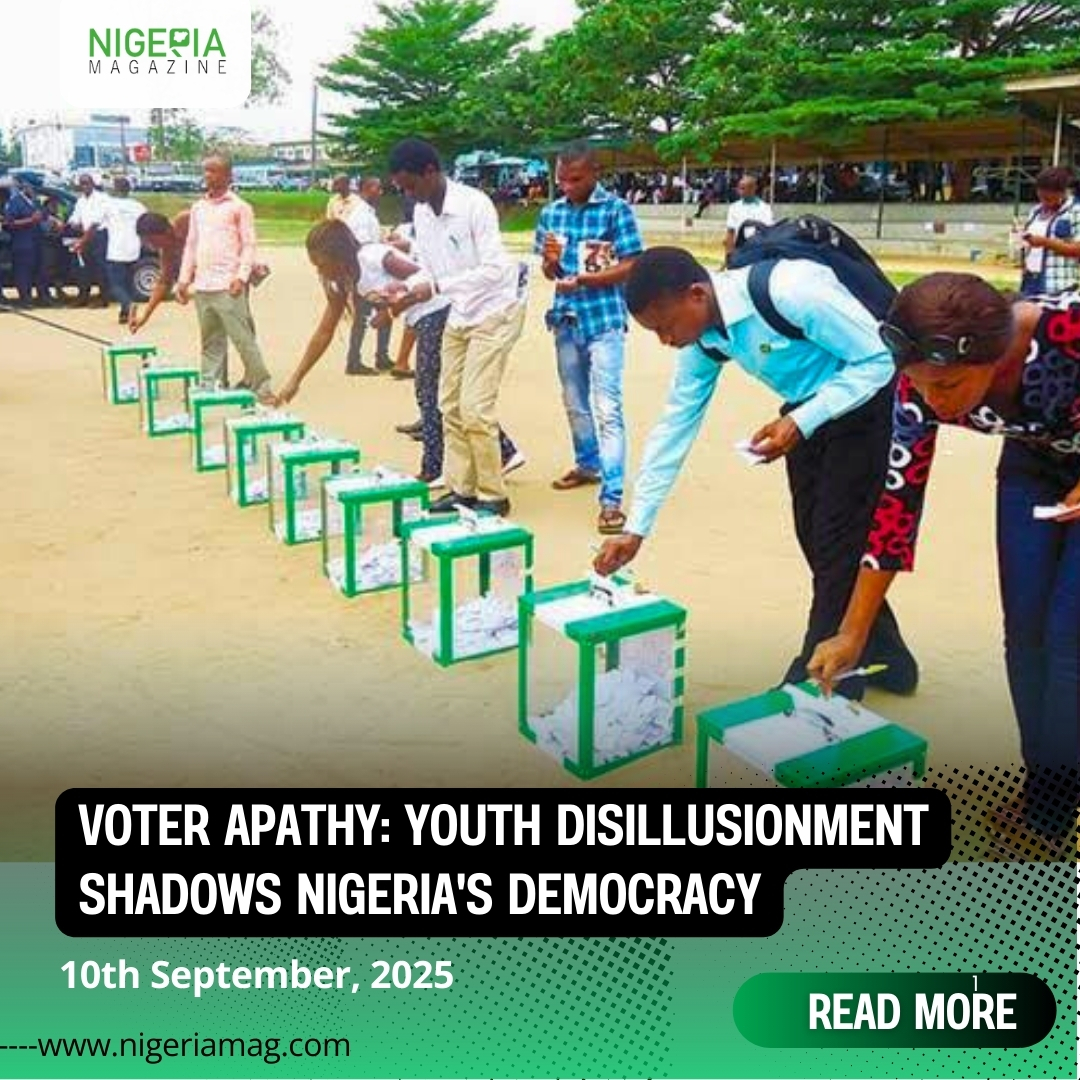
Elections should be the lifeblood of democracy, but in Nigeria, increasing numbers of citizens, particularly among the youth, are choosing silence over the ballot. This rising voter apathy threatens accountability, representation, and the future of governance.
Chinedu, a 25-year-old graduate, says, “I don’t believe my vote will count,” he says flatly. “We all saw what happened in the last election, people came out, but the results didn’t reflect their choices.”
Chinedu’s voice captures the frustration of millions of Nigerian youths who are withdrawing from the electoral process. For them, democracy seems more like a ritual than a real choice.
The Numbers Behind the Apathy
The Independent National Electoral Commission (INEC) registered 93.47 million Nigerians for the 2023 polls. Of this, young people aged 18–34 made up over 39% of the electorate, about 37 million voters. Students were the single largest occupational group, accounting for 27.8% of all registrants.
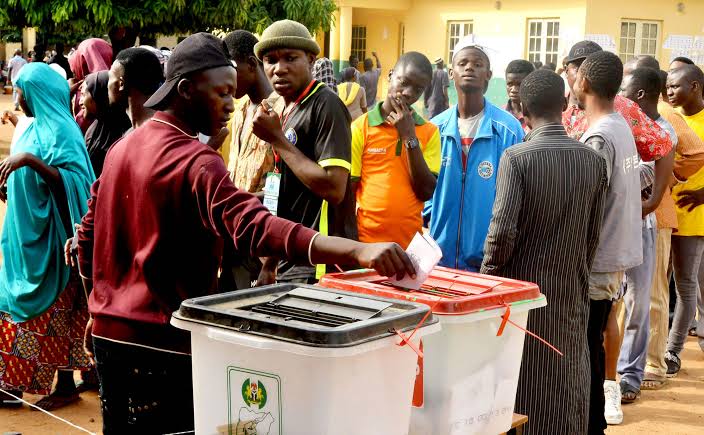
Even more striking, 7.28 million of the 9.5 million new registrants (76%) were youths. INEC Chairman, Professor Mahmood Yakubu, proudly declared it “the election of the young people.”
Yet, when it mattered most, voter turnout collapsed. Only 27% of eligible voters actually cast their ballots—the lowest figure since Nigeria’s return to democracy in 1999. In raw numbers, fewer than 11 million youths who registered went on to vote.
The statistics confirm what many Nigerians already fear: enthusiasm at the registration stage is not translating into active participation on election day.
Voices of Disillusionment
The reasons are not hard to find.
According to Zainab, a youth corps member in Abuja, “The politicians only remember us during campaigns. After the elections, they disappear. So why should I stress myself to register or stand in the sun to vote?”
“It is not that we don’t want to vote. We are just tired of the system. Until leaders are held accountable, voting feels useless,” laments Tunde, a young entrepreneur.
“Even with BVAS, results were still changed. That killed the hope of many young people.”
These are not isolated voices. A recent survey revealed that 73% of Nigerian youths do not trust INEC to conduct free, fair, and credible elections.
INEC’s Response
INEC insists the solution is not disengagement but deeper involvement. The Commission warns that refusing to vote weakens democracy and hands unchecked power to political elites.
To address concerns, INEC launched a Continuous Voter Registration (CVR) drive in 2024, targeting young people with mobile registration centres and online pre-enrollment platforms.
In Abuja alone, more than 107,000 pre-registrations were recorded during the early phases. Nationwide, the Commission hopes to surpass the 2023 registration figures by making the process more accessible, especially for students and first-time voters.
“The strength of our democracy depends on the active involvement of young Nigerians. Every vote counts, and every vote is a voice that must be heard,” Prof. Yakubu stressed.
Beyond the Numbers: A Human Struggle
For many young people, though, the issue goes beyond statistics. It is about faith in a system they feel has failed them too often.
Chinedu’s story echoes that of countless others: the long queues under the sun, the excitement of casting a first vote, the crushing disappointment when results are announced, and the gnawing sense that nothing changes.
Yet civic groups argue that walking away only deepens the problem. They warn that when young people, who make up nearly 40% of the electorate, stay home, it leaves Nigeria’s democracy in the hands of a shrinking few.
Rekindling the Fire
What would it take to bring young Nigerians back to the polls?
✅Transparency in collation and results transmission
✅Accountability for electoral malpractice
✅Stronger civic education campaigns
✅Visible consequences for leaders who break electoral laws
Until these issues are addressed, youths like Chinedu, Zainab, Tunde, and Amaka may continue to see voting not as a civic duty, but as a futile exercise.
The Crossroads
Nigeria is at a crossroads. On one side lies a democracy fueled by the energy and passion of its young people; on the other, a democracy hollowed out by apathy and mistrust.
The question is simple yet profound: will young Nigerians continue to retreat into silence, or will reforms rebuild the trust that makes every vote feel like it matters?
For now, the frustration is raw, the distrust is real, and the stakes for Nigeria’s future could not be higher.
Ubong Usoro for Nigeria Magazine

