


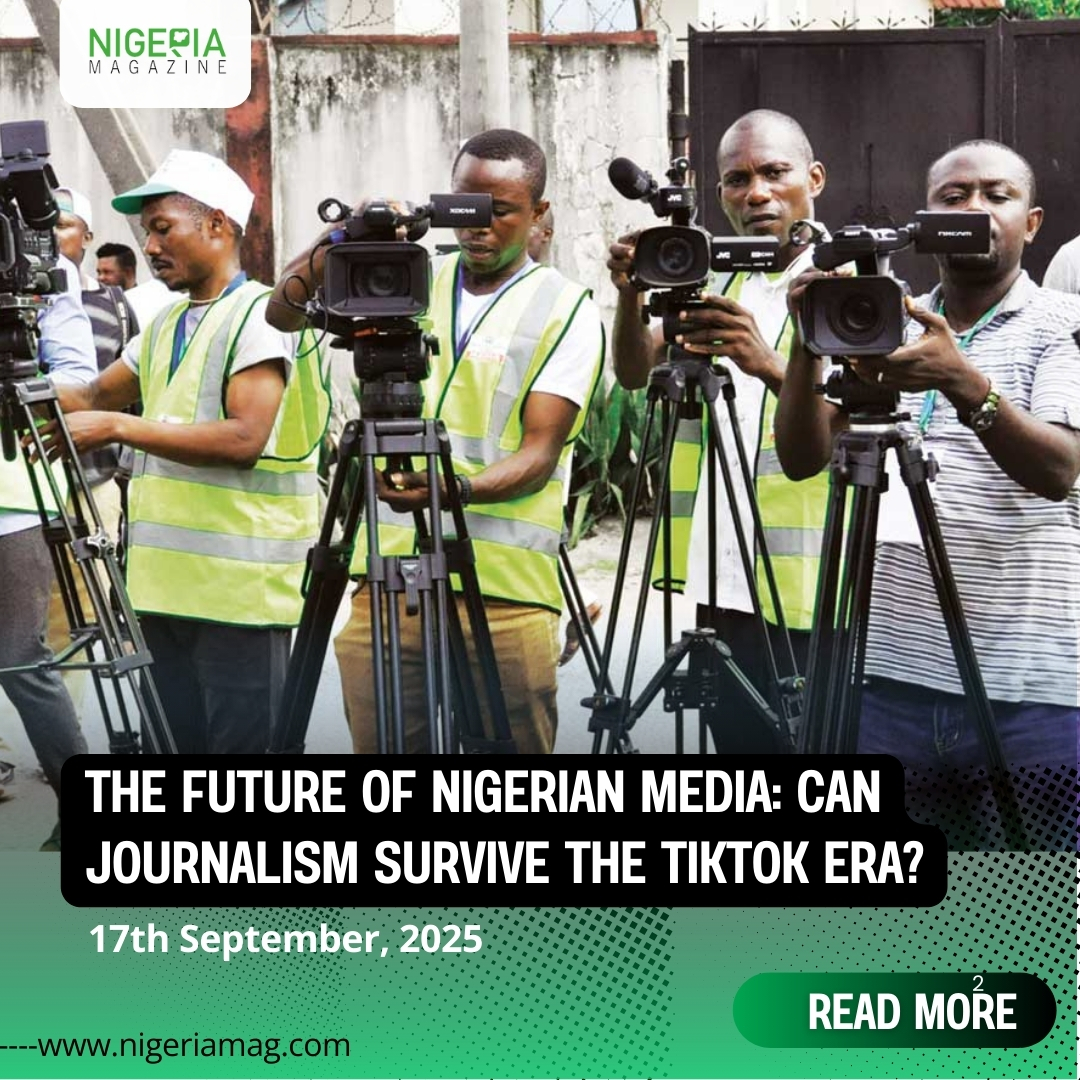
In the past decade, the Nigerian media landscape has undergone a dramatic transformation. Once dominated by newspapers, radio, and television, it is now heavily shaped by digital platforms where information travels faster than ever before. Among these platforms, TikTok has emerged as a cultural powerhouse, captivating millions of young Nigerians with its short, visually engaging, and highly personalised content.
The rise of TikTok has raised urgent questions: Can traditional journalism survive in this environment? What does the future hold for a profession that thrives on depth, fact-checking, and accountability in a digital ecosystem that rewards brevity, virality, and entertainment?
The Disruption of Attention
TikTok’s defining feature is its ability to seize and hold attention. Its algorithm serves users a constant stream of short videos curated to their preferences. This makes the app addictive, with users spending an average of 60–90 minutes daily on the platform. For young Nigerians—especially Gen Z—TikTok has become not only a space for entertainment but also for news consumption.

This presents a direct challenge to Nigerian journalism. Traditional outlets have long depended on readers who are willing to engage with lengthy articles, TV reports, or in-depth radio discussions. But in the TikTok era, attention spans are shrinking, and the expectation is that news should be quick, visual, and easy to digest. A well-researched 2,000-word investigative report may struggle for relevance when a 60-second video summarising events can rack up millions of views.
The Credibility Dilemma
While TikTok has democratised information sharing, it has also created fertile ground for misinformation and disinformation. During the 2023 Nigerian elections, for instance, misleading clips circulated widely on social media platforms, including TikTok. Because content is often consumed without context, unverified claims can spread faster than corrections.
For journalists, this is a double-edged sword. On one hand, it underscores the importance of credible, fact-checked reporting. On the other, it shows how easily professional journalism can be drowned out by louder, less reliable voices. The credibility that newsrooms have built over decades is being undermined by the speed and reach of viral content.
The Economic Pressures
The Nigerian media industry was already struggling with declining print circulation, shrinking advertising revenue, and the rise of citizen journalism. TikTok and similar platforms have intensified this struggle. Brands and advertisers are flocking to influencers who can guarantee instant engagement and viral reach, rather than investing in traditional media outlets that offer slower returns.
This shift has forced many Nigerian newsrooms to cut costs, lay off staff, and in some cases, shut down entirely. Journalism, which requires time, money, and resources, is becoming increasingly difficult to sustain in a digital economy where free, user-generated content dominates.
Opportunities for Reinvention
Despite the challenges, TikTok also presents opportunities for Nigerian journalism—if newsrooms are willing to adapt. Some outlets have already begun experimenting with short-form video content to reach younger audiences. For example:
Explainers and fact-checks: Journalists can condense complex issues—like fuel subsidy removal or currency devaluation—into 60-second explainers that are both engaging and informative.
Behind-the-scenes reporting: Short videos showing how journalists conduct investigations can help rebuild trust and transparency.
Storytelling through trends: By tapping into TikTok trends and sounds, newsrooms can creatively package serious stories for maximum reach.
These adaptations require journalists to embrace multimedia skills, from video editing to digital storytelling, while still holding onto the values of accuracy, balance, and depth.
The Role of Regulation and Policy
Another key factor in the future of Nigerian media is government regulation. Nigerian authorities have historically had a tense relationship with social media platforms, sometimes framing them as threats to national security or unity. Calls for regulation are growing, especially as disinformation spreads more rapidly online.
However, overregulation could stifle free expression and further endanger independent journalism. Striking a balance will be crucial: ensuring platforms like TikTok curb harmful content while allowing space for press freedom and civic engagement.
Audience Behavior and Trust
At the heart of the TikTok challenge is audience behavior. Young Nigerians, who make up more than 60% of the population, are increasingly skeptical of traditional media. They are drawn to content that feels authentic, relatable, and personal—qualities often found in influencer videos rather than newsroom broadcasts.
To survive, Nigerian journalism must learn to rebuild trust with this demographic. This might mean amplifying young voices within newsrooms, engaging directly with audiences through Q&A sessions or live streams, and being more transparent about editorial decisions.
Collaboration, Not Competition
Perhaps the most promising path forward lies in collaboration rather than competition. Journalists can partner with TikTok creators to co-produce content that combines credibility with virality. Influencers can help amplify fact-checked stories, while journalists provide the rigor and accuracy that influencers often lack.
This model is already gaining traction globally. In the UK and US, news outlets like The Washington Post and BBC have established strong TikTok presences with reporters who specialize in short-form video journalism. Nigerian media can follow suit, tailoring the approach to local contexts and cultural nuances.
A Hybrid Future
The survival of journalism in Nigeria does not depend on defeating TikTok—it depends on adapting to a hybrid future. This means maintaining spaces for long-form, investigative work while also embracing short-form storytelling that meets audiences where they are.
Journalism in the TikTok era must be:
Visual-first: Relying more on video, graphics, and images to convey information.
Platform-specific: Customizing content for TikTok, Instagram Reels, YouTube Shorts, and other platforms.
Community-driven: Engaging directly with audiences and fostering dialogue rather than one-way communication.
Credibility-focused: Doubling down on fact-checking and transparency to distinguish journalism from noise.
The TikTok era is not the end of Nigerian journalism—it is a call to evolution. While the challenges are significant—shrinking attention spans, misinformation, economic pressures—the opportunities are equally real. By innovating, collaborating, and staying true to its core mission of informing the public, Nigerian journalism can not only survive but also thrive in this new digital age.
The future belongs to newsrooms that can blend the rigour of journalism with the creativity of TikTok storytelling. The question is not whether journalism can survive the TikTok era, but whether it can evolve fast enough to remain relevant in the eyes of a young, restless, and digitally native Nigerian audience.

