


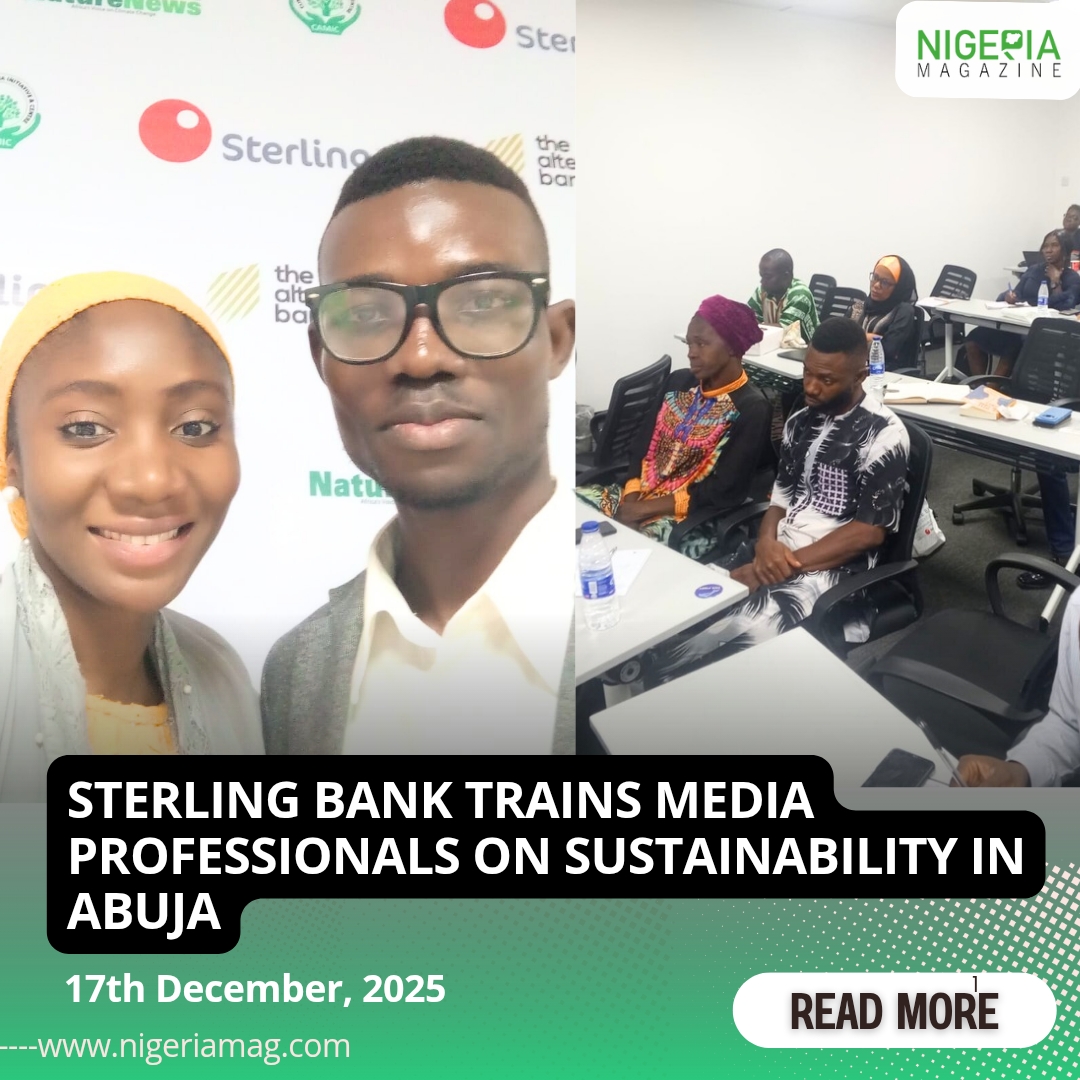
STERLING BANK TRAINS MEDIA PROFESSIONALS ON SUSTAINABILITY IN ABUJA
Media professionals gathered in Abuja recently for a unique training session hosted by Sterling Bank, aimed at equipping journalists with the knowledge and tools to report effectively on sustainability issues. The event brought together reporters, editors, and media executives from across the country, including Ubong Usoro of Nigeria Magazine, who participated in the sessions to gain insights into sustainability reporting.
The training featured notable speakers, including Bunmi Ajiboye, Chairperson of Sterling Bank’s Sustainability Working Group; Aliu Akoshile, Publisher of NatureNews Media; Akogun Ishiak Ajibola, former Managing Director of Daily Trust; and Victoria Bamas, Editor at the International Centre for Investigative Reporting (ICIR).
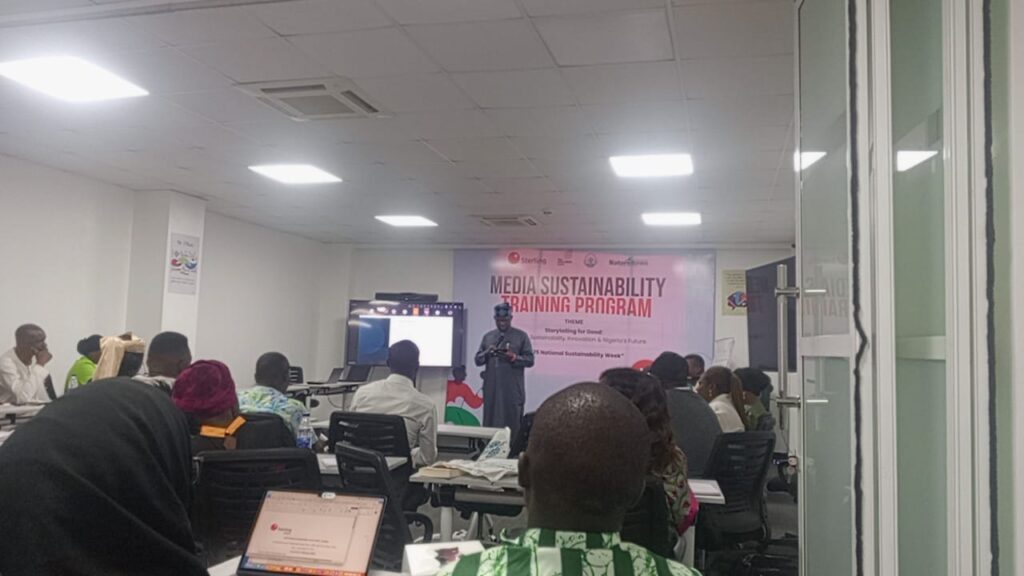
The day began with the national anthem and introductions, followed by a warm welcome from a Sterling Bank representative, who set the tone by emphasising the bank’s commitment to sustainability and its belief in the media’s power to influence change.
Throughout the day, participants explored key topics such as the role of media in promoting sustainability, practical ways to integrate environmental reporting into daily journalism, and the use of artificial intelligence to optimize content distribution. Journalists also learned about Sterling Bank’s CSR and sustainability initiatives, including programs supporting community development, environmental conservation, and financial inclusion.
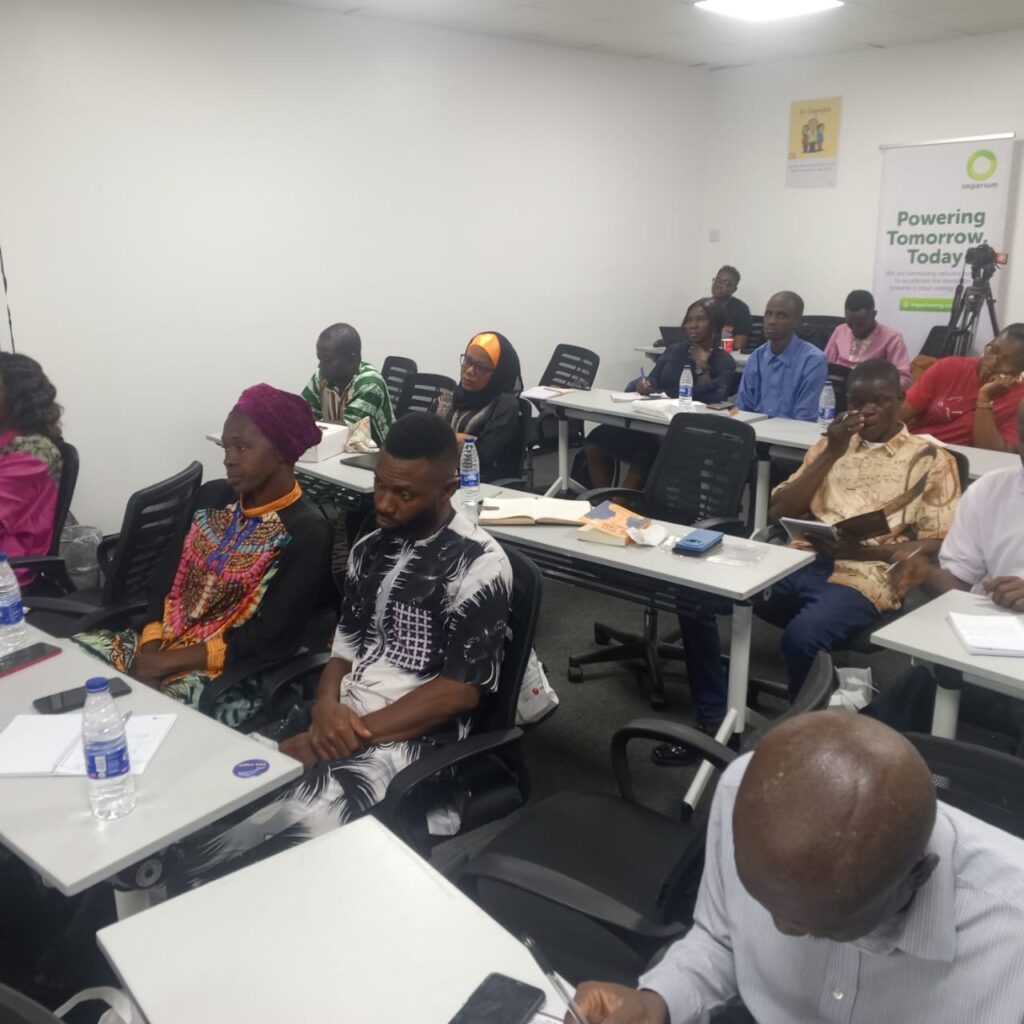
But it wasn’t all lectures. The training was interactive, with lively question-and-answer sessions that allowed participants to share their experiences, challenges, and ideas. “It’s one thing to read about sustainability,” said a participant, “but it’s another to hear from people who are actually implementing these initiatives. It makes the issue real.”
Bunmi Ajiboye encouraged the media professionals to see sustainability as more than a corporate buzzword. “Your stories can inspire change,” she said. “When the media reports responsibly, it helps communities make better decisions, holds corporations accountable, and pushes policymakers to act.”
Aliu Akoshile added that sustainability reporting is no longer optional—it is essential. “Our readers are asking questions about how businesses and governments are protecting the environment. We need to give them answers,” he said.
Victoria Bamas stressed the importance of investigative journalism in uncovering hidden environmental and social issues, while Akogun Ishiak Ajibola urged media houses to embrace digital tools and innovative storytelling to reach wider audiences.
The training also included tea and lunch breaks, which provided participants the chance to network, exchange ideas, and build connections that could help improve sustainability reporting across the country. Demonstrators at the event noted that small stories—like highlighting local farmers using sustainable practices—can have a ripple effect when shared widely.
By the end of the day, it was clear that Sterling Bank’s training had achieved more than just imparting knowledge. It had inspired a sense of responsibility, collaboration, and optimism among media professionals to tell stories that could influence policies, protect the environment, and empower communities.
As sustainability becomes an increasingly pressing global and national agenda, initiatives like this ensure that Nigerian journalists, including those from Nigeria Magazine, are not just reporting the news, they are shaping the future.
Ubong Usoro, Nigeria Magazine

