


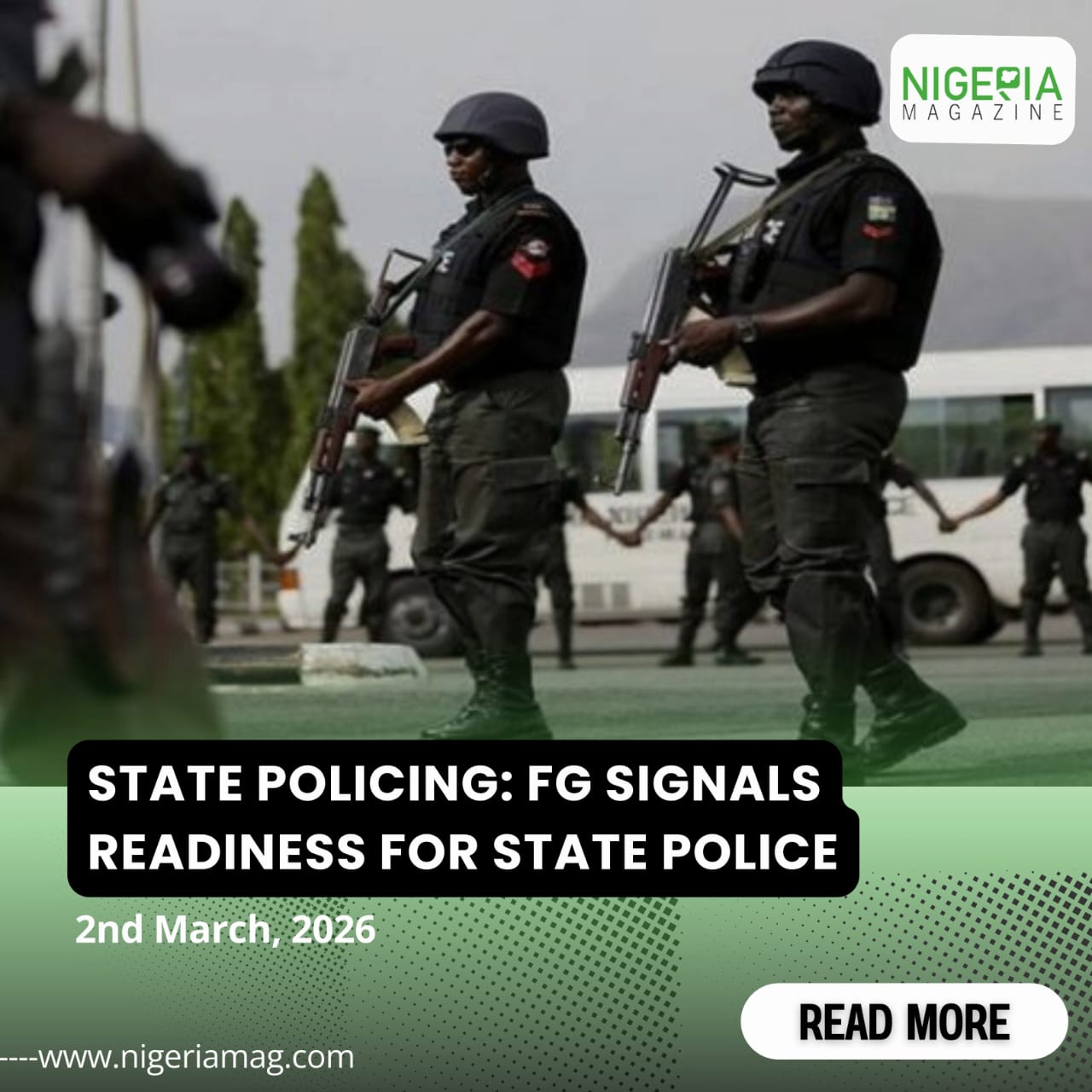
The Federal Government has reiterated its commitment to the establishment of state police as part of broader efforts to address Nigeria’s evolving security challenges.
The Minister of Information and National Orientation, Mohammed Idris, made this known during a strategic meeting with the Centre for Crisis Communication, led by its Chairman, Chris Olukolade, at the Ministry’s headquarters in Abuja.
Speaking at the meeting, Idris described decentralized policing as an imperative step toward strengthening internal security architecture across the country. According to him, Nigeria’s current security realities demand reforms that reflect local peculiarities, faster response mechanisms, and improved coordination among security agencies.
He stressed that strengthening the country’s internal security structure must go hand-in-hand with reinforcing national communication systems, particularly in an era where crises are shaped not only by physical events but also by the rapid spread of information across digital platforms.
The minister further noted that digital innovation is central to ensuring timely, accurate, and coordinated communication, especially during moments of national importance. He emphasized that effective crisis communication can help manage public perception, counter misinformation, and enhance trust in government institutions.
Earlier in his remarks, Major General Olukolade (Rtd) expressed appreciation to the minister for his continued support toward advancing crisis communication reforms in Nigeria. He appealed for the minister’s endorsement of the proposed National Crisis Communication Hub and a performance index framework designed to enable real-time monitoring, coordinated responses to misinformation, and strengthened institutional accountability.
Olukolade described the proposed framework as a critical tool for measuring the effectiveness of crisis responses and improving synergy among relevant stakeholders.
With rising insecurity and increasing complexity of threats across the country, conversations around state policing continue to gain momentum. Analysts argue that the shift toward decentralized policing may no longer be optional, but an inevitable step in Nigeria’s security reform journey.
Ubong Usoro for Nigeria Magazine

