


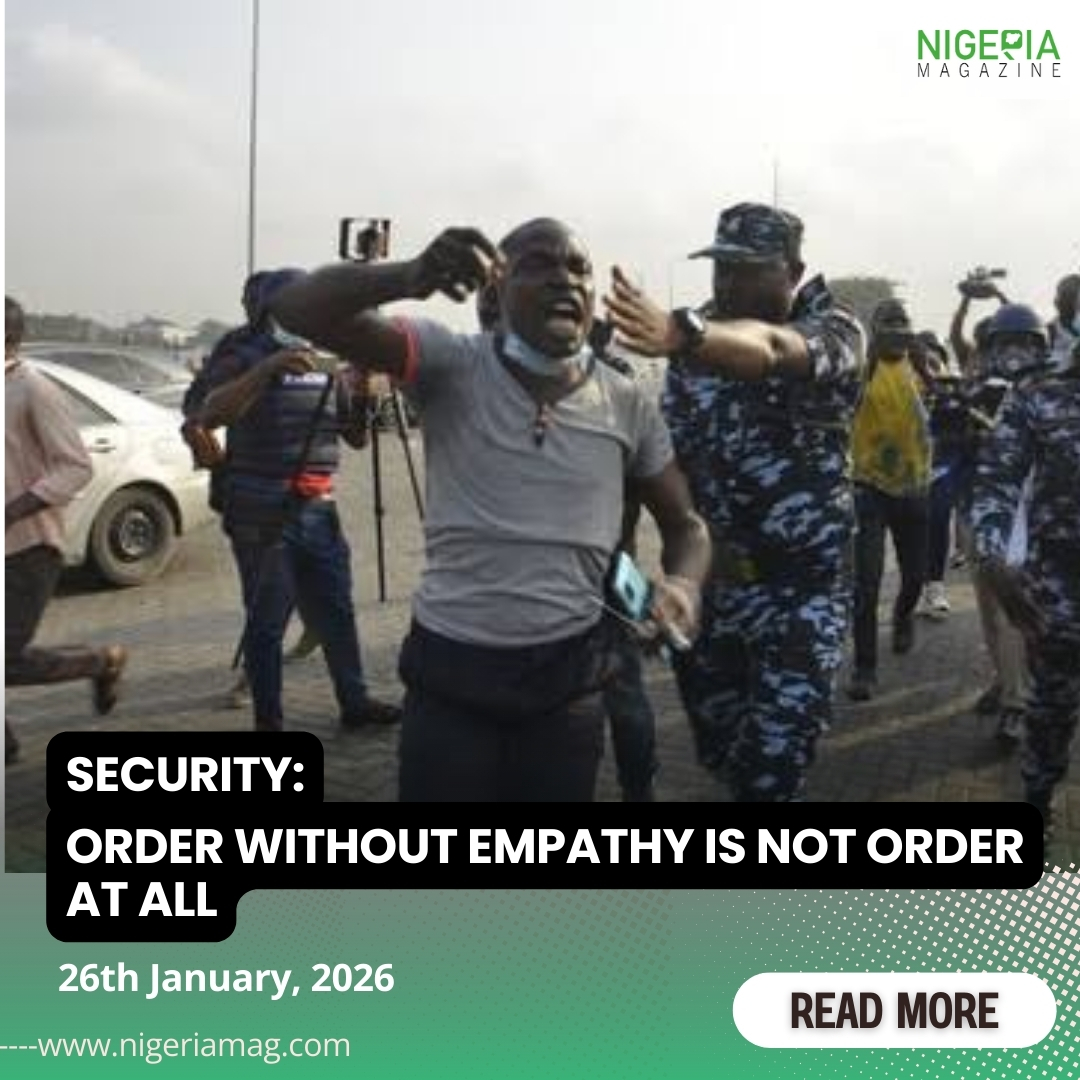
Recent videos showing the Lagos State Government’s raid on street beggars and homeless children along the Lekki–Ajah Expressway have reignited a familiar but unresolved debate: how do we balance urban order with human dignity?
On one hand, the government’s position is understandable. Lagos is a megacity under immense pressure—congested roads, rising insecurity, and the daily struggle to keep public spaces functional. Expressways are not safe places for children. Street begging and hawking increase the risk of accidents, traffic disruption, and crime. Any responsible government must care about safety and order.
Seen from this angle, enforcement is not cruelty; it is governance.
However, governance that stops at enforcement—and ends at arrest—is incomplete. This is where the criticism, especially from those who have worked closely with street children, deserves serious attention.
The children being rounded up are not abstractions. They are not statistics or nuisances. They are minors shaped by forces far larger than themselves—poverty, broken homes, failed schools, and a national culture that romanticises Lagos as a land of limitless opportunity. Many are migrants from other states, driven into the city by desperation and false promises. For them, the street is not rebellion; it is refuge.
This is why repeated raids feel futile. Not because the problem is imaginary—it is very real—but because removal without rehabilitation solves nothing. History has shown us the pattern clearly: arrest, detention, release, return. The children do not disappear; they simply scatter, regroup, and come back harder, angrier, and more mistrustful of authority.
There is a painful truth we must confront: no one becomes an area boy as an adult. The violent young men we fear today were neglected children yesterday. Criminality does not appear suddenly; it grows slowly and predictably in the soil of abandonment.
Public education failed many of these children long before the streets claimed them. Overcrowded classrooms, underpaid teachers, and a system that quietly labels struggling pupils as “good-for-nothing” push them out. Family breakdown—often driven by poverty, abuse, and instability—finishes the job. By the time the state meets these children on the expressway, it is meeting them at the end of a long chain of failures, not the beginning.
None of this excuses violence, harassment, or public disorder. Citizens have a right to safe roads and secure communities. But it does challenge the idea that force alone can restore order. You cannot police your way out of a social collapse.
Real solutions are slower and less glamorous than raids. They require shelters that are not detention centres; education pathways that welcome slow learners instead of discarding them; family support systems that intervene before homes break completely; and regional cooperation so Lagos is not left to absorb the consequences of national poverty alone.
Yes, enforcement may be necessary—but it must be the last step, not the only one. Without empathy, enforcement becomes performance. Without rehabilitation, it becomes cruelty dressed up as order.
A city that truly wants peace must choose prevention over punishment, healing over humiliation, and long-term solutions over short-term optics. Otherwise, we will keep clearing the streets while quietly preparing the next generation of anger that will one day return to claim them.
And when that happens, we will pretend to be surprised—even though the signs were always right in front of us.

