


As the 2026 international sporting calendar gathers momentum, Nigerian athletes across athletics, boxing, and other Olympic and non-Olympic sports are intensifying preparations for major global competitions. With the next cycle of world championships, continental qualifiers, and the build-up to multi-sport events such as the 2026 Commonwealth Games in Glasgow, Scotland, Nigeria is once again positioning itself as one of Africa’s most competitive sporting nations.
From track and field stars aiming to dominate the global stage, to boxers sharpening their skills for qualification tournaments, Nigeria’s sporting ecosystem is undergoing a critical phase of rebuilding, refinement, and renewed ambition.
Athletics: Nigeria’s Strongest Global Contender
Sprinting and Hurdles Prospects
Athletics remains Nigeria’s most visible and historically successful sport on the global stage. In 2026, attention is firmly on elite athletes competing in sprinting, jumping, and hurdling events.
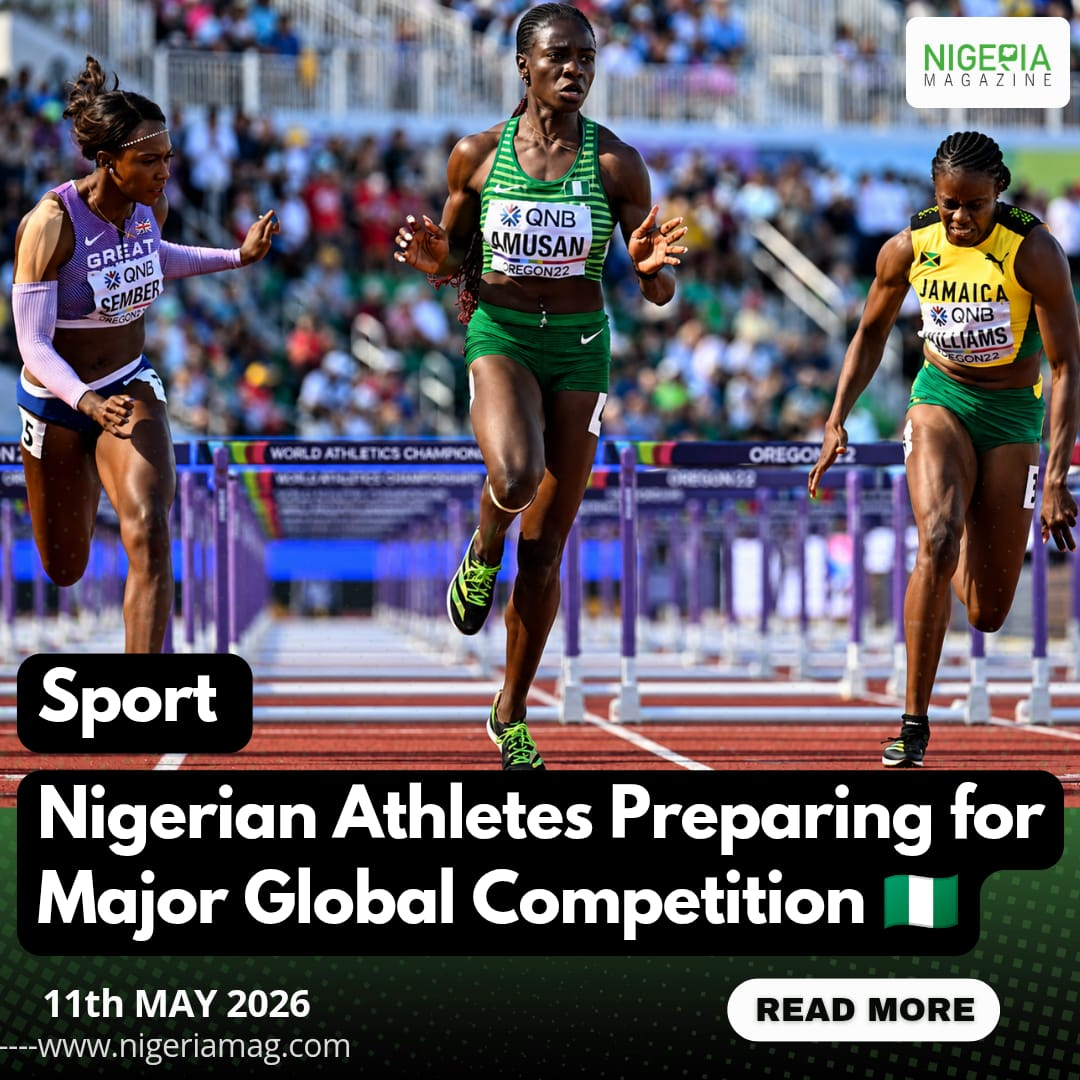
One of the leading figures is Tobi Amusan, who continues to be a central name in the women’s 100m hurdles. Following her breakthrough as a world record holder in the event, Amusan remains a key medal hopeful for any global championship cycle, provided she maintains fitness and consistency through the season.
In the women’s long jump, Nigeria continues to bank on the experience and international pedigree of Ese Brume. Brume, one of Africa’s most decorated long jumpers, is expected to play a leadership role in mentoring younger athletes while still competing at elite level.
On the men’s side, Nigeria’s sprinting program is undergoing a generational transition. Emerging athletes are being integrated into relay pools, particularly the 4x100m and 4x400m teams, as the federation looks to rebuild consistency in relay baton exchanges—a long-standing challenge for the country.
Middle and Long Distance Development
While Nigeria has traditionally not dominated middle and long-distance running compared to East African counterparts, 2026 has seen increased investment in athlete development programs. Training camps in Europe and North Africa are being used to expose Nigerian runners to higher competition standards.
Sports administrators are particularly focused on building depth in the 800m and 1500m events, where strategic racing and endurance training are being prioritized over raw speed.
Relay Team Rebuilding Efforts
One of Nigeria’s most promising medal pathways remains the relay events. The Athletics Federation is restructuring selection criteria to ensure that only athletes with consistent international exposure are fielded in global championships.
Improved coordination, early team bonding camps, and technical refinement are central to Nigeria’s goal of returning to podium contention in relay events, particularly at world championships and the Commonwealth Games.
Boxing: Reclaiming Lost Ground
Revival of Amateur Boxing Programmes
Nigeria’s boxing scene is undergoing a quiet but determined revival in 2026. After years of inconsistent international results, the Nigeria Boxing Federation is focusing on structured athlete development, grassroots talent identification, and improved coaching standards.
Boxers are currently preparing for Olympic qualification pathways and continental championships, where performance will determine entry into elite global competitions.
Focus on Weight Class Depth
A key strategic shift has been the expansion of depth across multiple weight categories. Historically, Nigerian boxing success has been concentrated in a few divisions, but current reforms aim to ensure competitiveness from flyweight to heavyweight classes.
Training camps have been intensified, with emphasis on endurance, defensive technique, and ring intelligence—areas where Nigerian fighters have often been outmatched at elite global levels.
International Exposure and Sparring Partnerships
To bridge the competitive gap with boxing powerhouses such as Cuba, the United States, and the United Kingdom, Nigerian boxers are increasingly participating in international sparring exchanges and invitational tournaments.
These exposure opportunities are designed to simulate real competition environments and improve tactical adaptability ahead of major qualification bouts.
Other International Sports:
Broadening Nigeria’s Reach
Football and Age-Grade Development
While senior football remains Nigeria’s most popular sport, 2026 has seen a renewed focus on youth development. Age-grade teams are being positioned as the foundation for future senior success, particularly in U-20 and U-23 competitions.
Scouting networks have expanded across domestic leagues and diaspora communities to identify dual-nationality players eligible to represent Nigeria.
Basketball and the Global Diaspora Influence
Nigeria continues to benefit from a strong basketball diaspora presence, particularly in North America. National team programs are increasingly integrating foreign-based players into international qualification cycles.
The focus is on consistency in FIBA competitions and improving tactical discipline to compete against global elite teams.
Wrestling, Weightlifting, and Paralympic Sports
Nigeria’s strength in combat and strength-based sports remains notable. Wrestlers and weightlifters are preparing for continental qualifiers with an emphasis on disciplined weight management and technical refinement.
Paralympic sports also remain a key area of national pride, with Nigerian para-athletes consistently performing strongly in global competitions, particularly in powerlifting.
Government and Institutional Support
Funding and Training Infrastructure
In 2026, Nigerian sports authorities are increasingly aware that global competitiveness requires sustained investment in infrastructure. Efforts are underway to upgrade training facilities, improve athlete welfare, and provide more stable funding for elite programs.
However, challenges remain in ensuring consistent support across all sports federations, particularly in non-televised disciplines.
Sports Science and Performance Analytics
A growing emphasis has been placed on sports science, nutrition, and performance analytics. Nigerian teams are gradually incorporating data-driven training methods to monitor athlete workloads, prevent injuries, and optimize competition readiness.
This shift reflects a broader global trend where marginal gains can determine podium finishes.
Challenges Facing Nigerian Athletes
Despite progress, Nigerian athletes continue to face structural challenges. These include limited access to world-class facilities, inconsistent funding cycles, and administrative bottlenecks in some sports federations.
Additionally, athlete migration—where talented individuals switch allegiance to other countries offering better support—remains a concern for talent retention.
Outlook for 2026 and Beyond
The 2026 season represents a critical building phase for Nigeria’s sporting ambitions. With major global competitions on the horizon, including the Commonwealth Games and world championship events across multiple sports, Nigerian athletes are under pressure to convert preparation into podium success.
The combination of experienced stars like Tobi Amusan and Ese Brume, alongside a growing pool of emerging talents in athletics, boxing, and team sports, provides cautious optimism.
If reforms in funding, administration, and athlete development continue, Nigeria could reassert itself more strongly on the global sporting stage in the coming years.
Nigerian athletes preparing for major global competitions in 2026 are navigating a period of transition marked by both opportunity and challenge. While athletics remains the country’s strongest medal prospect, boxing and other sports are undergoing strategic rebuilding efforts aimed at long-term competitiveness.
As global competitions approach, the performance of these athletes will not only reflect individual dedication but also the effectiveness of Nigeria’s broader sports development system.

