


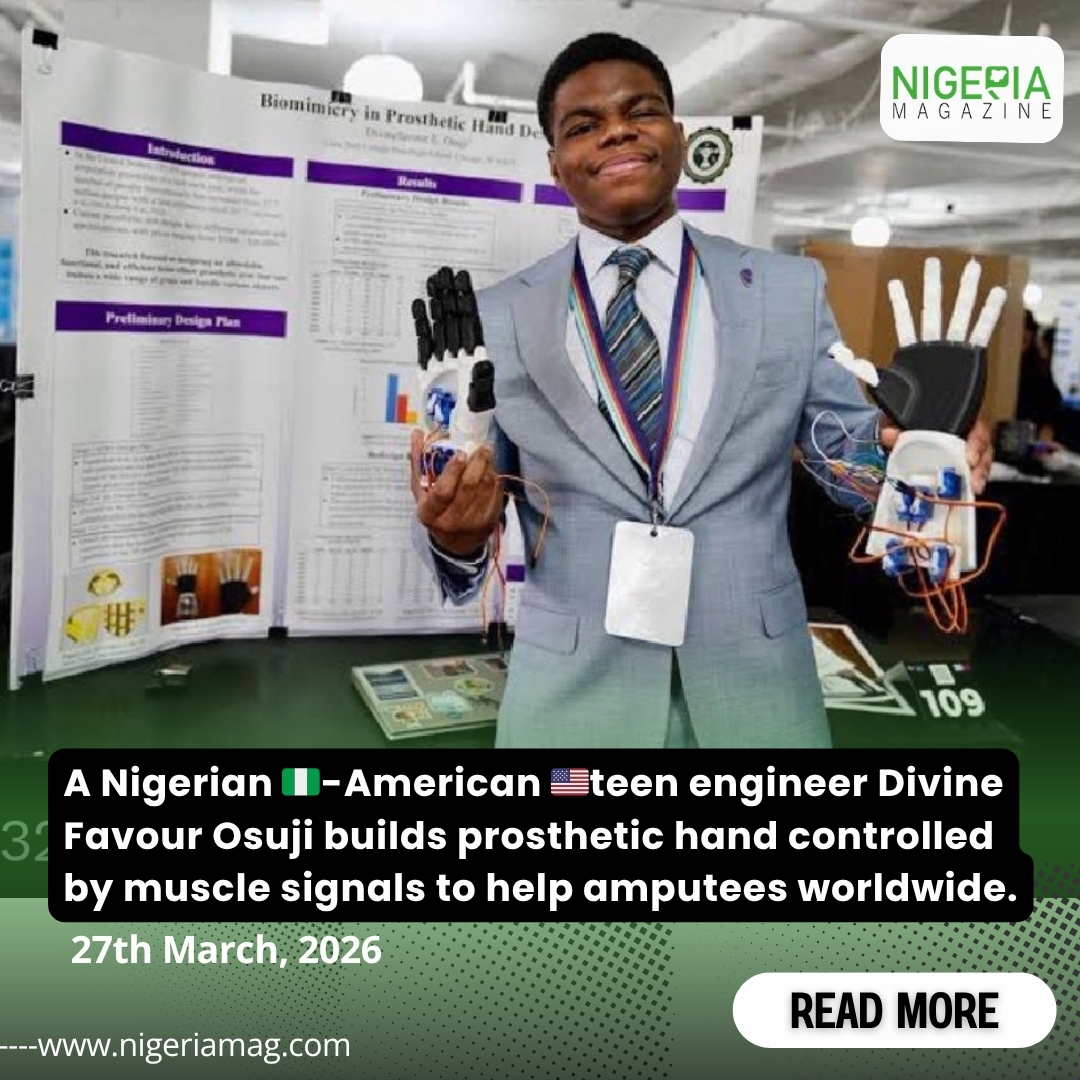
In an inspiring blend of compassion and ingenuity, Nigerian-American teen engineer Divine Favour Osuji is making global headlines with a groundbreaking invention—a prosthetic hand controlled by muscle signals. Designed to restore mobility and independence to amputees, the innovation reflects not only technical brilliance but also a deep commitment to solving real-world problems.
Osuji’s prosthetic hand uses electromyography (EMG) sensors to detect electrical signals generated by the user’s muscles. These signals are then translated into precise movements, allowing users to grip, lift, and perform everyday tasks with greater ease. Unlike many conventional prosthetics that are often expensive and less responsive, this design focuses on affordability, accessibility, and functionality—key factors for users in underserved communities around the world.
Driven by a passion for engineering and humanitarian impact, Osuji developed the device with the vision of making advanced prosthetic technology available to those who need it most, particularly in developing countries. The project has already attracted attention from educators, innovators, and health professionals, who see it as a promising step toward more inclusive healthcare solutions.
Beyond the innovation itself, Osuji’s story serves as a powerful reminder of the potential of young people to drive change. By combining technical skill with empathy, this young engineer is not only transforming lives but also inspiring a new generation of problem-solvers across Nigeria, the United States, and beyond.
As the world continues to seek affordable and effective healthcare solutions, inventions like this prosthetic hand offer a glimpse into a future where technology bridges gaps and restores hope—one life at a time.

