


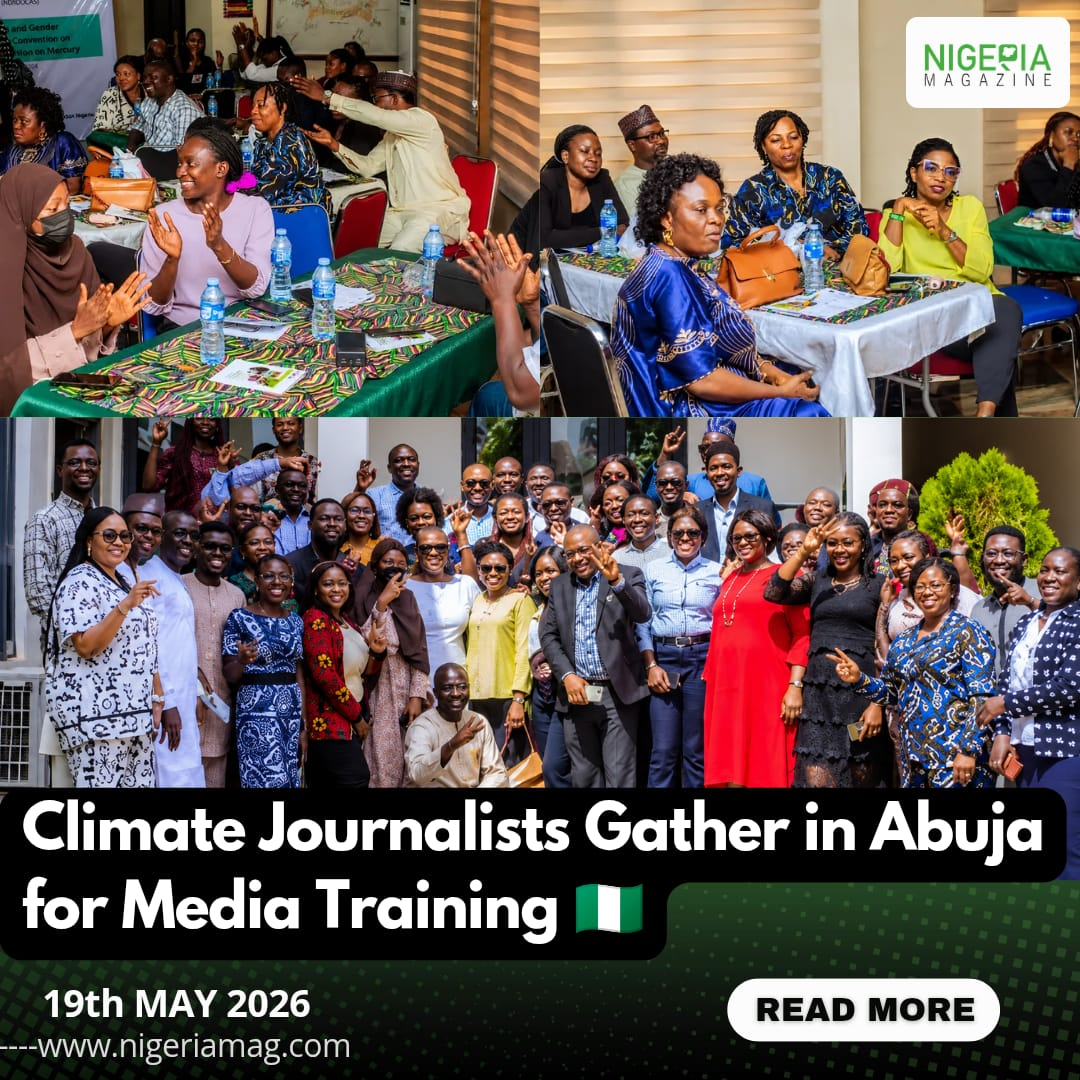
Journalists reporting climate change and environmental issues in Nigeria have been urged to intensify coverage of climate-related challenges through effective monitoring, tracking, and reporting of environmental developments across the country.
The charge was given during a media training organised in Abuja by Women Environment Programme and EnvironNews Advocacy and Campaign for climate reporters and environmental journalists.
The training focused on climate governance, the United Nations Framework Convention on Climate Change (UNFCCC), and the critical role of the media in promoting climate accountability and public awareness.
Speaking during the session, climate communication expert Michael Simire said journalists must see themselves not only as reporters but also as educators with the responsibility of driving public engagement and awareness on climate issues.
According to him, effective climate reporting can help citizens better understand environmental policies, climate risks, and government commitments toward sustainable development.
In his keynote address, former Chairman of the House Committee on Climate Change, Sam Onuigbo highlighted the importance of Nigeria’s Climate Change Act 2021, which he said provides a legal framework for climate action and environmental sustainability in the country.
He noted that achieving effective climate governance requires strong collaboration among government institutions, the media, civil society organisations, and citizens.
Participants at the training also stressed the need to strengthen climate reporting and increase media engagement in holding institutions accountable to environmental policies and climate commitments.
The training formed part of ongoing efforts by environmental advocacy groups to improve climate communication and deepen public participation in environmental governance across Nigeria.
Ubong Usoro for Nigeria Magazine

