


This past week, I found myself asking a question I had never really sat down to answer before: What does Nigeria mean to me?
Not the Nigeria we argue about on television. Not the Nigeria of politics and promises. But the real Nigeria, the one people live in every day.
I got my answer on the road.
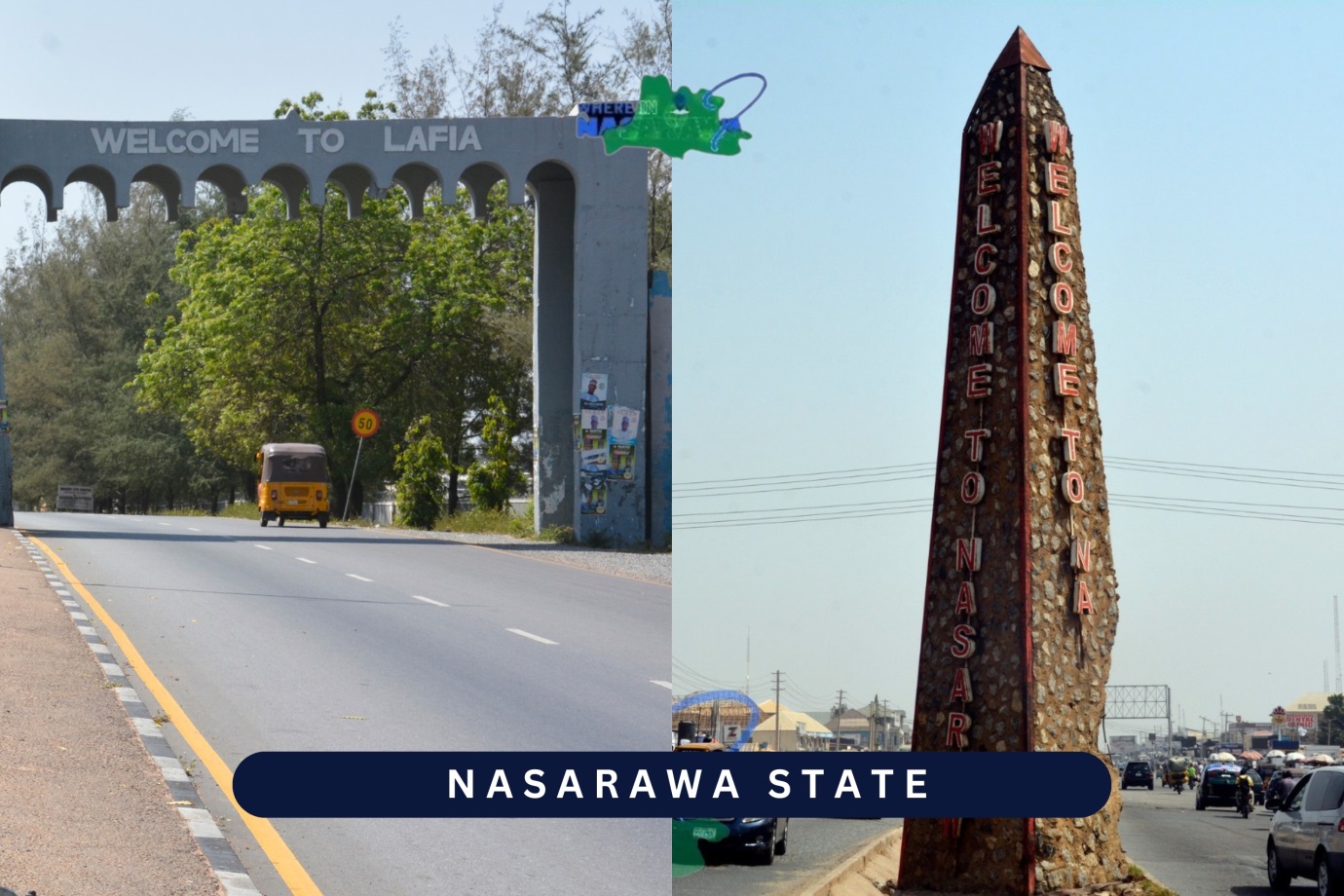
We were travelling for the Easter period, heading for Good Friday. The journey took us from Abuja through Nasarawa State, then to Benue, Enugu, Ebonyi, and eventually Cross River.
It was supposed to be a normal trip. The kind many Nigerians make without thinking twice.
But somewhere around villages like Gada Hudu and Kuvu, the road changed.
At first, it was just movement in the distance. Then it became clearer, and heavier.
People were running.
Not a few people. Not dozens. Hundreds.
Women. Children. Young men. The elderly. All pouring out from different villages, rushing towards the main road. Not walking, running. Some barefoot. Some clutching their children. Some carrying babies strapped tightly to their backs.
No bags. No belongings. Just fear.
I saw a woman trying to keep pace while holding a child who could barely walk. I saw another with a baby on her back and nothing else, no food, no water, just urgency. Their faces carried something deeper than panic. It was loss.
We stopped to ask what was happening, and the answers came in fragments. Some said it was a communal clash. Others said it was an attack. But the details didn’t matter as much as what we could already see.
People had been killed.
Homes had been burned.
Entire communities were emptying themselves onto the road.
One woman cried out loudly, calling names that would never answer. Another stood still, staring into nothing, like her world had ended but her body had not yet caught up.
Behind them were villages they might never return to.
And in that moment, it struck me, these are Nigerians. Just like me.
The road itself told another story. For about 15 kilometers, there was no network. No signal. No way to call for help. No way to reach the outside world.
We were in a car, but even that did not feel like safety.
I kept thinking, what if something happens here? What do we do?
There was no answer.
We simply kept moving, holding on to faith and silence.
But what shook me even more was not just what I saw, it was what I did not see.
No police.
No soldiers.
No checkpoints.
No sign that anyone was coming.
Just people running for their lives on an open road.
Yet, as the journey continued and we moved further south, through Ebonyi State, Cross River State, and Akwa Ibom State, everything changed.
Every few kilometers, there was a police checkpoint.
You could see security.
You could feel presence. You could sense that, at the very least, someone was watching.
And I kept asking myself:
Why is it not the same everywhere?
Why should some Nigerians feel protected, while others are left to run?
This is not about geography. It is about value. It is about whose lives are seen, and whose are forgotten.
Since returning from that journey, I have not been able to shake off what I saw.
It is one thing to read about insecurity. It is another thing to stand in the middle of it. To look into the eyes of people who have lost everything in a matter of hours.
It changes you.
The Governor of Nasarawa State, Abdullahi Sule, must answer hard questions.
What is being done to protect these communities? How do people live like this and still believe in the system?
And beyond the state, the question goes to all of us, to leadership, to institutions, to a nation:
What are we doing?
Because at the end of the day, these are not just victims.
They are mothers.
They are fathers.
They are children.
They are Nigerians.
As I think back to that road, one truth remains with me:
Nigeria should not be a place where people have to run to stay alive.
But until something changes, for many, that is exactly what it is.
Ubong Usoro for Nigeria Magazine

