


International Story Tied to Nigerian Development
As 2026 unfolds, the Nigeria–China relationship stands at a pivotal juncture — one shaped by decades of cooperation, rising expectations, geopolitical competition, and intensifying scrutiny over economic sovereignty. What once was a bilateral partnership built largely on trade and infrastructure financing has evolved into a Comprehensive Strategic Partnership, with deep implications for Nigeria’s infrastructure landscape, debt profile, and diplomatic engagements at the regional and global levels. (ThisDayLive)
- A Strategic Partnership in Full View: Context and Recent Developments
Nigeria and the People’s Republic of China officially elevated their relationship to a Comprehensive Strategic Partnership following meetings between President Bola Tinubu and President Xi Jinping. This framework, cemented in 2024 and actively deepened through 2025 into 2026, underscores ongoing cooperation across political, economic, technological, and people‑to‑people fronts. (ThisDayLive)
The two governments reaffirm commitments under joint statements such as the 2026 Joint Statement on Building a High‑Level China‑Nigeria Community with a Shared Future, which emphasizes infrastructure connectivity, productive capacity, regional economic integration, and diversified cooperation including digital economy and financial mechanisms (like local currency swaps). (State House Abuja)
In international diplomacy, China’s broader outreach to Africa — including high‑level visits by senior diplomats and expanded trade strategies — situates Nigeria as a key partner amid China’s recalibration of its Africa policy. (Africa Center)
- Infrastructure: China’s Footprint in Nigeria’s Development Landscape
A. Transformative Projects and Connectivity
China’s involvement in Nigeria’s infrastructure sector remains extensive and visible. Chinese companies have participated in major construction efforts spanning railways, ports, power facilities, airports, and urban transit systems — projects that are integral to economic growth and regional mobility. (mfa.gov.cn)
Notable infrastructure milestones include:
Railways and Transit: The Abuja–Kaduna and Lagos–Ibadan rail lines — part of broader plans extending toward a Lagos–Kano network — continue to reshape inland connectivity and reduce transport costs. (mfa.gov.cn)
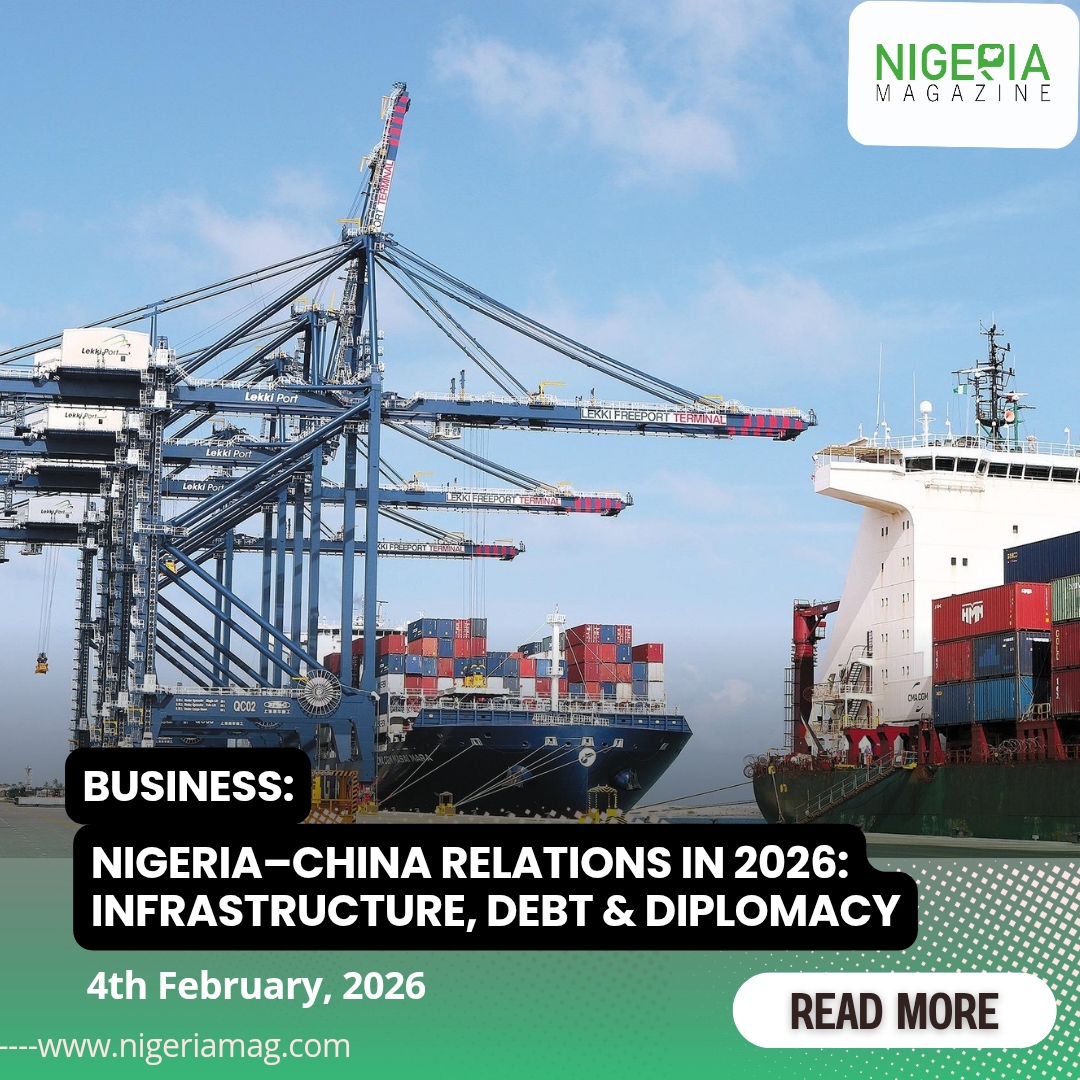
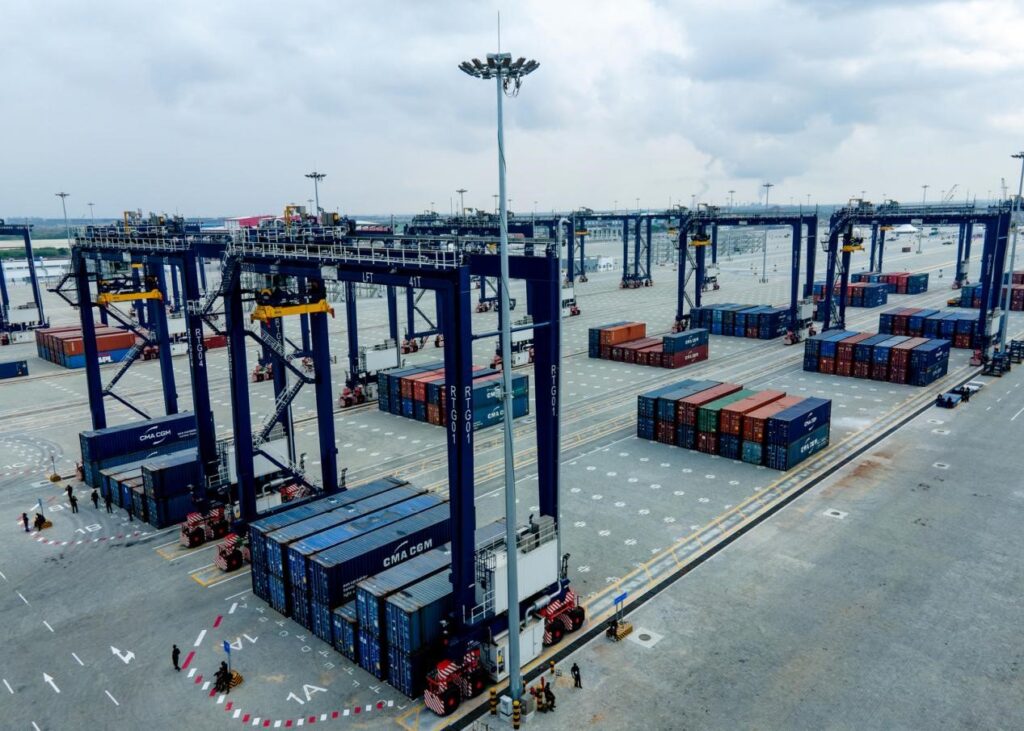
Ports and Trade Facilitation: The China‑built Lekki Deep Sea Port has emerged as a strategic maritime hub, attracting international commerce and stimulating logistics, trade growth, and industrial clustering. (africachinanews.com)
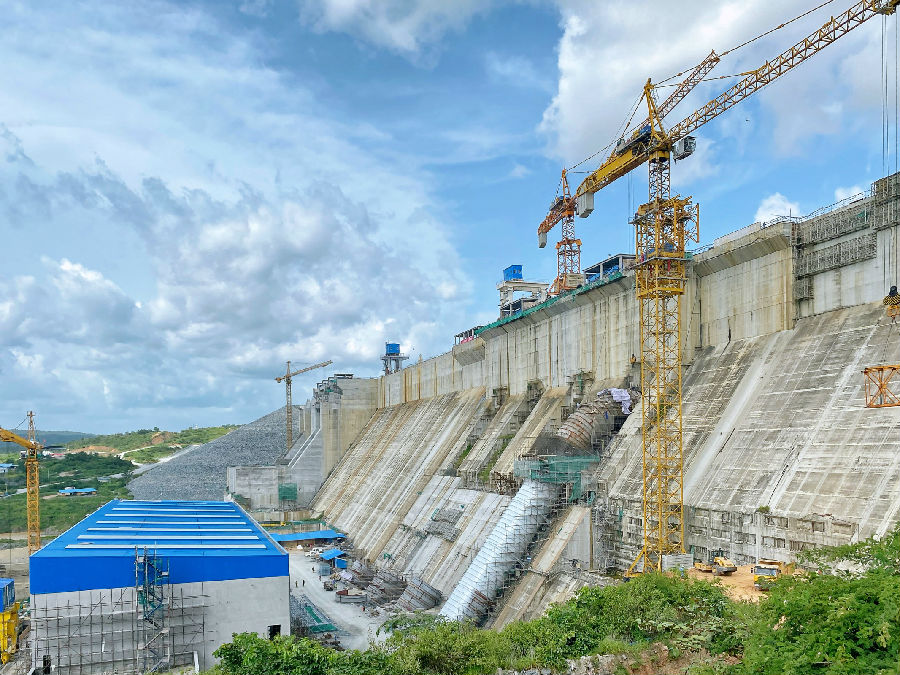
Power and Utilities: Projects such as the $1.3 billion Zungeru Hydropower Station and expanding renewable energy initiatives highlight China’s role in addressing Nigeria’s energy deficits. (africachinanews.com)
Industrial Development: The massive $24.6 billion Ogidigben Gas Revolution Industrial Park (GRIP) under China‑linked Belt and Road Initiative (BRI) commitments positions Nigeria as a potential processing and export hub for natural gas and downstream products. (cedirates.com)
B. Broader Benefits and Economic Impact
Infrastructure investment has generated tangible benefits: increased trade throughput at ports, higher passenger volumes on modern rail lines, improved connectivity between economic centers, and expanded capacity for commerce and manufacturing collaboration. (ciie.org)
Moreover, these projects have attracted associated investments in sectors like ICT and digital economies, contributing to Nigeria’s aspirations as a regional economic anchor. (Global Times)
- Debt Dynamics: Balancing Financing Needs and Sustainability
While Chinese capital has helped fill Nigeria’s infrastructure gap, concerns about debt sustainability and economic autonomy persist.
A. Debt Growth and Terms
Nigeria’s borrowing from China has historically been advantageous for financing large capital projects due to concessional terms and extended tenors, but this has also increased Nigeria’s exposure to external debt. (Businessday NG)
Historically, Chinese loans accounted for a significant share of Nigeria’s bilateral debt, with long tenures and grace periods seen as helpful for infrastructure delivery. However, critics have warned about overreliance on external financing and the risks inherent in servicing large debts amid economic headwinds. (TheCable)
B. Shifting Chinese Lending Patterns
Recent trends from broader Africa suggest China is selectively tightening its purse strings, with overall Chinese loans to Africa nearly halved and a strategic shift toward commercial projects and direct investment rather than large bilateral state loans — a move likely to shape future Nigeria engagements as well. (South China Morning Post)
This selective approach could ease pressure on Nigeria’s debt accumulation while encouraging investments that are commercially viable and aligned with host‑country needs.
C. Debate Around Debt and Sovereignty
Analysts and Nigerian stakeholders continue to debate whether large external debts enhance or undermine long‑term development. Some argue that Chinese financing accelerates critical infrastructure delivery essential for economic transformation, while others caution against dependency and structural imbalances that could constrain fiscal flexibility and domestic capacity. (TheCable)
- Trade, Economic Diplomacy and Global Positioning
A. Expanding Trade Relations
Bilateral trade between China and Nigeria remains robust. In 2025, trade flows exceeded $22 billion, with goods moving in both directions and Nigeria exporting agricultural products while importing manufactured goods from China. (ciie.org)
Beyond goods, Nigeria is pushing to broaden trade relationships through platforms like the China‑Africa Economic and Trade Expo and preferential market access initiatives, reflecting economic diplomacy beyond mere project financing. (ciie.org)
B. Strategic Economic Diplomacy
Nigeria is increasingly seeking to leverage its strategic position by engaging with multiple partners simultaneously — including the EU, the U.S., and regional blocs like BRICS (which Nigeria formally joined in 2025). This multilateral engagement helps enhance Nigeria’s bargaining power and diversify its economic options beyond any single partner. (Businessday NG)
C. Industrial Policy and Local Capacity
The Tinubu administration has emphasized the need for technology transfer, industrial capacity, and local value addition — steering away from a solely import‑centric partnership toward one where Chinese collaboration supports Nigeria’s domestic industrial goals. (ThinkChina)
- Diplomacy, Geopolitics and Future Trajectories
Nigeria–China relations do not exist in isolation; they are part of competitive geopolitics in Africa shaped by U.S.–China rivalry, shifting global supply chains, and strategic alliances.
Beijing’s continued diplomatic engagement across Africa — evidenced by senior diplomatic tours and trade missions — reflects China’s intent to secure not just markets but geopolitical support in global governance forums. (Reuters)
For Nigeria, balancing relations with China while strengthening ties with Western partners and other emerging economies remains a key foreign policy priority. This balancing act will determine how Nigeria navigates global power dynamics while pursuing domestic development goals.
As of 2026, Nigeria–China relations are robust and multifaceted, anchored in deep economic ties, ambitious infrastructure projects, and evolving diplomatic frameworks. Chinese involvement has undeniably accelerated infrastructure delivery in Nigeria, but it also raises complex questions about debt management, economic sovereignty, and strategic autonomy.
In an era marked by superpower competition and shifting global capital flows, Nigeria’s ability to steer this relationship towards mutual benefit — ensuring sustainable financing, technology transfer, local capacity building, and diversified economic engagement — will be central to its development prospects.
The partnership’s trajectory embodies both opportunity and complexity: a reflection of Nigeria’s aspirations, China’s global ambitions, and the dynamic geopolitics shaping the Global South in 2026. (ThisDayLive)

