


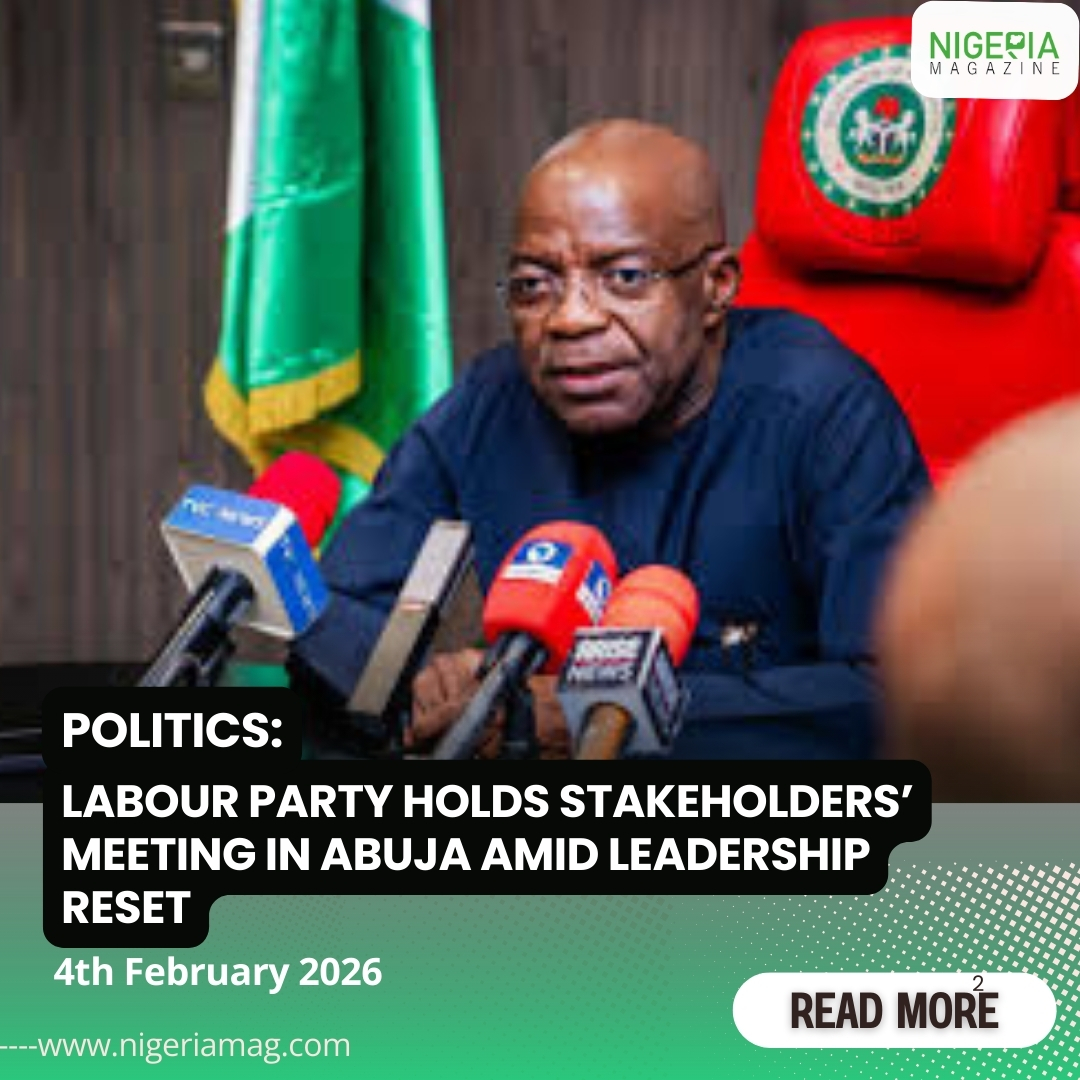
The Labour Party (LP) recently held a significant stakeholders’ meeting in Abuja as part of efforts to resolve its prolonged leadership crisis and reposition the party ahead of the 2027 general elections.
The meeting, which took place at the Abia State Government Lodge in Asokoro, brought together key party leaders, representatives of organised labour, and state executives, following a series of court rulings that have reshaped the party’s leadership landscape.
Recognition of Interim Leadership
At the meeting, the party’s National Chairman, Senator Nenadi Usman, expressed appreciation to the Independent National Electoral Commission (INEC) for recognising the party’s National Working Committee (NWC) led by her. This came after a Federal High Court order that directed INEC to list the Usman-led committee as the official leadership of the party on its portal — a development widely regarded within LP circles as ending months of uncertainty.
Senator Usman noted that the recognition followed last year’s Supreme Court judgment, which nullified earlier appeals court rulings that had previously recognised the former National Chairman, Barrister Julius Abure. She described the recognition as a pivotal moment for internal unity.
INEC listing includes Senator Usman as chairperson and Senator Darlington Nwokocha as National Secretary, along with other members of the caretaker committee responsible for guiding the party to its next convention.
Plans for Party Rebuilding and Congresses
Speaking on the party’s next steps, National Secretary Senator Darlington Nwokocha announced comprehensive plans to hold ward congresses beginning March 14, followed by a national convention on April 25, 2026. These events are designed to renew the party’s structures across the country and prepare for general elections. He also revealed intentions to undertake nationwide membership revalidation and fresh registration to strengthen the party’s grassroots support.
Governor Alex Otti of Abia State, who serves as the national leader of the Labour Party, reiterated that the party remains focused on rebuilding and reconciliation after the leadership impasse. He emphasised the importance of organisational cohesion and robust internal structures as the party seeks to present a competitive platform for Nigerians ahead of future elections.
Governor Otti also clarified the party’s position on national coalitions, stating that the Labour Party is not seeking to join any formal alliance with opposition parties aimed at unseating the ruling All Progressives Congress (APC) in 2027. Rather, he said the party believes its natural base, including workers, progressives, and grassroots supporters, constitutes a “coalition” in itself that must be strengthened from within.
Outlook and Challenges
While the meeting was largely constructive, the shadow of the leadership crisis still lingers. The faction previously led by Julius Abure has rejected the latest court ruling and vowed to appeal the decision, maintaining that the matter should be resolved within party mechanisms rather than through the courts.
Despite this dissent, the Labour Party leadership has called on all aggrieved members to return to the fold and participate in the rebuilding process under established constitutional norms. Governor Otti stated that reconciliation is possible, but only if returning members accept the authority of the current interim leadership and abide by the party’s constitution.
The Labour Party also announced that it will not participate in the February 21 Federal Capital Territory Area Council elections, a decision attributed to the organisational disruptions caused by the leadership dispute. Nevertheless, party leaders expressed optimism that with renewed unity and a clearer direction, the LP will be better prepared for the major electoral battles ahead.
Ubong Usoro for Nigeria Magazine

