


SANDRA BABU-BOATENG
My people, let’s talk for a minute.
Every time Africa comes up in global conversations, it’s the same tired storyline: Africa is poor. Africa needs aid. Africa needs loans. Africa needs saving.
And yes—Africa does have a debt problem. No denying that.
But here’s what almost nobody talks about:
Africa already has money. A lot of it.
Roughly $4 trillion of it.
And that, to me, is the real scandal.
Africa Isn’t Broke — The Money Is Just Sitting There
New research from the Africa Finance Corporation (AFC) did something important. Instead of guessing or using top-down estimates, they went country by country, institution by institution, and added it all up.
What they found is staggering:
Africa holds over $4 trillion in domestic capital.
That money exists today—in African systems, African institutions, African balance sheets.
It includes:
- Pension funds
- Insurance companies
- Sovereign wealth funds
- Commercial banks
- Central bank foreign-exchange reserves
This isn’t hypothetical money. This isn’t future potential. This is real capital, sitting right now in African banks and institutions.
So the question becomes: If Africa has $4 trillion, why does it still feel cash-starved?
Because the Money Isn’t Moving
Here’s the uncomfortable truth.
Most of that $4 trillion is not building roads.
It’s not financing power plants.
It’s not funding factories, ports, railways, or industrial parks.
Instead, it’s parked in:
- Short-term government securities
- Low-yield treasury bills
- Offshore accounts
- Or just sitting idle because institutions don’t know where—or how—to deploy it safely
Africa’s money is behaving like scared money.
And I get why.
Why Africa’s Own Capital Is Afraid of Africa
African pension funds and insurers are among the most conservative investors on earth—and not because they want to be, but because the system pushes them that way.
A few reasons:
- Regulations often forbid long-term infrastructure investment
- Capital markets are shallow and fragmented
- There aren’t enough well-structured, bankable projects
- Political risk and policy inconsistency scare institutions off
- Everyone is taught that “safe” means short-term and foreign
So instead of financing development, African capital is protecting itself.
But protection without productivity is stagnation.
Meanwhile, Africa Keeps Borrowing
This is where the irony gets painful.
While $4 trillion sits idle at home, African governments are:
- Borrowing externally at high interest rates
- Taking on dollar-denominated debt they don’t control
- Negotiating with IMF, World Bank, and foreign creditors
- Losing policy space and sovereignty in the process
So yes, Africa’s debt is a problem.
But the deeper problem is that Africa keeps acting like it has no choice—when it does.
This Is a Failure of Intermediation, Not Wealth
Let’s be clear: this is not about Africa lacking money.
It’s about failing to connect money to mission.
Africa doesn’t have a capital shortage.
It has an intermediation problem.
The pipes are broken.
There are not enough vehicles that take long-term domestic savings and channel them into:
- Infrastructure
- Industrialization
- Energy
- Transport
- Digital connectivity
Until those pipes are fixed, Africa will keep begging abroad while wealth sleeps at home.
What Could $4 Trillion Actually Do?
Let’s zoom out for a second.
Africa’s annual infrastructure financing gap is estimated at around $400 billion.
You don’t need all $4 trillion.
You don’t even need half.
If Africa mobilised just 10–15% of that domestic capital effectively, it could:
- Close major infrastructure gaps
- Finance power generation and transmission
- Build industrial corridors
- Reduce dependency on external debt
- Anchor long-term growth with African ownership
That’s the difference between development happening to Africa and development being driven by Africa.
This Is About Power, Not Just Finance
At the end of the day, this conversation isn’t just technical.
It’s political.
It’s strategic.
It’s about power.
Who controls capital controls the future.
As long as Africa’s money is passive, external actors will continue to set the terms.
But the moment African capital becomes intentional, coordinated, and long-term—everything changes.
Debt negotiations change.
Investment partnerships change.
Africa’s leverage changes.
So What Needs to Happen Next?
This won’t fix itself.
It will take:
- Regulatory reform to free pension and insurance capital
- Better project preparation and risk-sharing mechanisms
- Regional capital markets that actually talk to each other
- Development finance institutions that crowd in domestic money—not crowd it out
- Leadership willing to think long-term, not election-cycle to election-cycle
In other words: systems, not speeches.
And This Is Exactly What the African Union Should Be Fighting For
Now let me say the quiet part out loud.
If the African Union is not going to aggressively push real economic integration—
not speeches, not summits, not communiqués—
then this is the lane it should be running full speed in.
Because if there is one thing the AU can and shouldcoordinate, it’s continental financial policy alignment.
Right now, African capital is fragmented by design.
Different rules.
Different limits.
Different investment caps.
Different definitions of “risk.”
So even when the money exists, it can’t move across borders or into scale.
That’s not a market failure.
That’s a policy failure.
This Is Continental Policy Work — Not Charity
Think about it.
No single African country, on its own, can unlock this $4 trillion efficiently.
But the AU could—if it chose to act like a serious economic bloc.
This is where the AU should be:
- Harmonizing pension and insurance investment rules across member states
- Setting continental guidelines for infrastructure and long-term asset allocation
- Creating common standards for what qualifies as “bankable” African projects
- Supporting regional project-preparation facilities so deals don’t die on paper
- Coordinating risk-sharing frameworks so African capital doesn’t have to carry risk alone
This is not abstract Pan-Africanism.
This is plumbing.
And without plumbing, nothing flows.
If You Can’t Integrate Trade, Integrate Capital
We hear it all the time:
AfCFTA is slow.
Borders are still sticky.
Politics get in the way.
Fine.
But if goods and people can’t move freely yet, capital should.
Money is the easiest thing to coordinate—if the political will exists.
Imagine if:
- African pension funds could co-invest across borders
- Insurance pools could underwrite regional infrastructure
- Sovereign funds could anchor continental development vehicles
- Domestic savings could scale projects beyond single-country limits
That’s how you build integration from the balance sheet up.
Final Thought
Africa’s biggest tragedy today is no longer what was taken from it.
It’s what we are failing to build with what we already have.
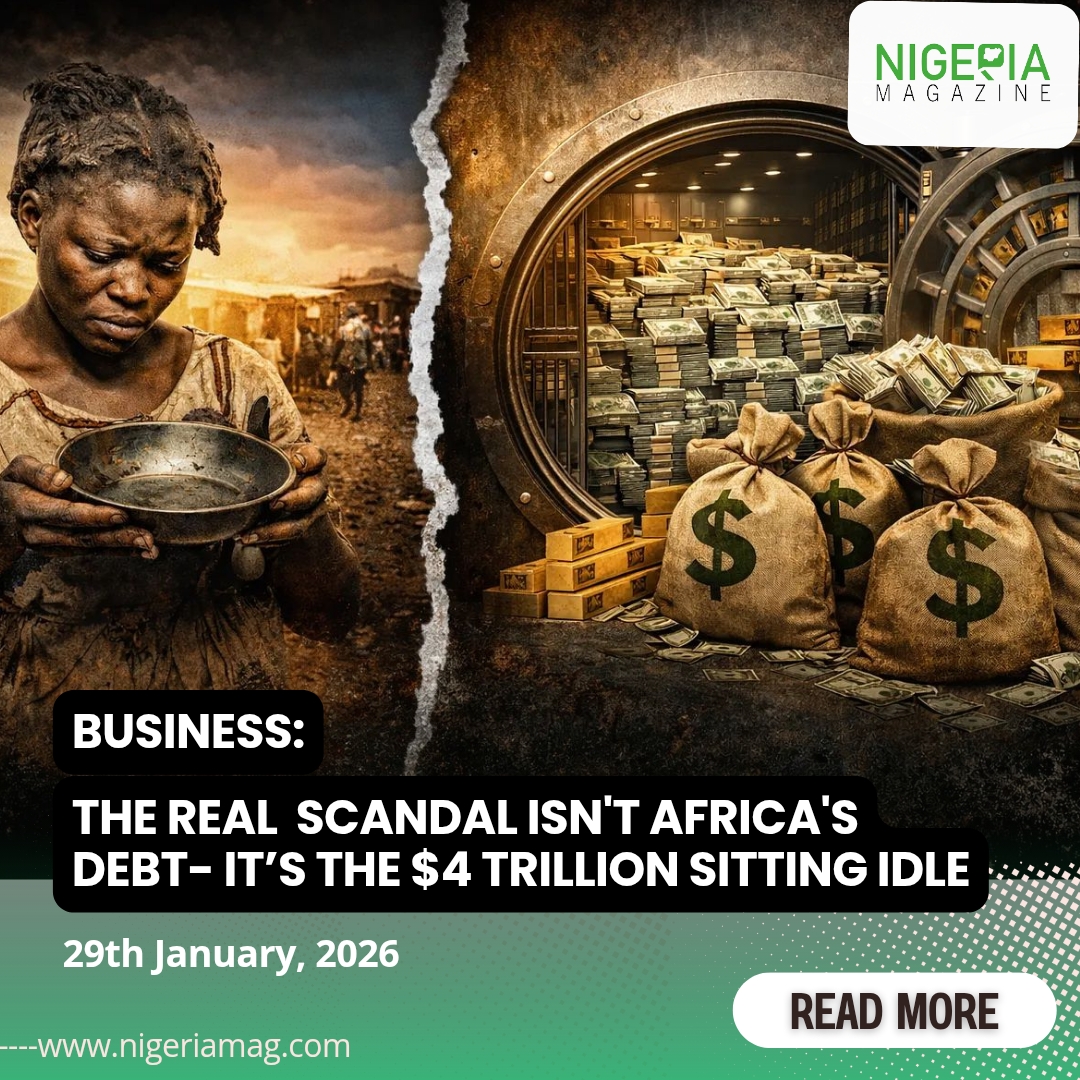
The real scandal isn’t Africa’s debt. It’s the $4 trillion sitting idle—while the continent keeps being told it’s poor.
And that’s a narrative we need to retire.

