


Explainer on the scope of the ban, affected exports, diplomacy, and possible responses
In 2025–2026, Nigeria and the United States — long-standing trade partners — have found their economic relationship under strain. While direct complete trade bans have not been imposed, a series of partial trade restrictions, elevated tariffs, and regulatory frictions have morphed into a broader tension that is reshaping commerce, diplomacy, and economic planning on both sides.
What Is the “Partial Ban” in Context?
The term “partial ban” refers less to a single sweeping prohibition and more to a suite of U.S. trade measures and visa restrictions that cumulatively constrain the normal flow of goods and services between the two countries.
U.S. Tariffs and Trade Barriers
In April 2025, the U.S. administration under President Donald Trump introduced a reciprocal tariff regime, imposing a general 14 – 15 per cent tariff on Nigerian exports to the U.S. — marking a significant departure from previous arrangements where many goods enjoyed lower duties. (Independent Newspaper Nigeria)
These measures applied broadly and affected a wide range of non-oil exports (since crude oil — Nigeria’s largest export — was largely exempted) and raised costs for U.S. importers. (Independent Newspaper Nigeria)
Washington’s stated rationale was rooted in a new “Fair and Reciprocal Trade Plan,” targeting what it deemed unfair trade imbalances and lack of market access for U.S. exporters in some countries. (Chartered Institute of Directors Nigeria)
Visa and Mobility Restrictions (Partial Ban on Entry)
Separate from trade tariffs, U.S. immigration policy changes have introduced partial travel bans and restrictions on Nigerian nationals’ entry. Under a December 2025 U.S. proclamation, Nigeria was added to a “partial ban” list limiting certain visa categories (e.g., B-1/B-2, F, M, and J visas) due to purported concerns over overstay rates and identity document issues. (NAFSA)
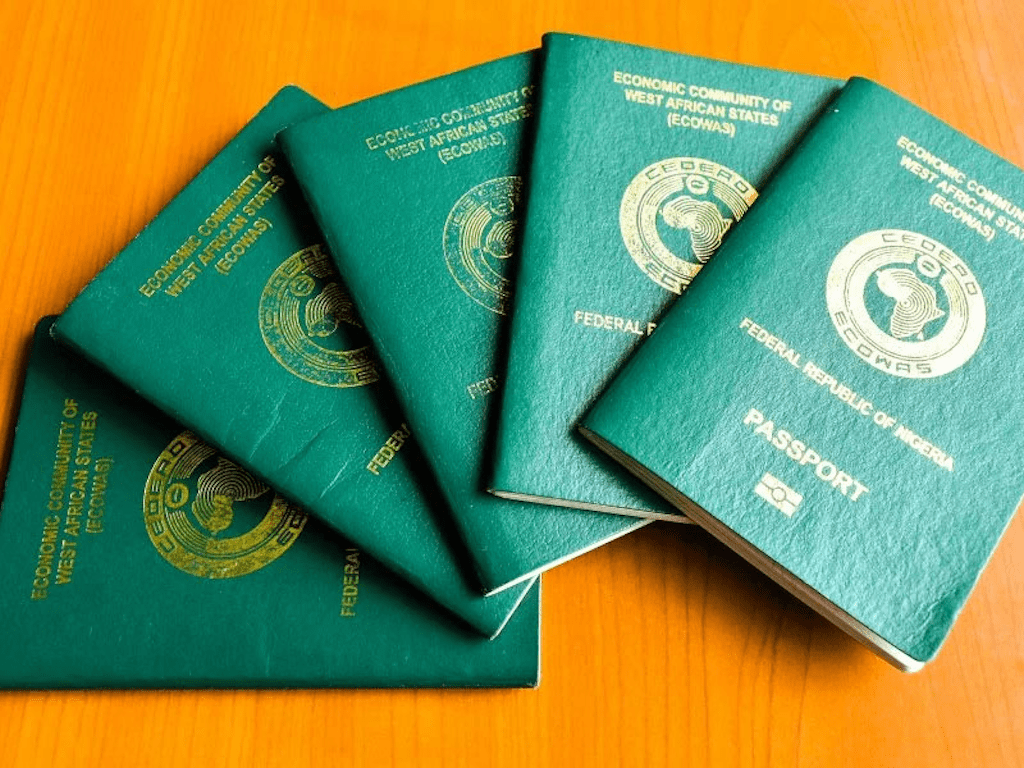
Although not trade measures per se, these mobility limits feed into economic friction by constraining business travel, professional exchanges, and investment discussions between the two countries.
Scope: What Exports and Imports Are Affected?
Nigerian Exports to the U.S.
Nigeria’s trade with the United States has historically been weighted toward energy products:
Crude oil and petroleum products make up more than 90 per cent of exports by value. (Independent Newspaper Nigeria)
Secondary exports include fertiliser (urea), kerosene, petroleum gas, and small amounts of agricultural goods like cocoa derivatives. (Independent Newspaper Nigeria)
However, the tariff hikes have uneven effects:
While oil exports have remained largely unaffected by duties, the non-oil export sector has struggled as higher tariffs make Nigerian agricultural and processed goods less competitive in the U.S. market. (Independent Newspaper Nigeria)
Import Dynamics
On the U.S. side, Nigeria imports a variety of machinery, agricultural inputs, industrial equipment, and consumer goods. Rising tariffs and reciprocal trade rhetoric raise the potential for higher costs of these imports, particularly if Nigeria chooses to retaliate with higher duties on American goods as part of its negotiation strategy.
Nigerian Policies Also Under Scrutiny
Nigeria itself maintains an import ban on 25 product categories — including poultry, pork, fruit juices, and certain consumer and pharmaceutical items — originally instituted to protect local industries. (TheCable)
The U.S. Trade Representative has cited this policy as a barrier limiting U.S. exporters’ access to the Nigerian market, further complicating bilateral trade narratives. (TheCable)
The Economic Impact
Exports and Trade Balance
Nigeria’s exports to the U.S. contracted sharply in 2025, with official data showing a decline of about ₦940.98 billion (around 20.5 per cent) in the first nine months of 2025 compared with 2024. (Independent Newspaper Nigeria)
The combination of tariff headwinds and weaker demand contributed to this slide and transformed what was once a trade surplus into a trade deficit with the United States — a dramatic reversal in bilateral trade performance. (Eagle 102.5 FM)
Non-Oil Sector Stress
Economists and industry leaders have warned that:
Higher U.S. tariffs undermine the competitiveness of Nigerian manufactured and agricultural goods in the U.S. market. (TheCable)
Industries such as agro-processing, chemicals, and basic manufacturing – already striving to diversify beyond oil – face eroded demand and higher cost of market entry in crucial export destinations. (ThisDayLive)
Some analysts estimate potential annual export losses of ₦1 – ₂ trillion for agric-related exports alone under sustained tariff pressure. (ThisDayLive)
Investment and Confidence
Tariff uncertainty tends to lower investor confidence. Higher trade barriers reduce profit margins for export-oriented firms, making Nigeria less attractive as an assembly or export hub for multinational companies. (FedMin Info & National Orientation)
Consumers and Prices
If trade tensions escalate and result in retaliatory tariffs, consumer prices for imported goods — including staples such as wheat — could rise domestically due to increased import costs, exacerbating inflationary pressures already present in the economy. (ThisDayLive)
Diplomatic Undercurrents and Broader Tensions
Trade friction does not exist in a vacuum. Nigeria–U.S. relations have concurrently faced tension on other fronts:
Visa restrictions and travel bans are part of wider immigration policy shifts in Washington that affect Nigerian businesspeople, students, and professionals. (NAFSA)
Security cooperation and geopolitical disagreements, including over regional approaches to global conflicts and deportation policies, have added layers of strain. (Reddit)
Nigeria and other African states have expressed a desire to deepen economic ties with the U.S. even as visa and trade barriers risk undermining these engagements. (Reuters)
Diplomatically, Abuja must balance domestic economic interests with the need to maintain good relations with its largest single trading partner outside Africa.
Possible Responses and Strategic Options
Trade Diplomacy and Negotiations
Nigeria could pursue:
Bilateral negotiations to seek tariff reductions or exemptions, perhaps within World Trade Organization frameworks.
Reciprocal enforcement of trade agreements to pursue fairer access for Nigerian exports and ensure U.S. compliance with market access standards.
Diversification of Export Markets
The evolving trade environment has accelerated Nigeria’s pivot toward other global markets, including Asia and Europe, and reinforced interest in continental trade under the African Continental Free Trade Area (AfCFTA). (State)
Strengthening regional value chains can help reduce reliance on any single partner’s market dynamics.
Industrial Policy and Productivity Growth
To withstand external headwinds, long-term policy focus on:
Enhancing product quality, standards compliance, and market diversification.
Supporting manufacturers and value-added sectors to reduce dependency on primary commodity exports.
Bolstering competitiveness through infrastructure investment and export facilitation programs.
Multilateral Engagements
Leveraging regional blocs and international forums could provide platforms for collective negotiation and support, with organizations like the African Union and ECOWAS advocating for fairer trade terms.
The current phase of Nigeria–U.S. trade tensions — manifest in tariffs, visa restrictions, and diplomatic friction — has significant implications for Nigeria’s economic landscape. These developments illustrate how international trade and foreign policy are increasingly intertwined, requiring nuanced strategies that blend negotiation, diversification, and long-term economic reform.
As trade dynamics evolve in 2026 and beyond, the choices made now by policymakers and businesses in Abuja and Washington will shape not only bilateral relations but also Nigeria’s place in a shifting global economic order.

