


Culture, community voices and age-old customs that usher in fresh beginnings across the Giant of Africa
As the calendar turns and fireworks light up the skies from Lagos to Abuja, Port Harcourt to Benin City, Nigerians across the country mark the New Year with an array of practices that reflect the nation’s deep cultural diversity, spiritual rhythms and communal aspirations for prosperity. From time-honoured indigenous rites to vibrant contemporary celebrations, each tradition tells a story — one of hope, renewal and cultural continuity.
Crossover Services and Urban Countdown Culture
In Nigeria today, the New Year often begins long before the clock strikes midnight. Across cities and towns, millions converge at “crossover services” in churches on December 31st — extended worship sessions where congregants pray, sing and reflect on the outgoing year while seeking blessings for the one ahead. For many worshippers, attending these services isn’t just ritual; it’s deeply spiritual, anchored in a belief that how one enters the year shapes its fortunes. (Counting The Days)
In major urban centres like Abuja and Lagos, the religious thread of crossover services is woven together with spectacular city countdowns. The annual Greater Lagos Fiesta (formerly Lagos Countdown) stretches from early December through January 1, featuring live concerts, street celebrations and fireworks that draw huge crowds. (Wikipedia)
“For us, church and celebration go hand in hand,” says Chidinma Okeke, a Lagos-based teacher. “We spend the night in prayer, then join the festivities at midnight — we want both spiritual and earthly joy in the new year.”
The Benin Kingdom’s Igue and Ewere Ceremonies
While mainstream New Year’s Eve festivities are widespread, some Nigerian ethnic groups attach New Year observances to ancient indigenous cycles.
In Benin Kingdom (Edo State), traditional rites tied to the Igue Festival span from late December into early January. Rooted in the 14th century during the reign of Oba Ewuare I, the Igue brings together palace rituals, homage to ancestors and communal blessings. At the heart of this season is the Ewere Ceremony (Ugie-Ewere), a symbolic ritual in which Ewere leaves — emblems of peace, joy and goodwill — are offered to the Oba (king) and shared within the kingdom. These leaves are believed to secure peace and prosperity for the coming year, bridging monarchal history with community life. (Wikipedia)
Oba Akenzua II, a previous steward of tradition, explains that “this ceremony unites our people around ancestral blessings and reminds us that a new year is rooted in continuity with our past.” Participants wear regal regalia and perform ceremonial dances that echo centuries of heritage — a stark contrast to urban countdowns but equally powerful in symbolic meaning.
Harvest Cycles and the Igbo New Year
In southeastern Nigeria, some ethnic communities mark a traditional “New Year” aligned with the agricultural calendar. Among the Igbo people, festivals such as Igu Aro historically signal the start of the indigenous year — a time for elders, priests and community members to divine guidance and blessings for the year ahead. Ritual libations and spiritual consultations are central to this practice. (Ou Travel & Tour)
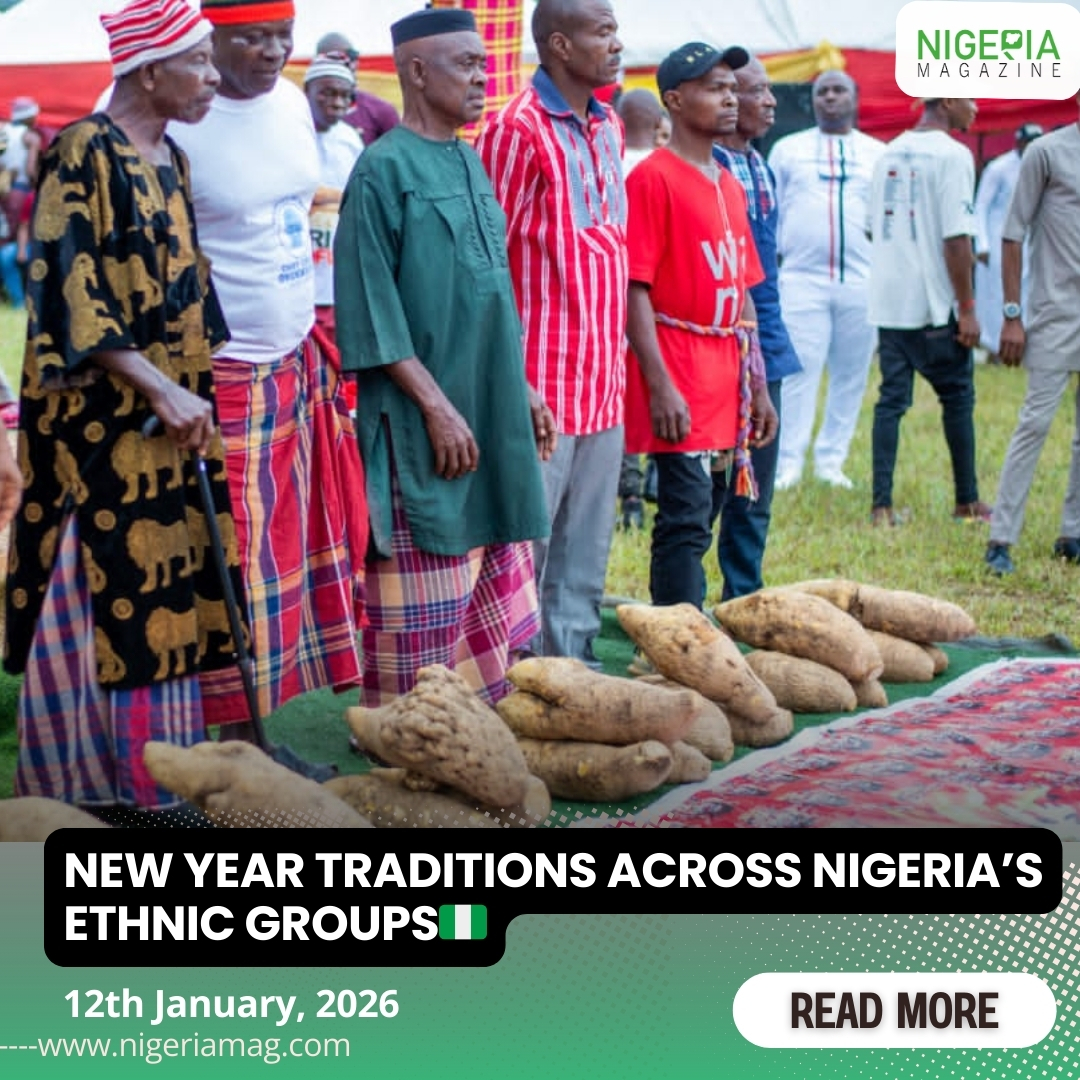
Another cornerstone of Igbo cultural life is the New Yam Festival — variously called Iri Ji, Iwa Ji, or Otute — which celebrates the completion of a farming season and the arrival of fresh yam, the region’s staple crop. These harvest rites, typically held between August and October, are not tied to January 1 on the Gregorian calendar but reflect a renewal deeply anchored in land cycles, gratitude and communal feasting. (Nigeria 234)
At a recent Iri Ji festival in Abuja, community member Ifeanyi Ugochukwu shared, “Eating the first yam represents prosperity. We thank the earth and ancestors, and by the time January 1 comes, we are already spiritually and culturally renewed.” (Travel And Tour World)
Yoruba Cultural Expressions and the Turn of the Year
Among the Yoruba communities of southwestern Nigeria, the New Year season is also rich with traditional festivals and contemporary celebrations. While many urban Yoruba youth join in national midnight countdowns, traditional festivals such as those of the Awori people’s Iganmode Cultural Festival in Ogun State showcase ancestral dances, masquerades and community rites in December that resonate with local identity. (Wikipedia)
Another famous Yoruba celebration, the Ojude Oba festival in Ijebu-Ode, though anchored to Islamic calendar events like Eid al-Adha, reflects the enduring role of age-grade groups and pageantry in local cultures — bringing together community pride and mutual respect. (Wikipedia)
Food, too, is culture: festive dishes from pounded yam and soups to jollof rice and suya appear at family gatherings across Yoruba cities on New Year’s Eve, symbolizing abundance and shared joy.
Riverside Rhythms: Ijaw and Niger Delta Celebrations
In the Niger Delta, ethnic groups such as the Ijaw weave water-based traditions into their festive seasons. While these ceremonies are not directly tied to January 1, boats, regattas and masquerade parades during the December to early January stretch echo community life, emphasizing renewal and collective identity. (RNN)
At Port Harcourt’s waterfront, traditional drumming and river floats blend with city lights and countdown events, creating a unique fusion of heritage and modern festivity.
Voices from the Ground: What New Year Means to Today’s Nigerians
For many ordinary Nigerians, the New Year is a moment of introspection, reunion and hope. In urban centers, families come together for feasts, share well-wishes and attend church or mosque services that echo across neighborhoods. In rural areas, the drumbeats of traditional music and ancestral ceremonies reinforce a sense of belonging that cuts across age and religion. (assendelft.co.za)
“Whether I am in the church or back home for masquerade celebrations, the New Year brings my family together,” says Mariam Abdullahi, a teacher from Kano. “It’s about belonging, gratitude and setting intentions for what lies ahead.”
Celebrating With Purpose
Across Nigeria, the turn of the year is not just a calendar event — it is a tapestry of cultural expression, spiritual consciousness and family bonds. From the spiritual depth of crossover services and royal traditions in Benin to harvest-linked rites of the Igbo and festive rhythms in Yoruba towns, the celebrations reflect how different communities understand time, renewal and togetherness.
In this season of fresh starts, these traditions offer more than spectacle — they offer a living archive of Nigeria’s rich cultural mosaic, one that continues to evolve even as it welcomes every January with unity, resilience and joy.

